
.jpg)
Substantively reviewed and updated: August 28, 2026
Direct answer
If your surgeon includes a compression garment in your liposuction recovery plan, follow that written plan for the exact garment, coverage and wear schedule. There is no universal âmandatoryâ timeline, Stage 1/Stage 2 definition or mmHg value for every procedure. When comparing products, focus on treated-area coverage, pressure-free instructions, closures, seams, current measurements and changing fit.
- Plan first: the surgeon decides whether compression is used and when the garment changes.
- Coverage first: the product must match the areas treated and any areas that should remain pressure-free.
- Evidence has limits: compression is common practice, but it does not guarantee a complication-free or smoother result.
A practical liposuction recovery timeline
Recovery timing varies by treated area, procedure extent and your surgeon’s instructions. The examples below are general recovery context, not a garment schedule or clearance to change activity.
First few days
Protect and observe. Soreness and swelling are common early on. Follow your surgical team’s instructions for dressings, drains, medication, bathing and movement.
Weeks 1–2
Gradual daily activity. Bruising and swelling may still be present. Work readiness varies, so another person’s timeline should not be used as your target.
Weeks 3–4+
Ask before exercise. Some people may begin gentle exercise around this stage, but only after their surgeon confirms that it is appropriate.
Following months
Allow recovery to continue. Residual swelling or numbness can take time to settle. Keep follow-up appointments and report unexpected changes according to your care instructions.
Quick FAQ
Is a compression garment mandatory after liposuction?
That is a decision for your surgeon. If a garment is prescribed, follow the procedure-specific instructions rather than treating online advice as clearance to skip or change it.
How many hours should I wear it?
Use the schedule supplied by your surgical team. The correct plan varies with the procedure, treated areas, garment and individual recovery.
When should I switch to Stage 2?
Only when your surgeon approves the change. Stage labels describe retail product groups; they are not a universal medical calendar.
What compression level do I need?
Use verified documentation for the exact garment and the level requested by your provider. Do not infer an mmHg value from a stage name or tight feeling.
What the evidence can supportâand where it stops
The American Society of Plastic Surgeons explains that patients may be directed to wear an elastic bandage or compression garment after liposuction and repeatedly tells patients to follow their surgeonâs instructions. A 2023 practical review of postoperative compression garments found that compression is widely used across plastic-surgery recovery, while the quality and direction of evidence vary by procedure and outcome.
That evidence boundary matters. A shopping guide should not promise that a garment prevents seroma, fibrosis, bruising, pain or contour irregularity, and it should not claim that stronger pressure creates better final results. Garment selection is one part of a broader postoperative planânot a substitute for surgical follow-up.
Map garment coverage to the areas treated
| Areas discussed with the surgeon | Construction to compare | Questions before buying |
|---|---|---|
| Abdomen and flanks | Abdominal garment, open-bust bodysuit or waist-to-thigh format | Where should the upper and lower edges end? Are closures or seams restricted? |
| Hips and thighs | Mid-thigh, capri or full-length lower-body garment | Which leg length covers the treated area without ending in an unsuitable position? |
| Arms and upper back | Sleeved top or arm-and-abdominal set | What sleeve length and underarm construction are appropriate? |
| Multiple body zones | Full-body garment or coordinated separate pieces | Is connected coverage needed? Where may pieces overlap or leave a gap? |
| Areas with incisions, drains or special instructions | Only the construction specifically approved by the care team | Which zones must stay accessible or pressure-free? |
Stage 1 and Stage 2 are not universal standards
Retailers often use Stage 1 and Stage 2 to separate earlier and later recovery-garment constructions. A later-stage product may be more structured, lower profile or offer additional closure positions. But the label does not establish a universal week, daily wear time or pressure measurement.
ASPS articles include examples of surgeons using different garments at different points, and the examples vary. The consistent instruction is to follow the individual surgeon. Use the Stage 1 vs Stage 2 guide to compare features, then obtain clearance before changing.
How to evaluate a post-lipo garment
- Bring the written plan. Record the requested coverage, garment type, pressure or support specification if one is documented, and wear instructions.
- Measure now. Use the exact product chart. Do not rely on a pre-procedure dress size or another productâs chart.
- Check every boundary. Review the upper edge, lower edge, sleeve or leg length, rear panel, gusset and any pressure-free zone.
- Review access. Make sure hooks, zippers, bathroom openings and any area requiring clinical inspection are compatible with the care plan.
- Plan for reassessment. Ask what fit change means the garment should be adjusted, replaced or reviewed by the team.
Fit checks: secure does not mean painful
Even placement
Panels should sit where designed without twisting, bunching or a concentrated ridge. Do not add pads or foam unless the care team instructs you to.
Normal function
Confirm that you can breathe and perform permitted movements. A smaller size is not a safe shortcut to stronger support.
Closure protection
Hooks and zippers should align, remain secure and avoid pinching or exposing sharp edges.
Changing measurements
If the garment becomes loose, uneven or newly uncomfortable, remeasure and ask the team whether adjustment or a different garment is appropriate.
Questions to take to the surgeon
- Which exact areas should the garment cover, and which should remain pressure-free?
- Is a connected bodysuit, lower-body garment, upper-body garment or separate set preferred?
- Does the requested product need a documented pressure specification?
- Which closure, seam, crotch, sleeve and leg constructions are acceptable?
- What is my wear and removal schedule, including showering and sleep?
- What fit changes or symptoms require a call before I switch sizes or stages?
Can regular shapewear replace a post-lipo garment?
Do not substitute ordinary shapewear unless the surgeon approves that exact product and construction. Everyday pieces are selected for styling and may use different panels, seams, closures and coverage. Read Everyday Shapewear vs Post-Surgery Compression for the category distinction.
When to stop shopping and contact the care team
Use the symptom and emergency instructions provided by the surgical team. Significant or increasing pain, breathing difficulty, concerning color or temperature change, loss of sensation, wound or drain interference, sudden swelling, fever or another urgent concern requires professional guidanceânot an online fit adjustment.
Compare coverage formats, not medical outcomes
| Product | Format | Decision cues to verify |
|---|---|---|
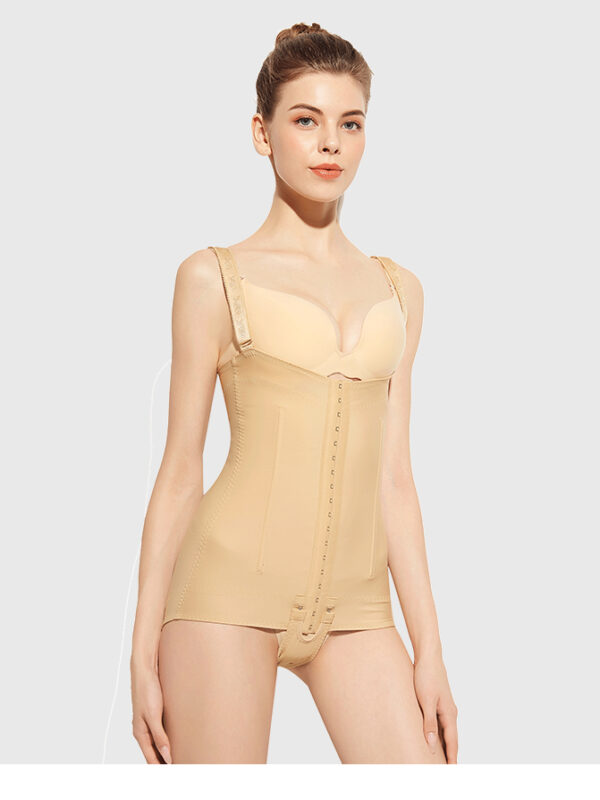
| Post-Lipo Open-Bust Full-Body Compression Garment with Hook Closure | Connected full-body coverage | Torso length, treated zones, leg coverage, hooks and bathroom access |
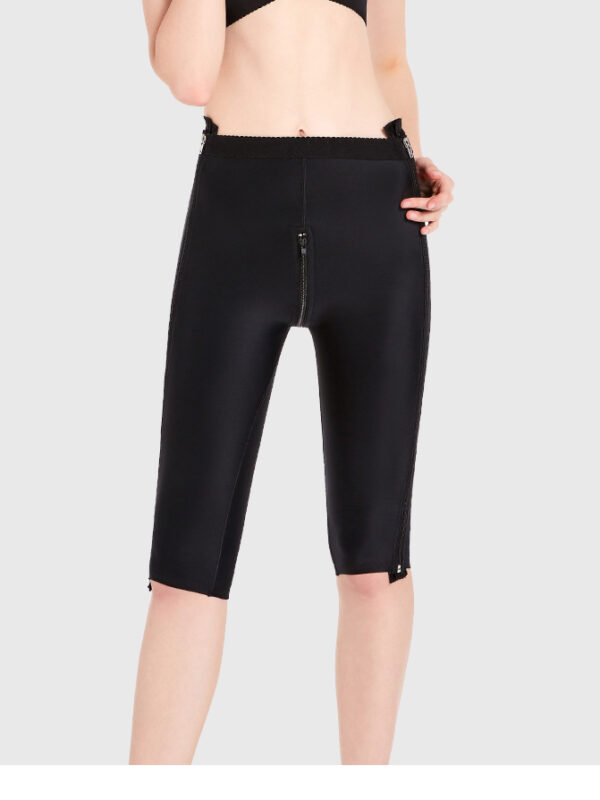
| High-Waist Post-Lipo Compression Capri Pants with Side Zipper | Lower-body capri coverage | Waist height, zipper position, capri hem and treated-area match |
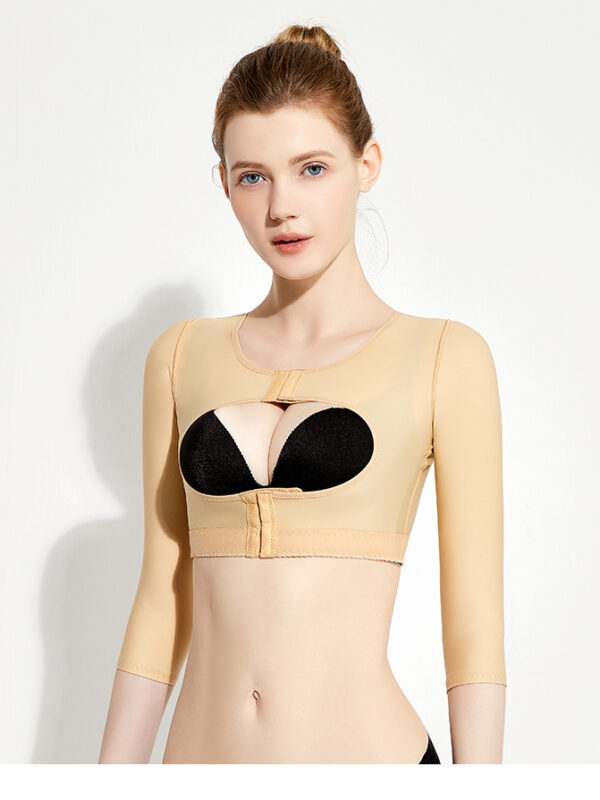
| Post-Surgery Arm & Abdominal Compression Garment Set | Separate upper-body and abdominal pieces | Sleeve length, overlap, closure access and multi-zone instructions |
View the three coverage formats
Use these as construction comparisons. Product selection, timing and wear instructions should be confirmed with the treating surgeon.
- Recovery Leggings & Pants
High-Waist Post-Lipo Compression Capri Pants with Side Zipper
$79.00 Select options This product has multiple variants. The options may be chosen on the product page - Fajas & Recovery Bodysuits
Post-Lipo Open-Bust Full-Body Compression Garment with Hook Closure
$79.00Select options This product has multiple variants. The options may be chosen on the product page - Recovery Sets
Post-Surgery Arm & Abdominal Compression Garment Set
$69.00Select options This product has multiple variants. The options may be chosen on the product page
Ready to compare liposuction recovery garments?
Use the recovery collection to compare garment coverage and construction after you have the instructions you need from your treating professional.
Continue with Post-Surgery Compression Garments, the support-level guide and the measurement guide.
Sources and review notes
- American Society of Plastic Surgeons: Liposuction Recovery â postoperative garment and follow-up context.
- ASPS: The Importance of Compression After Plastic Surgery â individualized garment timing and fit.
- ASPS: Compression Garments in Recovery â examples of staged protocols, not universal rules.
- Plastic and Reconstructive Surgery Global Open: The Use of Postoperative Compression Garments in Plastic Surgery â practical review of evidence and limitations.
Sources and product availability checked August 28, 2026. This guide is educational and does not replace the postoperative plan supplied by a surgeon.