
Find Your Qinelle Fit
Start with your current measurements, then use the size chart on the exact product you want to buy. Qinelle styles can use different measurements depending on garment construction, coverage and fit.
Measure the body you have today.
Use a soft measuring tape, stand naturally and keep the tape flat. Do not pull the tape tighter to try to qualify for a smaller size.
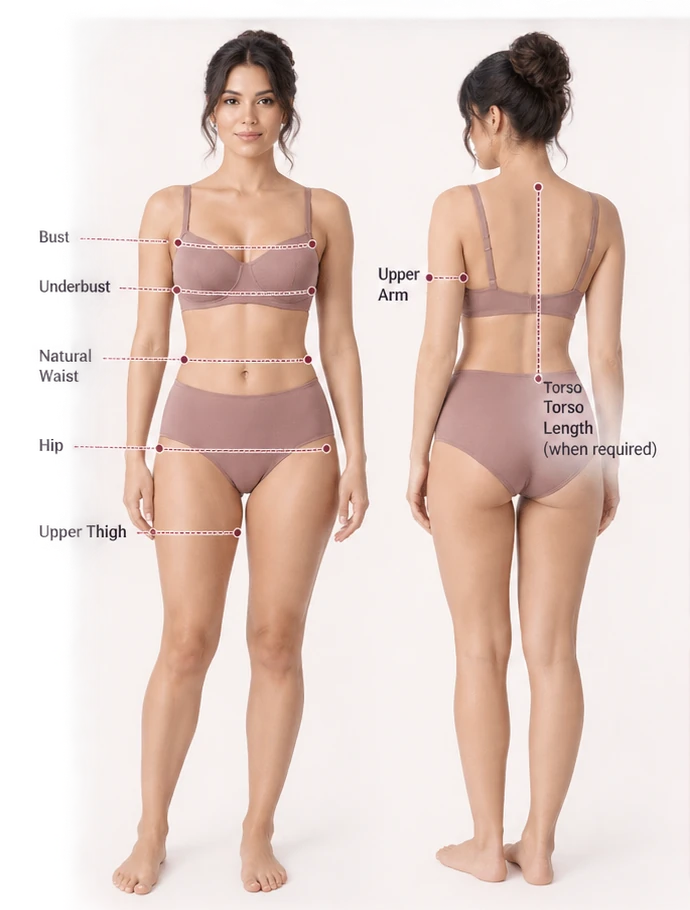
Measure around the fullest part of the bust, keeping the tape level across the back.
Measure around the upper chest above the fullest bust area and beneath the underarms when the product chart asks for it.
Measure directly beneath the bust around the ribcage. Keep the tape close without compressing the body.
Measure around your natural waist without holding your stomach in. If a product specifies lower waist, follow that instruction instead.
Measure around the fullest part of the hips and seat, keeping the tape level from front to back.
With the arm relaxed, measure around the fullest part of the upper arm when that measurement appears on the product chart.
Measure around the fullest part of the upper thigh while standing relaxed. Keep the tape level.
Use torso length only when the exact product provides a defined method. Torso measurement methods can differ between garment types.
Wear light clothing or measure over undergarments. When you are between sizes, start with the product-specific fit note rather than tightening the tape or automatically sizing down.
Body measurements and garment measurements are not the same thing.
Before comparing numbers, check what the product chart is actually measuring.
Measured around you
Examples include bust, underbust, waist, hip, upper arm and upper thigh. Keep the tape level and close to the body without pulling it tight.
Measured from the garment
Examples include flat waist, 1/2 waist, garment length, inseam and garment bust. Stretch garments can measure smaller when laid flat than the body they are designed to fit.
Do not double, convert or reinterpret a flat measurement unless the exact product chart explains how that measurement should be used.
Three checks before choosing a size.
Confirm whether the chart lists body measurements, garment measurements or a source/reference value.
If a chart gives waist and thigh, or upper bust and underbust, compare both rather than choosing from only one number.
The product selector shows the sizes currently offered. A historic or source size label does not override the live product option.
Between sizes? Start with the exact product guidance.
There is no universal rule that works for every Qinelle garment because construction, stretch, closures and coverage differ.
If two measurements point to different sizes
Follow the product-specific fit note first. When no more specific instruction is provided, use the size that can accommodate the larger fit requirement rather than forcing a smaller garment closed.
Do not size down only for a stronger feeling
A smaller size can change closure alignment, garment position and comfort. Choose from the verified product chart rather than using undersizing as a substitute for a different level of support or shaping.
Useful on some charts. Not a replacement for product-specific measurements.
Some Qinelle product charts include height or weight as reference information. When a chart also provides waist, hip, bust, underbust, thigh or another direct measurement, use those product-specific measurements as the primary fit reference unless the product instructions state otherwise.
Some recovery styles use measurements that everyday shapewear does not.
Facial and head-support garments may use measurements such as head circumference or a chin-to-crown loop. Follow the measurement names and instructions on the exact product rather than substituting bust, waist or clothing size.
For garments used as part of post-procedure recovery, your healthcare provider's fit, timing and use instructions take priority.
Still unsure which size to choose?
Send us the product link and the measurements requested on that product's size chart. Height and weight can be included as additional context when useful.
Choose the guide that matches what you are shopping for.
Live confidently