BBL Stage 2 Faja: When to Switch, How to Choose, and What Most Guides Get Wrong (2026 Doctor-Reviewed Guide)

Medically reviewed by [Dr. ___, MD, FACS]Board-Certified Plastic Surgeon | Last reviewed: May 2026

(Reviewer placeholder — to be filled after HARO/SOS or LinkedIn outreach response.)


TL;DR — The Stage 2 Decision in 60 Seconds

Most BBL patients switch to a Stage 2 faja between weeks 3 and 4 post-op, but the right timing depends on three things — not the calendar:

  1. Your drainage has dropped below ~30 ml/day for at least 3 consecutive days
  2. Your swelling has measurably decreased (waist circumference stable for 3+ days)
  3. Your incisions are fully closed with no redness or weeping

Switch too early and you risk seroma, fibrosis, or compromised fat graft survival. Switch too late and you lose the contouring window that prevents fibrosis from forming.

This guide gives you the self-assessment checklist, the exact sizing rule when transitioning, and the 5 mistakes that quietly sabotage BBL results — most of which other guides skip entirely.


What Is a Stage 2 Faja, Really? (And Why “Stage” Matters)

If you search Google for “Stage 2 faja,” you’ll see dozens of guides describing it as “the tighter one.” That’s technically true — and almost completely useless.

The actual difference between Stage 1 and Stage 2 isn’t tightness. It’s fabric architecture.

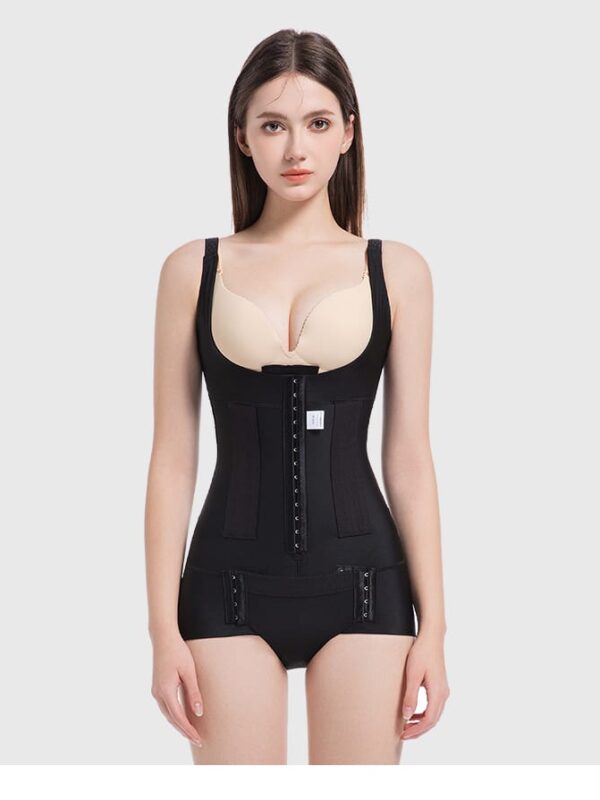
Stage 1 fajas are made from soft lycra-spandex blends, cut with multiple rows of hook-and-eye closures so the garment can adjust around aggressive post-op swelling. The compression is gentle (roughly 15-20 mmHg) and uniform — designed to contain swelling and protect surgical sites without applying clinical pressure.

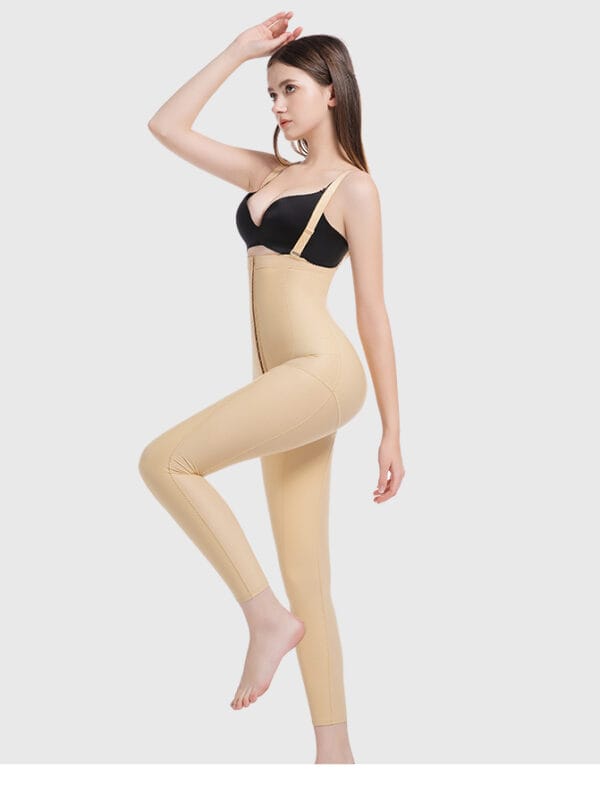
Stage 2 fajas are constructed from powernet, a high-density warp-knit fabric that delivers graduated compression in the 25-35 mmHg range. The fabric itself does the work: less stretchy, denser, and engineered to apply firm, even pressure across the abdomen, waist, and back, while leaving the buttock area capacious to protect transferred fat cells.

Here’s a side-by-side that captures what actually matters:

PropertyStage 1 FajaStage 2 Faja
Primary fabricLycra/spandex blendPowernet (high-density warp knit)
Compression range~15-20 mmHg~25-35 mmHg
Primary functionContain swelling, protect incisionsSculpt contour, prevent fibrosis
ClosuresMultiple hook-eye rows (highly adjustable)Fewer or no closures, structural fabric does the work
BBL buttock zoneLoose, non-compressiveSupportive but never compressive over fat graft area
Daily wear23 hr/day for ~3-4 weeks12-23 hr/day for 8-24 weeks

If you remember nothing else from this section: Stage 1 is a bandage. Stage 2 is a cast. They have different jobs and switching between them is a clinical milestone, not a wardrobe upgrade.


When Should You Switch? The Real Answer (Not Just “2-4 Weeks”)

If you’ve been told everything from “switch at 2 days” to “wait 6 weeks,” you’re not crazy. We see this conflict in published surgeon advice constantly — and it’s because the right answer depends on your body, not a number.

The transition isn’t governed by the calendar. It’s governed by four physiological signals:

Signal 1: Drainage volume
If you have surgical drains, daily output should drop below ~30 ml/day for 3 consecutive days before you switch. If you don’t have drains (some BBL patients don’t), the equivalent signal is no visible weeping or fluid collection at incision sites.

Signal 2: Incision integrity
All incisions must be fully closed and showing healthy granulation tissue — no redness extending beyond the incision line, no warmth, no separation. Stage 2 compression on an open incision is a fast track to wound dehiscence.

Signal 3: Stable swelling
Measure your waist circumference at the same point each morning for 3 consecutive days. If the measurement is stable (within 0.5 inch), your swelling has reached a plateau and your body can handle the increased pressure without “fighting” the garment.

Signal 4: Pain tolerance
Stage 2 compression feels noticeably firmer. If you still need pain medication just to wear your Stage 1 comfortably, your tissues aren’t ready for the next level.

Here’s how those signals typically map to weeks post-op:

Week post-opDrainageSwellingRecommended action
Week 0-1HeavySevereStage 1 mandatory
Week 2DecreasingStill pronouncedEvaluate; usually still Stage 1
Week 3Minimal/stoppedReducingTransition window for many patients
Week 4StoppedModerateMost patients ready to switch
Week 5-6StoppedLightAlmost all patients should be in Stage 2
Week 6+ResidualAlready in Stage 2; missed window if not

The honest truth: most board-certified surgeons will give a different specific timeline because they’re optimizing for their own protocols and patient populations. The signals above are what they’re actually evaluating when they tell you “you’re ready” — so you can evaluate them yourself if your surgeon isn’t accessible (common for patients who travel for surgery).

[Pull-quote placeholder for medical reviewer]
“The transition isn’t a date — it’s a clinical assessment. I tell patients to focus on what their body is doing, not what week they’re in.” — Dr. ___, Board-Certified Plastic Surgeon


The Self-Assessment Checklist: Are You Ready for Stage 2?

Most online guides tell you to “consult your surgeon.” Real talk — many BBL patients travel internationally for surgery, can’t reach their provider for routine questions, or have already been discharged. So here’s a self-assessment you can run before that next phone call.

Answer yes or no to each:

  • [ ] My drainage has been below ~30 ml/day for 3+ consecutive days (or I never had drains and have no fluid weeping)
  • [ ] All incisions are fully closed with no redness, warmth, or separation
  • [ ] I can take a deep breath without sharp pain
  • [ ] My morning waist measurement has been stable for 3+ days
  • [ ] I’m at least 14 days post-op
  • [ ] I can sleep on my stomach or sides for short periods without significant pain
  • [ ] My Stage 1 faja feels noticeably loose (you can fit a flat hand between fabric and skin)
  • [ ] I’m not currently running a fever or showing signs of infection
  • [ ] I’m not on prescription pain medication around the clock
  • [ ] My energy level allows me to walk for 15+ minutes continuously

Score interpretation:

  • 8-10 yes → You’re likely ready. Confirm with your surgeon, then transition.
  • 5-7 yes → Wait one week and reassess. You’re close but not there.
  • Below 5 → Stay in Stage 1. Switching now creates more risk than reward.

This isn’t a substitute for surgeon clearance. It’s a way to come to that conversation prepared with specific data instead of a vague “I think I’m ready.”


Stage 2 Sizing — Should You Size Up, Down, or Stay the Same?

Sizing is where most patients quietly sabotage their results. The Stage 2 faja you pick at week 3 is the one your body will live in for the next 2-6 months. Wrong size means wrong pressure, and wrong pressure means uneven contour, fibrosis, or both.

The simple rule: Stage 2 sizing depends on what your body has done since surgery, not what your Stage 1 size was.

Here’s the decision matrix we work with:

Your situationStage 2 sizing
Body weight returned to within ±2 kg of pre-opSame numerical size as Stage 1
Weight is 3-5 kg below pre-op (common — surgery + reduced appetite)Size down one
Still significant visible swellingSame size, but reassess in 1 week
Stage 1 has become visibly loose (hand fits flat between garment and skin)Size down immediately, don’t wait
Weight is above pre-op (rare but possible)Same size or up one — never compress over a heavier frame

How to actually measure:

  1. Underbust: Wrap the tape directly under your breasts, parallel to the floor.
  2. Natural waist: The narrowest point of your torso, usually about 2 inches above the navel.
  3. Hip widest: The widest point of your hips and buttocks, with feet together.

Take measurements first thing in the morning, before eating, in your underwear only. Do this 2 days in a row and use the average.

[Sizing diagram placeholder — to be replaced with original SVG showing the three measurement points on a body silhouette]

One caution: many brands use Colombian sizing, which runs smaller than US sizing. If your Stage 2 is from a Colombian-style brand and you wear a US Medium, you may need a Colombian Large. Check the actual measurement chart, not the letter size.


Top 5 Stage 2 Faja Mistakes That Sabotage BBL Results

After 13 years of manufacturing post-surgical compression garments and reviewing hundreds of patient recovery questions, these are the mistakes we see again and again. Each one is preventable.

Mistake 1: Switching to Stage 2 too early

The most expensive mistake. Patients see swelling go down at week 2 and assume they’re ready. If drainage hasn’t fully stopped, the increased Stage 2 compression can trigger seroma formation (a pocket of fluid under the skin) or compromise the survival of transferred fat cells in the buttock zone.

The fix: Run the self-assessment checklist above. If you score below 8, give it another week.

Mistake 2: Choosing aesthetic shapewear instead of medical-grade compression

Skims, Spanx, and similar aesthetic brands are not Stage 2 fajas. They use standard nylon-spandex blends that compress uniformly without therapeutic pressure gradients. Wearing them post-op can actually impede recovery by creating uneven pressure points or restricting circulation.

The fix: Look for “powernet” listed as the primary fabric, with compression ratings between 25-35 mmHg. If a brand can’t tell you the compression rating, it’s not a medical-grade garment.

Mistake 3: Wearing it too tight (“more compression = better”)

Counterintuitive but true. Excessive compression over the buttock area in a BBL faja can crush newly transferred fat cells before they vascularize, killing them. And excessive compression on the abdomen can cause numbness, tingling, and even tissue damage.

The fix: A correctly fitted Stage 2 should feel firm but not painful. You should be able to take a deep breath. If you feel tingling or your skin appears blanched (white) under the fabric, the garment is too tight or too small.

Mistake 4: Owning only one Stage 2 faja

You’ll wear the garment 12-23 hours a day for 2-6 months. Powernet loses elasticity when worn continuously without rest, and one garment can’t be properly hand-washed and air-dried in time for next-day wear.

The fix: Buy two of the same model in the same size. Rotate every other day. Each garment will last longer, and you’ll always have a clean one ready.

Mistake 5: Stopping Stage 2 at 6 weeks

Many guides say “wear Stage 2 for 6 weeks.” This is incomplete advice. Fibrosis (scar tissue formation under the skin) continues to develop for 3-6 months post-op. The compression that prevents fibrosis must be present during that entire window. Stopping at 6 weeks gives up the contouring benefit you paid the surgery for.

The fix: Wear Stage 2 for a minimum of 8 weeks at near-full daily hours, then transition to 12 hours/day for an additional 8-16 weeks depending on how your body settles.


How to Choose Your Stage 2 Faja: 7 Features That Actually Matter

When you’re shopping for a Stage 2 faja, ignore the marketing language and check these 7 features. Any garment that hits all 7 is medical-grade. Any garment that misses 2 or more is aesthetic shapewear with a recovery label.

1. Powernet as primary fabric, ≥70% nylon content
The powernet weave is what creates the pressure gradient. Lower-grade nylon stretches out within weeks.

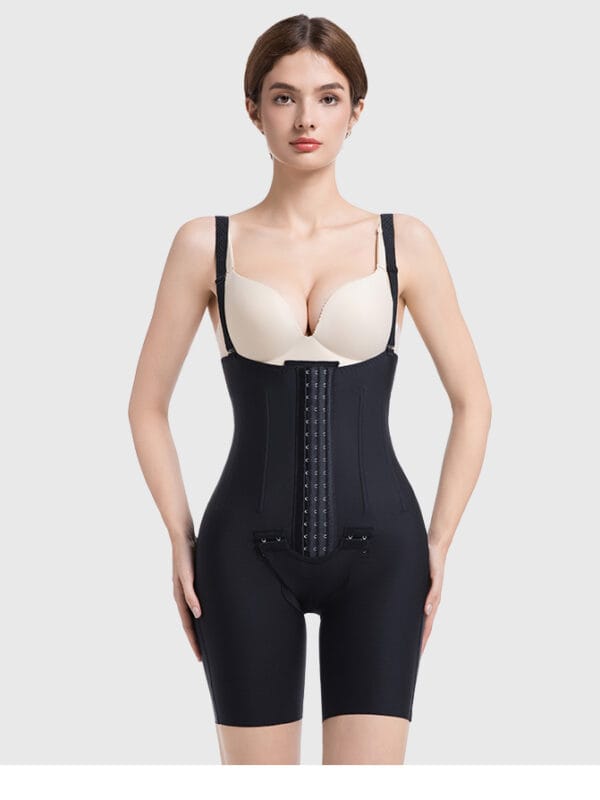
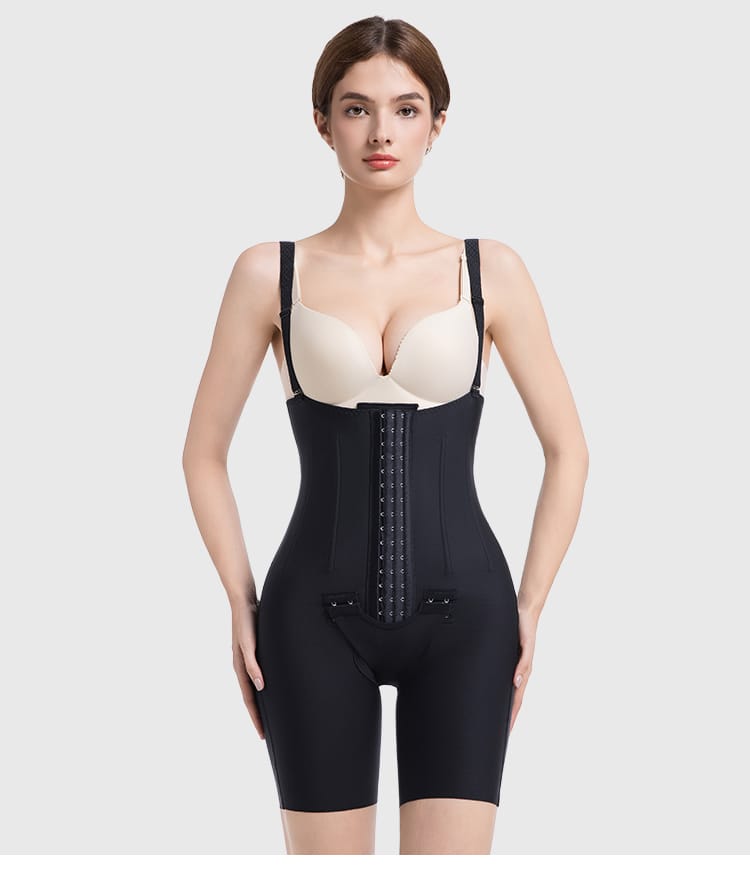
2. Open-bust design
You’ll need to wear a separate post-surgical bra. A built-in bra in a Stage 2 faja either doesn’t fit your post-op chest correctly or creates pressure points where your bra meets the faja seam.

3. Bathroom zipper or crotch opening
You’ll wear this 23 hours a day. The ability to use the bathroom without removing the entire garment is non-negotiable.

4. Graduated compression (not uniform)
True medical-grade fajas apply different pressure to different zones — strongest at the waist, lighter at the hips, none over the BBL graft area. Uniform compression is shapewear, not recovery wear.

5. Latex-free internal seams
Latex sensitivity post-surgery is more common than people realize. Surgical patients are often more reactive than usual due to repeated wound exposure.

6. Multiple rows of hook-and-eye adjustment (3+ rows)
As your body continues to change over the months you wear this garment, you’ll need to tighten it. Without adjustability, you’ll outgrow the garment in the wrong direction (loose).

7. Medical device certification (FDA Class I or CE marking)
This is the most overlooked check. Genuine medical-grade compression garments are registered as Class I medical devices in the US (FDA) or carry CE marking in Europe. The certification means the manufacturer has documented the compression specifications and made them verifiable.


Looking for a Stage 2 faja that meets all 7 criteria? Qinelle’s Post-Surgical collection is built specifically for BBL Stage 2 transition. Browse Stage 2 garments →


How to Put On a Stage 2 Faja Without Hurting Yourself

This is the section other guides skip, even though it’s the most asked question on Reddit. Stage 2 fajas are intentionally harder to put on than Stage 1 — that resistance is part of the contouring effect — but there’s a right way.

Step 1: Lie flat on your back on a bed. Do not try to put on a Stage 2 standing up.

Step 2: Pull the garment up to your knees first, then your hips, before sitting up. This minimizes strain on healing tissue.

Step 3: Stand up slowly. Adjust the crotch and seat alignment before doing anything else.

Step 4: Hook from the bottom up, not the middle. Starting from the bottom hook-and-eye row and working upward distributes tension correctly. Starting from the middle creates fabric distortion that won’t smooth out later.

Step 5: Adjust the shoulder straps last, only after the body of the garment is fully closed and aligned.

If the garment won’t close even with this method: it’s too small. Don’t force it. Force creates microtrauma to healing tissue and stretches the garment out within the first few wears.

If the garment closes but feels loose at the top: the sizing is wrong, or you’ve shrunk significantly since surgery. Size down before continuing.


Daily Wear Schedule, Care, and Washing

Wear schedule, by recovery week:

Recovery weekDaily wear hoursNotes
Week 3-4 (first transition)18-20 hr/dayAllow 2-4 hours off in the evening for skin breathing
Week 5-822-23 hr/dayOnly off for showering and washing the garment
Week 9-1216-18 hr/dayCan begin reducing as swelling fully resolves
Week 13-2412 hr/dayMaintenance phase; ensures contour stability

Washing — the rules that actually matter:

  • Hand wash only. Machine washing destroys powernet within 5-10 cycles.
  • Cold or lukewarm water. Hot water breaks down the elastic fibers.
  • Mild detergent, no fabric softener. Softener coats the fibers and reduces compression effectiveness — measurably, within 3 washes.
  • No bleach, ever. Even oxygen bleach degrades the fabric structure.
  • Air dry flat, never in a dryer. Dryer heat ruins the compression rating permanently.

A correctly cared-for Stage 2 faja lasts the full 6-month recovery window. A poorly cared-for one loses 30-40% of its compression by week 8.

When to replace it:

  • The garment slides or twists during normal movement
  • Hook-and-eye closures feel loose at all rows
  • The fabric appears thin or transparent under stretch
  • Compression no longer feels firm at the waist

Beyond Stage 2: When and How to Transition to Stage 3 (or Daily Shapewear)

Stage 3 is where most guides become vague — because it’s where most patients become curious about their body for the first time post-surgery.

Stage 3 timing:

Most patients transition to Stage 3 (or maintenance shapewear) around 8-12 weeks post-op, when:

  • Swelling is fully resolved
  • Final contour is visible and stable for 2+ weeks
  • All medical clearances are in place
  • You’re considering returning to normal exercise

Stage 3 isn’t a different kind of medical garment — it’s a transition to high-quality everyday shapewear that maintains the contour your Stage 2 worked so hard to set. Look for compression in the 15-22 mmHg range (similar to Stage 1, ironically), with everyday-friendly fabrics that allow longer wear without skin issues.

The mistake here is going from medical-grade compression directly to no compression at all. Your soft tissue has spent 3 months in a particular shape; sudden removal of all support can cause minor contour shifts, especially during exercise. Easing into Stage 3 wear during weeks 9-12 protects the result.


When to Call Your Surgeon Immediately

Your Stage 2 faja is supportive equipment, not a substitute for medical care. Call your surgeon (or go to urgent care if your surgeon isn’t reachable) immediately if you experience:

  • Sudden, severe pain that isn’t managed by your prescribed pain regimen
  • Swelling that returns or increases after it had been decreasing
  • Redness, warmth, or red streaking at any incision site
  • Fever above 100.4°F (38°C) — sign of possible infection
  • Numbness or tingling that doesn’t go away within 30 minutes of removing the garment
  • Difficulty breathing when wearing the faja
  • Wound separation or new bleeding at incision sites
  • Foul-smelling discharge from any incision

These aren’t reasons to be embarrassed about asking. They’re reasons to call. Most surgeons would rather hear about a false alarm than miss a real complication.


Frequently Asked Questions

Can I sleep in my Stage 2 faja?
Yes — and you should, especially during weeks 5-12. Continuous compression during sleep prevents the swelling rebound that occurs when the garment comes off. If sleeping in it disrupts your rest, switch to a softer Stage 1 garment for nighttime only during weeks 5-6, then transition fully to Stage 2 nighttime wear.

What if my Stage 2 faja feels too tight?
There’s a difference between firm (correct) and dangerous (wrong). Firm pressure that allows full breathing, no skin discoloration, and no numbness is correct. Tingling, blanched skin, shortness of breath, or pain that doesn’t subside within 10 minutes of putting the garment on means the size or fit is wrong. Size up or contact the manufacturer.

Can I exercise in a Stage 2 faja?
Light walking, yes. Strength training, lower-body workouts, or anything involving heavy abdominal engagement should wait until your surgeon clears you (typically 6-8 weeks post-op, sometimes longer). Even after clearance, the Stage 2 faja can stay on during light cardio but should come off for serious exertion.

Do I really need two Stage 2 fajas?
Yes. Single-garment rotation is one of the most common mistakes. The garment needs 6-12 hours to fully air-dry, and continuous wear without alternating destroys the elastic recovery of the powernet within weeks.

Can a Stage 2 faja flatten my BBL results?
Only if it’s the wrong design. A genuine BBL Stage 2 faja has a non-compressive zone over the buttock — meaning the powernet either has cutouts or significantly lighter compression in the BBL graft area. Standard waist-cinching compression garments designed for tummy tucks (without BBL-specific cutouts) can absolutely flatten results. Check the product description for “BBL-specific” or “non-compressive buttock zone” language.

Stage 2 faja vs. waist trainer — are they the same thing?
No. Waist trainers are aesthetic garments designed to temporarily reduce waist measurement through extreme compression, often with rigid bones. They don’t have the graduated compression, BBL-safe buttock zone, or medical-grade fabric of a Stage 2 faja. Waist training after BBL surgery — before full healing — is not safe.

How long until I see results from Stage 2?
Most patients notice their waistline visibly tightening within 2-3 weeks of consistent Stage 2 wear, with continued refinement over 8-12 weeks. The full final contour typically appears around 4-6 months post-op.

Can I wear a Stage 2 over my surgical drains?
No. Drains require a Stage 1 garment that accommodates the drain bulbs and tubing without pressure. Wait until drains are removed (typically week 1-2) before considering Stage 2.

What if I had a 360 lipo combined with my BBL?
The protocol is largely the same — Stage 1 for 3-4 weeks, Stage 2 for 8-24 weeks — but you’ll want a faja with extended back coverage to address the lipo’d zones (lower back, flanks). Look for “high-back” or “full-back” Stage 2 designs specifically.

Can I wear a Stage 2 faja while breastfeeding?
This applies to a minority of BBL patients (those who had BBL after their last pregnancy), but it comes up. The faja itself doesn’t affect breastfeeding, but the open-bust design means you’ll need a separate nursing bra. The faja shouldn’t compress the chest or interfere with milk supply.


Bottom Line — Your Personalized Next Step

Stage 2 is the phase of BBL recovery where your final result is actually made. Stage 1 protects the surgery; Stage 2 sculpts it.

Get the timing right, the sizing right, and the daily wear right, and your contour will look as good at month 6 as it did at week 1 — better, actually, because the swelling will be gone. Get any of these wrong and you can lose part of what you paid for.

Your next step depends on where you are right now:

Still in Week 1-2? You’re not ready for Stage 2 yet. Focus on Stage 1 wear, hydration, and gentle movement. See our Stage 1 Faja collection →

In Week 3-4 and considering switching? Run the self-assessment checklist in this guide, then talk to your surgeon. If you’re cleared, browse Stage 2 fajas designed for BBL recovery →

Already in Stage 2 but unsure if your sizing is right? Re-measure using the morning protocol in the sizing section. If your current garment is loose, size down before another week passes.

Want a printable version of this guide? Download the free Stage 2 Readiness Checklist (PDF) — includes the self-assessment, sizing chart, and daily wear schedule, all on one page you can keep on your fridge or in your recovery binder.


About the Author

Ammby Lee is the founder of Qinelle, a women’s shapewear and post-surgical compression garment brand. Qinelle’s manufacturing facility (Foshan Qinelle Garment Co., Ltd., established 2012) has produced medical-grade compression wear for BBL, liposuction, tummy tuck, and C-section recovery for over 13 years. Ammby writes about post-surgical recovery and compression garment selection for the Qinelle blog.

This article was medically reviewed by [Dr. ___, MD, FACS], board-certified plastic surgeon, in May 2026.


Sources & Further Reading

  • American Society of Plastic Surgeons — Post-Operative Care Guidelines
  • Mayo Clinic — Liposuction and BBL Recovery Protocols
  • Qinelle Internal Manufacturing Specifications (powernet density and compression rating documentation)
  • [Reviewer’s clinical references — to be added by medical reviewer]

Last updated: May 2026 | Reviewed annually for medical accuracy.