
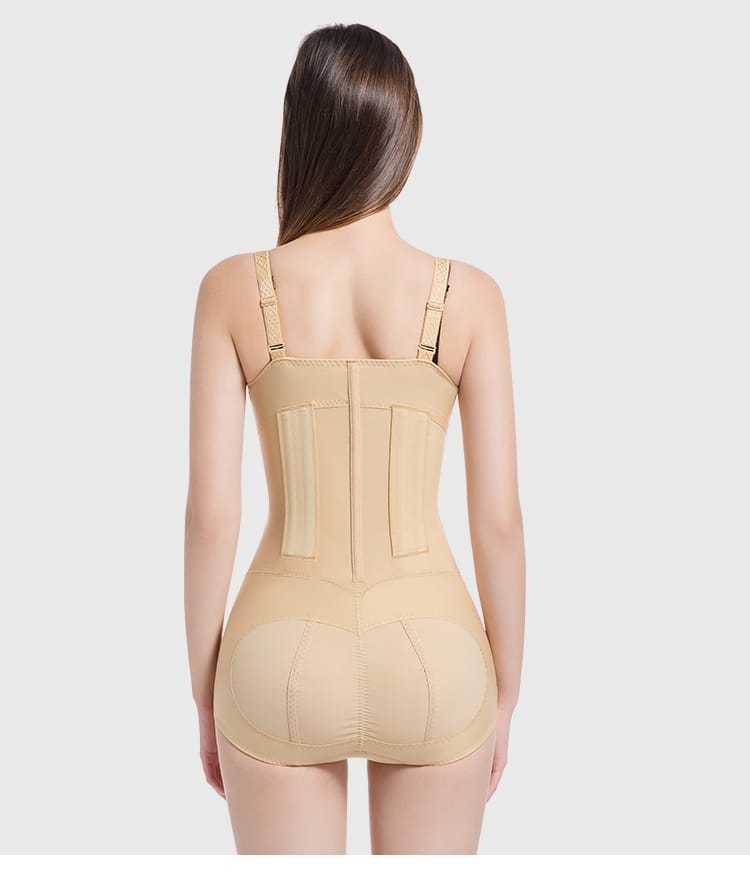
Not all post-surgical compression garments are the same and choosing the wrong one for your procedure can affect your recovery and final results. Here is how to match the garment to the surgery.
Why the right garment must match the procedure
A compression garment is not generic medical equipment. After every surgery, your tissues swell, retract, and reshape on a timeline that depends on what was operated on. The garment that works after a tummy tuck would compromise a BBL. The garment that works after a BBL would not provide enough abdominal support after a tummy tuck.
The right garment does three things at once: applies the correct compression level (in mmHg) to the correct anatomy, leaves untreated and vulnerable areas free of pressure, and supports your incision lines without friction. Get any one of these wrong and you compromise either your final result or your healing.
Use this guide as a starting framework and always confirm specific recommendations with your surgeon, who knows the details of your incisions, technique, and recovery plan.
Compression levels explained: matching mmHg to recovery stage
Compression is measured in mmHg (millimeters of mercury). The number tells you how much pressure the fabric applies to your skin and underlying tissue. Different stages of recovery require very different pressure levels.
- Stage 1 medical compression (30-50 mmHg): Worn 23-24 hours per day during the first 2-3 weeks after surgery. Firm enough to control major post-operative swelling, support skin retraction, and reduce seroma risk.
- Stage 2 compression (20-30 mmHg): Worn 12-16 hours per day from approximately weeks 3 through 8. Lighter than Stage 1, designed to be worn under regular clothing while continuing to support healing.
- Everyday shapewear (8-15 mmHg): Light support for daily wear, not medical compression. Not appropriate during the first 6-8 weeks of post-surgical recovery, but useful long-term to maintain results.
Wearing the wrong compression level is one of the most common mistakes patients make. Everyday shapewear is too light for early recovery. Stage 1 compression worn beyond week 4 can over-compress healing tissue.
After liposuction
Liposuction treats specific areas commonly the abdomen, flanks, thighs, arms, and back. Your compression garment must cover all treated areas completely. Partial coverage produces uneven results as untreated areas compress differently from treated ones.
Key requirements: full coverage of all lipo sites, open crotch design for 24-hour Stage 1 wear, adjustable closure to accommodate changing swelling, smooth flat seams at all edges. Stage 1 compression 40-50 mmHg for weeks 1-3, transitioning to Stage 2 at 20-30 mmHg for weeks 4-8.
After tummy tuck
A tummy tuck repairs the abdominal muscles and removes skin from hip to hip. The compression garment must provide full abdominal coverage from the lower chest to the hips. The lower edge must sit clear of the incision line a garment that is too short will sit directly on the scar, causing friction on healing tissue.
Key requirements: front closure for easy on and off when core mobility is limited, full abdominal coverage, smooth construction at the lower edge away from the scar line, high enough to support the upper abdomen where muscle repair was performed.
After BBL
Brazilian Butt Lift transfers fat to the buttocks. The compression garment must compress the donor areas typically abdomen, flanks, and thighs while keeping pressure off the buttocks where transferred fat is establishing blood supply.
Key requirements: open or non-compressive buttock panel, firm compression at all donor sites, full thigh coverage if thighs were a donor area. This is the most specific garment requirement of any common procedure a standard compression garment without buttock protection is inappropriate after BBL.
Going through BBL recovery now? Our complete BBL Recovery Week by Week Guide walks you through what to wear and what to expect at each stage from Week 1 to Month 3.
After C-section
C-section recovery benefits from gentle abdominal support rather than firm compression. The incision is low and horizontal. Key requirements: soft, gentle compression rather than firm surgical compression, smooth lower edge that does not sit on the incision, breathable fabric for extended wear during postpartum recovery.
After breast surgery (augmentation, reduction, or lift)
Breast surgery requires a specialized post-surgical bra rather than a standard chest-coverage compression garment. The garment supports the new breast position, reduces swelling, and stabilizes implants or tissue during the critical healing period.
Key requirements: front closure for easy on and off without lifting the arms above shoulder height, soft band that sits clear of the incision lines, no underwire (which presses on healing tissue), and adjustable straps to accommodate changing post-op swelling. Most surgeons recommend wearing a post-surgical bra continuously for the first 4-6 weeks, then transitioning to soft wireless support bras through 3 months.
After arm lift (brachioplasty)
Arm lift surgery removes excess skin from the upper arm. Recovery requires sleeve-style compression that covers the full upper arm without restricting shoulder mobility or cutting into the underarm.
Key requirements: dedicated arm compression sleeves rather than generic upper-body garments, smooth seams at the shoulder and underarm, secure but non-cutting upper edge, breathable fabric for extended daily wear. Worn 23-24 hours per day for the first 2 weeks, then transitioning to lighter compression through weeks 3-6.
The universal requirements
Regardless of procedure: breathable fabric for extended wear, flat seams that do not create pressure on healing tissue, and compression level appropriate to your recovery stage. Always follow your surgeon’s specific garment recommendations individual procedures vary and your surgeon knows the details of your specific case.
A 5-step checklist for choosing your post-surgery compression garment
Use this sequence when shopping. Skipping a step is how patients end up with the wrong garment for their procedure.
- Confirm your procedure type and treated areas with your surgeon. Get a written list of exactly what was done and which areas need coverage. “Lipo” is not enough was it abdomen only, abdomen plus flanks, or 360 (back included)? The garment must match.
- Identify the recovery stage you are buying for. Stage 1 (weeks 1-3, 30-50 mmHg) and Stage 2 (weeks 3-8, 20-30 mmHg) are different garments. Most patients need both, not one.
- Check the construction details that matter for your specific surgery. Open crotch (lipo/BBL Stage 1), front closure (tummy tuck/breast surgery), open buttock panel (BBL), or sleeve-only (arm lift).
- Measure carefully and size for peak swelling, not goal contour. Use your pre-surgery measurements as the baseline. The garment must fit at days 3-5 (peak edema), not at month 3.
- Plan for two garments per stage. One on, one in the wash. Rotating extends the life of each garment and ensures clean compression is always available.
Stage 1 vs Stage 2 vs everyday shapewear: do not confuse them
This is the single most common compression-garment buying mistake. The three categories are not interchangeable.
- Stage 1 medical compression is built for the first 2-3 post-op weeks: high mmHg pressure, adjustable closures, accessible openings for bathroom/shower use, sized for peak swelling. It is not comfortable enough for daily life beyond recovery.
- Stage 2 compression bridges weeks 3-8: medium mmHg pressure, smoother under clothing, designed for 12-16 hours of wear rather than 24. Still medical-grade construction.
- Everyday shapewear is fashion-grade light support: 8-15 mmHg, smooth lines under outfits, no medical pressure rating. Useful long-term, but not a substitute for medical compression in early recovery.
If your surgeon recommends “compression for 6 weeks,” they mean Stage 1 plus Stage 2 not your shapewear drawer.
Common mistakes when buying post-surgery compression
Most patients who end up unhappy with their compression garment made one of these errors:
- Buying everyday shapewear and assuming it counts as Stage 1 compression. The mmHg pressure is not high enough to support post-surgical healing. Result: prolonged swelling, increased seroma risk.
- Sizing down to “compress harder.” Compression is about consistent even pressure, not maximum pressure. Sizing down causes folds, rolling, numbness, and indentations that can become permanent.
- Buying a single garment to wear for 8 weeks. Stage 1 fabric loses tension after 3-4 weeks of 23-hour wear. You need at least one Stage 1 (often two) and at least one Stage 2.
- Picking a generic full-coverage garment after BBL. Standard compression compresses the buttocks and kills grafted fat. BBL requires open-back construction.
- Ignoring incision line position when checking the garment edge. A lower edge that sits on a tummy tuck scar or C-section incision causes friction, irritation, and visible scar widening.
- Trusting “post-op shapewear” labels without checking mmHg or construction. Marketing language is not regulated. Look for actual pressure ratings and construction details, not just claims.
Frequently asked questions
Can I wear the same compression garment for multiple procedures?
Sometimes if the garments overlap in coverage and compression requirements. For example, a 360-coverage Stage 1 garment may work for both lipo and tummy tuck recovery if your surgeon approves. But never assume. Confirm with your surgical team for your specific situation.
How many garments do I actually need?
Most patients need at minimum: 2 Stage 1 garments (rotate while one is in the wash) and 1-2 Stage 2 garments. Procedure-specific patients may need more (BBL recovery often requires 3-4 garments across the 8-week timeline).
Is medical-grade compression always better than shapewear-grade?
For the first 6-8 weeks of post-surgical recovery, yes. After that, transitioning to lighter shapewear is normal and supports long-term contour maintenance.
What if my garment feels too tight?
Compression should feel firm and supportive, not painful. Sharp pain, numbness, color changes in skin, or restricted breathing are signs the garment is too tight or incorrectly sized. Loosen adjustable closures first, and if symptoms persist, the garment is wrong for you.
Can I exercise in my compression garment?
Walking yes, from day 1. Other exercise depends on procedure and recovery stage most surgeons restrict structured exercise until weeks 4-6. The garment is worn during whatever activity your surgeon has cleared.
What is the difference between a faja and a medical compression garment?
Traditional Colombian fajas are widely used post-surgery and provide effective compression, but quality and construction vary. Medical-grade garments are tested for specific mmHg ratings and standardized construction. Both can work effectively what matters is consistent pressure, proper fit, and matching the garment to your procedure.
Choosing your post-surgery compression garment
Qinelle’s post-surgical compression collection is built around the realities of recovery: Stage 1 garments at 40-50 mmHg with adjustable closures and procedure-specific construction (open crotch for lipo, open back for BBL, front closure for tummy tuck), Stage 2 garments smooth enough for daily wear through weeks 5-8, and procedure-targeted designs for breast surgery and arm lift recovery.
Every garment is manufactured in our Foshan facility, the same factory that has produced post-surgical compression for international clinics since 2012.
Browse Qinelle post-surgical compression garments →
For procedure-specific recovery guides, see our complete liposuction recovery guide, BBL recovery guide, and immediate post-op fat grafting guide.
Shop Post-Surgery Compression Garments
Explore Qinelle recovery-stage compression garments designed for liposuction, tummy tuck, BBL, c-section, postpartum and post-surgical support needs.
Related recovery guides: If your procedure includes buttock transfer or hip shaping, compare our BBL Recovery Compression Garments. For breast surgery or upper-body recovery support, see our Post-Surgical Bras guide.