
Substantively reviewed and updated: August 28, 2026 · Scope: everyday shapewear, not postoperative compression
Direct answer
Yes—shapewear can temporarily smooth clothing lines and change how a silhouette looks while the correctly fitted garment is being worn. It does not remove body fat, cause lasting weight loss or permanently reshape the body. “Effective” therefore depends on a specific, observable goal such as a smoother waistband under one outfit—not a promise of permanent physical change.
- Define the outcome: smoothing under clothing is testable; “changes your body” is too vague.
- Fit beats tightness: sizing down can create rolling, digging, numbness and new visible lines.
- Results stop at removal: everyday shapewear changes garment appearance while worn, not body tissue afterward.
Quick FAQ
Does shapewear actually work?
It can work for temporary smoothing and clothing fit while worn. Judge it against a defined outfit and coverage goal, not a permanent body-change promise.
Does shapewear make you thinner?
It can make the outline look smoother under clothing, but it does not remove fat or produce lasting weight loss.
Should shapewear be very tight?
No. It should feel secure while allowing normal breathing and movement. Pain, numbness, persistent marks or irritation are reasons to remove it and reassess the size or style.
Can shapewear change your body permanently?
No credible evidence establishes permanent reshaping from ordinary wear. Cleveland Clinic notes that modern shapewear does not permanently narrow the ribcage or move organs.
Start with the outcome: what does “work” mean?
Shapewear questions often combine four different goals. Separating them prevents a temporary styling effect from being presented as a health or body-composition result.
Everyday shapewear evidence boundary
Green = observable while the garment is worn. Amber = not established by a styling garment.
Can be evaluated
- Smoother clothing transitions while worn
- Coverage under a defined outfit
- Rolling, riding, digging and visible edges
- Breathing, sitting, walking and bathroom access
Cannot be promised
- Fat loss or lasting weight change
- Permanent waist or body reshaping
- Treatment of a medical condition
- A guaranteed dress-size or confidence outcome
Evidence context: Cleveland Clinic distinguishes temporary garment effects from permanent anatomical change and advises correct sizing and stopping for irritation or discomfort. This chart is an editorial classification, not a measured product result.
How shapewear creates a temporary smoothing effect
Stretch fabric and pattern pieces create tension across the covered area. Panels, seams and edges distribute that tension and influence the transition between garment-covered and uncovered areas. The outer outfit then sits over a different surface. When the shapewear is removed, that garment-created tension is removed too.
This mechanism explains why coverage and boundary placement matter as much as a broad “control level.” A high-waist brief may smooth the lower abdomen but introduce a waist transition. Shorts extend the transition to the thigh. A bodysuit connects torso and lower-body coverage but introduces torso-length, strap, bust and gusset variables.
| Goal under clothing | Format to compare | Boundary to inspect | What success looks like |
|---|---|---|---|
| Smooth a waistband area | High-waist brief or thong | Top edge and leg opening | Edge stays flat without rolling or creating a sharper line |
| Continue smoothing through the thigh | High-waist shorts | Waist and thigh hem | Hem remains positioned while sitting and walking |
| Avoid a separate waistband | Brief or mid-thigh bodysuit | Torso length, bust/armhole and leg opening | Torso stays aligned without shoulder or gusset pulling |
| Use a low-back or special neckline | Outfit-specific bodysuit | Back, neckline, straps and cup compatibility | Shapewear remains hidden and the outfit is supported as intended |
What the health guidance supports
Cleveland Clinic’s physician guidance says modern shapewear will not permanently narrow the ribcage or relocate organs. It also warns that prolonged or excessively tight wear can contribute to skin irritation, numbness or tingling, circulation problems in susceptible people, reflux and digestive discomfort.
The practical conclusion is not that every shapewear product is harmful. It is that correct sizing, reasonable wear and attention to symptoms matter. Remove the garment if it causes pain, numbness, breathing restriction, persistent irritation or another concerning symptom. People with medical conditions or symptoms should seek individualized advice rather than using a shopping article as clearance.
Why smaller is not more effective
Sizing down may move the waistband, panel boundaries and leg openings away from their intended positions. The garment may roll, create a ridge, pinch a nerve or restrict normal movement. A smaller label does not establish stronger or more even support, and retail control terms are not standardized pressure measurements.
- Use current measurements. Measure at the locations shown by the exact product chart and follow its instructions.
- Choose for the largest relevant measurement. If measurements fall across sizes, use the brand’s guidance or ask customer support; do not automatically choose the smaller size.
- Put it on gradually. Align panels, seams, gusset and closures instead of pulling from one edge.
- Run a movement check. Breathe normally, sit, stand and walk. Recheck every boundary under the intended outfit.
- Remove for concerning symptoms. Pain, numbness, tingling, breathing difficulty or persistent skin irritation is not “the garment working.”
Run a simple outfit test instead of trusting hype
A transparent test compares the same outfit, pose, lighting and movement with and without the garment. It does not need a fake percentage score. Record the parts that matter to you and preserve both positive and negative observations.
Five-part fit and outfit protocol
Personal observation protocol—not a laboratory compression test.
| Criterion | Pass question | Failure signal |
|---|---|---|
| Silhouette | Is the intended clothing transition visibly smoother? | A new ridge, bulge or uneven panel boundary |
| Stability | Do waist and leg edges remain in place? | Rolling, riding, twisting or repeated adjustment |
| Visibility | Are seams, closures and edges acceptable under this outfit? | Visible hardware, seam or hem line |
| Function | Can you breathe and perform normal movement? | Restriction, pain, numbness or tingling |
| Practicality | Can you dress and use the bathroom as needed? | Access or closure is impractical for the occasion |
Record the product, size, outfit and date so the comparison is repeatable. Personal observations cannot be generalized into a clinical or brand-wide performance claim.
Why reviews and before-and-after photos can mislead
Photos can change with pose, lens distance, crop, lighting, clothing tension and image editing. A review may use a different body shape, product revision, size or outcome definition. Use such material to generate questions, not to predict your result.
More useful evidence identifies the product and size, uses the same outfit and setup, shows front/side/back views, includes movement, states the wear duration, and reports rolling, irritation or access problems as well as appearance. A brand should not convert one wearer’s experience into a universal result.
Does fabric composition prove effectiveness?
No. Fiber percentages identify composition, not garment-level fit or smoothing. Construction, pattern, size and the outer outfit interact. Our how shapewear is made guide explains why stretch-and-recovery testing needs a named method, sample count, direction, repetitions and limitations.
| Claim or label | Evidence question | Safe expectation |
|---|---|---|
| “High compression” | Is this a relative retail label or a verified measurement under a stated method? | Compare construction and fit; do not assume a medical pressure level |
| “No roll” | Which sizes, body shapes, movements and wear durations were tested? | Run the intended-outfit movement test |
| “Invisible” | Under which fabrics, colors, lighting and positions? | Inspect under the exact outfit from multiple angles |
| “Body shaping” | Does this mean appearance while worn or a permanent change? | Expect only a temporary clothing-silhouette effect |
Compare three everyday coverage formats
| Product | Coverage format | Most important boundaries |
|---|---|---|
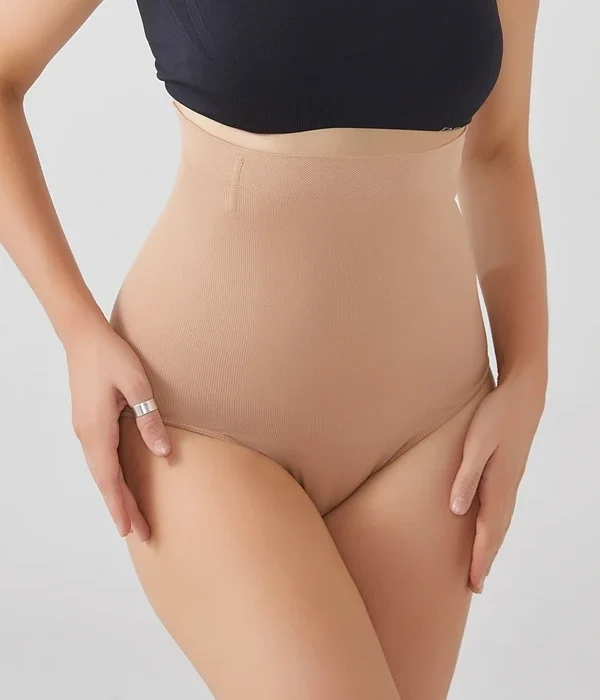
| High-Waist Tummy-Control Shaping Brief | High-waist brief | Top edge, brief leg opening and gusset |
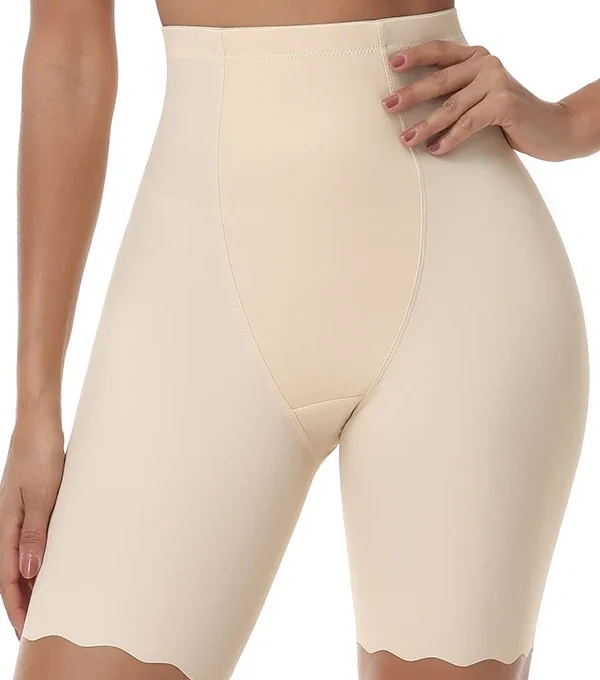
| High-Waist Seamless Shaper Shorts—Tummy & Thigh | High-waist shorts | Waist, thigh hem, inseam and sitting stability |
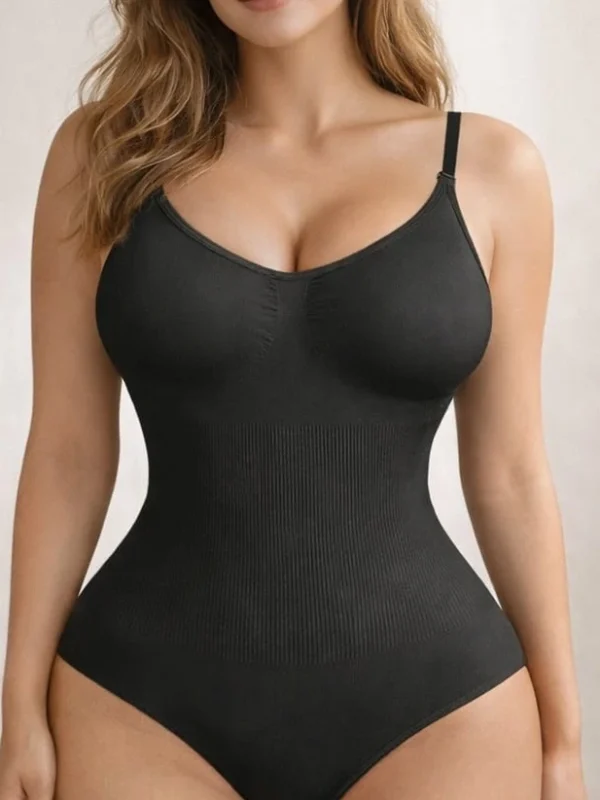
| Seamless Tummy Control Bodysuit for Smooth Everyday Outfits | Connected bodysuit | Torso length, neckline, armhole, leg opening and gusset |
Test the format, not the promise
Choose a format based on the outfit and boundaries you need to manage. Product names are catalog descriptions; they do not establish quantified smoothing, pressure or permanent body change.
- Shaper Shorts
High-Waist Seamless Shaper Shorts – Tummy & Thigh
Original price was: $39.00.$29.00Current price is: $29.00.Select options This product has multiple variants. The options may be chosen on the product page - Shaping Briefs & Thongs
High-Waist Tummy-Control Shaping Brief
Original price was: $29.00.$19.00Current price is: $19.00.Select options This product has multiple variants. The options may be chosen on the product page - Shapewear Bodysuits
Seamless Tummy Control Bodysuit for Smooth Everyday Outfits
Original price was: $39.00.$29.00Current price is: $29.00.Select options This product has multiple variants. The options may be chosen on the product page
Continue with how to choose shapewear, the measurement guide and shapewear types and functions.
Sources and evidence notes
- Cleveland Clinic: A Doctor’s Advice on Wearing Shapewear — temporary effects, correct sizing and possible irritation or excessive-tightness concerns.
- Cleveland Clinic: Waist Trainers—What You Should Know — distinction between temporary appearance and permanent results; tighter structured devices have additional risk.
- U.S. Federal Trade Commission: Textile Fiber Rule — what fiber-content labels establish.
Sources, product availability and internal links checked August 28, 2026. This page addresses everyday styling garments and does not replace medical advice.