
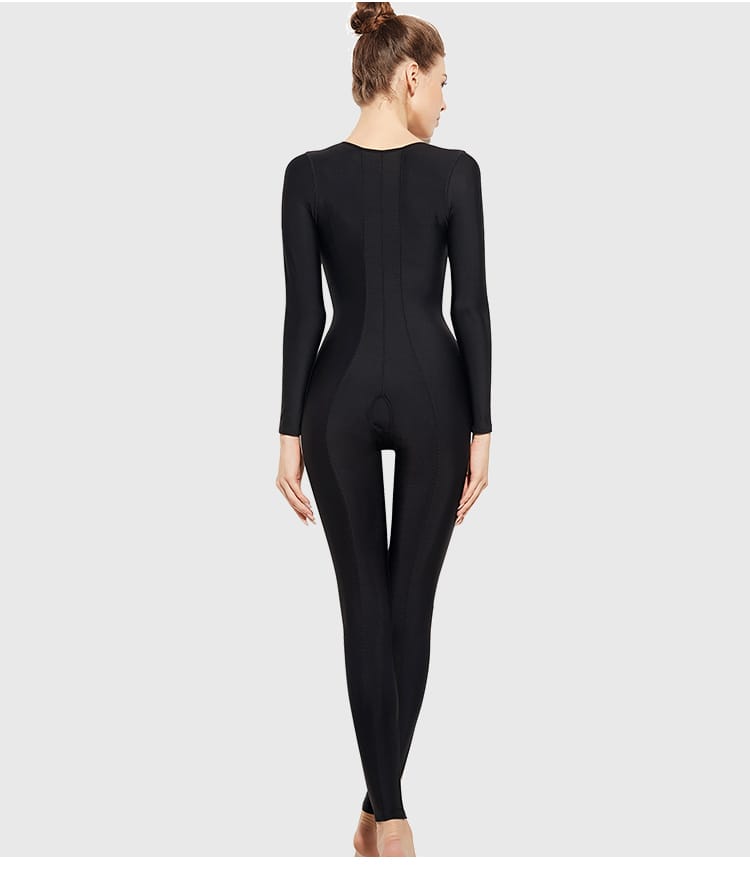
Quick answer: BBL recovery compression is about support and protection
After buttock fat grafting or BBL, shoppers often ask, “What should be compressed, and what should be protected?” The short answer is that recovery garments are not the same as regular shapewear. The right garment should support the treated areas while avoiding unnecessary pressure on areas your provider wants protected.
What people usually ask
- Can I wear regular shapewear after BBL?
- What is BBL-safe compression?
- When should I switch from Stage 1 to Stage 2?
- How do I know if a garment is too tight after fat grafting?
Qinelle’s point of view: recovery compression should never be guessed. Follow your surgeon or healthcare provider’s instructions, and do not size down for stronger compression.
Buttock fat grafting commonly known as Brazilian Butt Lift requires post-operative care that is more specific than almost any other body contouring procedure. Here is what the recovery actually involves.
Why fat grafting recovery is different from other procedures
Most cosmetic surgery recoveries focus on healing one tissue. Buttock fat grafting requires you to manage two healing processes simultaneously: the donor sites where fat was harvested (typically abdomen, flanks, and back) and the recipient sites where fat was transferred (the buttocks).
The donor sites behave like any post-liposuction recovery: they swell, bruise, and need firm compression to retract smoothly. The recipient sites behave very differently: the transferred fat cells must establish a new blood supply within roughly 30 days, or they die and are reabsorbed by the body. This is why pressure on the buttocks is forbidden in early recovery pressure cuts off the fragile new blood vessels before they fully form.
Every recovery decision what you wear, how you sit, how you sleep has to balance these two requirements: firm support at the donor sites, zero pressure at the recipient sites.
The first 72 hours: the most critical window
The transferred fat cells are most vulnerable in the first 72 hours after surgery. They have been harvested, processed, and injected into a new location and they have not yet established a blood supply. During this window, the priority is keeping pressure completely off the grafted areas and allowing the initial inflammatory response to settle.
You will leave surgery in a compression garment that covers the donor sites but protects the buttocks. You will be instructed to avoid sitting or lying on your back. Sleep on your stomach or side. This is not a suggestion it directly affects how much of the transferred fat survives.
The role of the compression garment in BBL recovery
The compression garment after fat grafting has a different job than after pure liposuction. It is not just controlling swelling it is shaping the donor sites while leaving the recipient sites untouched.
A correctly designed BBL compression garment has three features that distinguish it from a standard post-lipo garment:
- A buttock cutout (open-back design): The buttock area is left uncovered or covered only by lightweight non-compressive fabric. This protects the grafted fat from any direct pressure during the critical 2-4 week window.
- Firm compression at flanks, abdomen, and lower back: Where the fat was harvested, compression should be 30-40 mmHg enough to control donor-site swelling and shape the new contour.
- Smooth flat seams away from grafted areas: Any seam pressing into the buttock can leave indentations in the final result. Seams should sit at the legs, waist, or upper back never under or across the buttocks.
Wearing the wrong garment after BBL is one of the most common reasons patients lose volume in the first month. A standard full-coverage Stage 1 garment will compress the buttocks and kill grafted fat. The garment matters as much as the surgery.
BBL garments vs Lipo garments: why they cannot be interchanged
A common and costly mistake after BBL surgery is using a standard post-liposuction compression garment because “it looks similar” or “a friend had one available.” The two garments serve fundamentally different purposes, and using the wrong one can destroy fat survival in the first two weeks.
- Lipo garments compress the entire treated area at 40-50 mmHg. They are full-coverage, firm, and designed to flatten swelling everywhere. The buttocks, if covered at all, are pressed flat.
- BBL garments compress only the donor sites at 20-30 mmHg, with an open-back cutout over the buttocks. The waist, abdomen, flanks, and thighs receive firm compression to manage donor-site swelling. The buttocks receive zero pressure, allowing the fragile newly-grafted fat cells to establish their blood supply undisturbed.
- The compression level itself is different. Even on the donor sites, BBL garments use lighter compression (20-30 mmHg) than Stage 1 lipo garments (40-50 mmHg). Excessive compression on the abdomen and back can indirectly affect circulation to the buttocks, which is why BBL-specific construction uses a more moderate pressure profile across the entire garment.
- The seam placement is different. BBL garments are engineered with smooth, low-profile seams positioned away from the gluteal crease and the cheek edges, where pressure on healing tissue can leave permanent indentations or kill grafted fat cells in localized zones.
If you only have a lipo garment available on the day of surgery, do not wear it. Wait for your BBL-specific garment to arrive, even if it means going without compression for 24-48 hours. A wrong garment is worse than no garment in the first week of BBL recovery.
Weeks 1-2: establishing the graft
The transferred fat is beginning to establish blood supply during this period. Compression at the donor sites controls swelling and supports skin retraction. The buttocks remain off-limits for direct pressure. Use a BBL pillow when sitting is unavoidable this transfers weight to the backs of the thighs rather than the buttocks.
Swelling at the donor sites peaks around days 3-5 and then begins to gradually reduce. Bruising is normal and will yellow and fade over the following weeks.
How to sit safely after BBL: the BBL pillow technique
You will need to sit at some point in the first 8 weeks to eat, to work, to use the toilet. Doing it correctly is the difference between preserving and losing grafted fat.
- Place the BBL pillow under your thighs, not your buttocks. The pillow should sit just behind your knees and extend toward (but not under) your buttocks. Your bodyweight should land on the back of your thighs.
- Lean forward slightly when sitting. A small forward tilt of 10-15 degrees keeps weight on your thighs rather than rolling back onto your buttocks.
- Limit sitting sessions to 15-20 minutes at a time. Even with a pillow, prolonged sitting compresses the grafted area indirectly. Stand and walk briefly every 20 minutes.
- Use a stand-or-lean strategy at work. A standing desk, a high counter, or a stool you can lean against are all better than sitting through the workday.
- Plan car rides carefully. Use the BBL pillow on every car seat. Long drives over 30 minutes should be broken up with stops to stand and walk.
Sleeping positions after BBL surgery
Sleep is when the highest volume of grafted fat is lost in poorly recovered patients, because hours of unconscious back-pressure during sleep cuts off blood supply to the grafts.
- Stomach sleeping (best): Place a small pillow under your hips to keep pressure off the donor sites on your abdomen, with your face turned to the side. This is the safest position for graft survival.
- Side sleeping (acceptable): Use a pillow between your knees to keep your hips aligned, and a body pillow against your back to prevent rolling backward in your sleep.
- Back sleeping (forbidden for the first 4-6 weeks): Direct pressure on the buttocks during sleep destroys grafted fat. If you are a chronic back-sleeper, set up barriers (pillows or rolled blankets) on both sides of you to physically prevent rolling.
- The first 2-3 nights are the hardest. Most patients struggle to sleep through the night in a forced new position. Plan for short, broken sleep early on. It improves quickly.
Weeks 3-4: transition phase
By week 3, most of the transferred fat that will survive has established its blood supply. The sitting restriction typically eases around week 4 for most surgeons, though a BBL pillow remains recommended. Your surgeon may transition you to a Stage 2 compression garment at this point lighter compression at the donor sites, worn for fewer hours per day.
Weeks 5-8: shaping phase
The final contour is beginning to emerge as swelling continues to resolve. Light activity resumes. Most patients return to work and social life during this period. The compression garment transitions to everyday shapewear as the mandatory recovery period ends.
Month 3-6: final results
The full result of fat grafting takes 3-6 months to emerge as residual swelling fully resolves. The fat that has survived is permanent it behaves like natural fat and will respond to weight changes. Maintaining a stable weight in the months after surgery helps preserve the volume achieved.
Lymphatic drainage massage
Manual lymphatic drainage massage, performed by a certified therapist, is widely recommended after fat grafting surgery. It reduces swelling, prevents fibrosis at the donor sites, and supports overall recovery. Most surgeons recommend starting MLD sessions from week 2-3 onwards, continuing through the first 2-3 months.
Common BBL garment fit problems and how to identify them
An incorrectly fitting BBL garment can compromise your result without you noticing until weeks later. Use this checklist within the first 3 days post-op to verify your garment is doing its job correctly.
- The open-back cutout sits too high or too low. The cutout should fully expose both buttock cheeks from the upper crease to the gluteal fold. If the fabric edge cuts across any part of the buttock, that band of tissue is receiving pressure that can kill grafted cells. Adjust the garment so the cutout frames the buttocks without touching them.
- The waistband rolls or digs into the lower back. A garment that is too tight at the waist creates a hard ridge that presses into the upper buttock as you sit or lie down. The waistband should sit smoothly above the iliac crest without rolling down.
- The thigh portion creates a visible bulge below the cuff. If the leg openings are too narrow, swelling pools in the area just below the garment edge, creating a permanent band of harder tissue. The thigh cuffs should distribute pressure gradually, not cut sharply.
- The fabric bunches in the abdomen. Bunching means the garment is too large or improperly sized. Bunched fabric creates uneven compression and pressure points on the abdomen liposuction zones, leading to wavy or indented final contour.
- You feel numbness in the thighs or buttock area. Numbness is not “the compression doing its job” — it is a sign of nerve compression. Loosen the garment immediately, and if numbness persists when the garment is off, contact your surgeon.
- You cannot insert two fingers under the waistband. The two-finger test is the simplest fit check. If you cannot slide two fingers flat against your skin under the waistband, the garment is too tight and is restricting circulation.
Reassess your fit at the 1-week and 3-week post-op marks. Your body shape will change as donor-site swelling resolves, and a garment that fit perfectly at day 3 may be loose by week 2. Most patients need at least two garments rotated through the recovery period, and many transition to a slightly smaller size around week 3-4.
Common BBL recovery mistakes that compromise fat survival
Most fat-grafting volume loss in the first 2 months traces back to one of these errors:
- Sitting on the buttocks before week 4. Even briefly. Even “just to drive home.” A single 20-minute episode of direct buttock pressure during week 1 can kill measurable graft volume.
- Wearing a standard Stage 1 garment instead of a BBL-specific design. Full-coverage compression on the buttocks defeats the entire purpose of the surgery.
- Sleeping on the back without a barrier system. Rolling onto your back unconsciously is the most common silent cause of graft loss.
- Severe calorie restriction or rapid weight loss in the first 3 months. The grafted fat behaves like body fat. Aggressive dieting reduces the volume that has just been transferred.
- Skipping MLD sessions. Donor-site fibrosis (hard lumpy scar tissue) develops in patients who do not receive lymphatic drainage. It is preventable but very difficult to treat once formed.
- Returning to gym workouts too early. Squats, lunges, and heavy resistance training before week 6-8 can shear newly formed graft blood vessels.
Frequently asked questions
How much grafted fat actually survives long-term?
Survival rates typically range from 60% to 80% of the volume transferred, depending on surgical technique, your post-op compliance, and individual biological factors. The fat that survives the first 3 months is permanent.
When can I drive again after BBL?
Most surgeons clear short-distance driving at 2 weeks, using a BBL pillow. Long-distance driving (over 30 minutes) is typically restricted until week 4-6.
Can I fly on a plane after BBL?
Avoid flights for the first 2 weeks due to clot risk and the difficulty of avoiding seated pressure. After week 2, short flights are usually acceptable with a BBL pillow. Use compression stockings on any flight to reduce DVT risk.
When can I return to normal exercise?
Walking from day 1. Light cardio at week 4. Lower-body resistance (squats, lunges, glute work) is typically restricted until week 6-8. Always confirm with your surgeon individual protocols vary.
Will I lose weight or gain weight differently after BBL?
Yes. The transferred fat behaves like the fat at its original donor site. Weight gain or loss after surgery affects the buttock volume the same way it affects natural fat. Stable weight maintenance preserves your result.
Why do my donor sites feel hard or lumpy weeks after surgery?
Some firmness and unevenness is normal in the first 2-3 months as fluid resolves and tissue heals. Persistent hard areas may indicate fibrosis this is treatable with MLD massage and time, but should be evaluated by your surgeon at your follow-up.
Can I wear regular shapewear after my BBL recovery is complete?
Yes after week 8-12, you can transition to everyday shapewear. Many patients continue using BBL-specific shapewear (open-back design) long-term to protect their result while still getting compression at the waist and thighs.
Related Qinelle BBL & recovery guides:
- BBL Recovery Week by Week: A Complete Timeline
- BBL Stage 2 Faja: When and How to Transition
- The Complete Guide to Post-Liposuction Compression Garments
Choosing the right BBL recovery garment
Qinelle’s post-surgical compression collection includes BBL-specific designs with open-back construction, firm compression at the donor sites (waist, abdomen, and flanks), and smooth seams positioned away from the buttock area. Stage 1 garments are designed for the critical first 4 weeks, and Stage 2 garments transition you through weeks 5-8 and beyond.
Every garment is manufactured in our Foshan facility, the same factory that has produced post-surgical compression for international clinics since 2012.
Browse Qinelle BBL recovery garments →
Looking for the broader BBL recovery timeline beyond the immediate post-op window? Read our complete BBL recovery guide.
Recovery safety note
This guide is for general garment education only and is not medical advice. Always follow your surgeon or healthcare provider’s instructions after liposuction, BBL, fat grafting or any other procedure. Do not force compression over swollen or sensitive areas, and do not size down for stronger compression.