

Substantively reviewed and updated: August 28, 2026 · Medical review boundary: education only; the operating surgeon’s plan controls
Direct answer
A safe BBL recovery “week-by-week” garment guide cannot prescribe one universal schedule. Use each week as a documentation checkpoint: confirm the surgeon’s current instructions, check whether donor and grafted areas require different pressure treatment, verify rear-panel and closure placement, remeasure only as directed, and ask before changing size, garment or retail “stage.”
- Surgeon first: garment type, wear time, sitting, sleep and activity instructions are patient- and procedure-specific.
- Map two zones: donor-area coverage and graft-area pressure restrictions may not be the same.
- Change by clearance: a calendar week or “Stage 2” label is not permission to switch products.
Quick FAQ
How long do you wear a compression garment after a BBL?
Your surgeon sets the schedule. ASPS says patients may be instructed to wear a support garment around the clock and that the surgeon determines how long and whether other garments are needed.
Can a garment compress the buttocks after fat transfer?
Do not guess. Ask the surgeon to mark donor, grafted and pressure-free zones and approve the exact rear-panel or opening design.
When do I switch to a Stage 2 faja?
Only after the surgeon approves the change. Stage terminology is a retailer classification, not a universal medical timeline or pressure standard.
Should I size down when swelling changes?
No. Remeasure and ask the care team what fit change requires adjustment or replacement. A smaller size can move seams and pressure into the wrong place.
Why this topic needs a careful, evidence-led guide
BBL garment questions serve a real and continuing audience. The American Society of Plastic Surgeons’ 2024 report records 29,466 buttock augmentations with fat grafting performed by ASPS member surgeons, compared with 29,383 in 2023. The difference is only 83 procedures, so the data show a stable year—not evidence of a surge and not a forecast.
Buttock augmentation with fat grafting
ASPS member-surgeon procedure counts · United States · 2023 vs 2024
Source: American Society of Plastic Surgeons, 2024 Plastic Surgery Statistics Report, page 6. Calculation: (29,466 − 29,383) ÷ 29,383 × 100. Procedure volume does not measure garment effectiveness or recovery outcome.
The source-backed facts—and their limits
ASPS buttock-enhancement recovery guidance says patients may be instructed to wear a support garment around the clock; the surgeon determines duration and whether other garments are needed. For fat grafting, its general patient page gives an example of avoiding prolonged sitting for about two weeks while noting that some surgeons prefer longer. That example is not personal clearance and does not resolve garment pressure zones.
A 2023 peer-reviewed practical review of postoperative compression garments found that the amount, quality and agreement of evidence vary by operation and outcome. It also cautioned that potential benefits must be balanced with discomfort, venous stasis and skin complications. Therefore this article compares garment construction and decision points; it does not promise fat survival, edema reduction, pain control, contour improvement or prevention of complications.
Use checkpoints instead of a universal BBL timeline
A week-by-week article becomes safer and more useful when it records decisions rather than issuing them. At every checkpoint, compare the current written instruction with the exact garment and your current symptoms. Do not wait for the next “week” if the care team told you to report a concern sooner.
The repeatable checkpoint
Use after discharge, at each follow-up and before any garment change.
This is a decision workflow, not a medical timetable. The care team may require different checks or more urgent contact.
Your week-by-week garment log
Bring this structure to follow-up visits. Record only information your team asks you to track; do not treat a measurement trend as a diagnosis.
| Date / recovery week | Current written instruction | Garment and size | Observed fit change | Question / clinician answer |
|---|---|---|---|---|
| Discharge / first fitting | Coverage, wear/removal, pressure-free zones | Record SKU or exact product name | Rear panel, donor zones, seams and closures | What requires an immediate call? |
| First scheduled follow-up | Record any updated instruction | Same / adjusted / replaced | Loose, even, rolling, rubbing or otherwise changed | Continue, adjust or replace? |
| Before a proposed “stage” change | Document explicit clearance | Compare old and proposed construction | Coverage and boundary differences | Is this exact product approved? |
| Each later follow-up | Record current plan | Current garment and size | Fit and skin observations | When is the next reassessment? |
Map donor, grafted and access zones before shopping
Ask the surgeon to identify the zones on a diagram or written order. A product image cannot tell you whether its panels align with the procedure. Review the garment from front, side and back—not only by waist size.
| Zone | Construction to inspect | Question to ask |
|---|---|---|
| Abdomen, flanks or other donor areas | Panel coverage, upper/lower edges, closure and seam position | Which donor areas should be covered, and what pressure specification—if any—is documented? |
| Buttock / grafted area | Rear panel material, opening, cutout, contour seam and neighboring panel boundaries | Must this area be pressure-free or use a specified construction? |
| Hips and upper thigh | Side panels, leg length, hem and transition into the rear panel | Where should compression coverage end? |
| Incision, drain or inspection area | Access opening, closure direction and removable layers | What must remain accessible, visible or free of friction? |
| Waist and torso boundary | Rise, waistband, shoulder straps if present and torso length | Where may the garment end without rolling or contacting a restricted area? |
Rear-panel designs are not interchangeable
Full rear coverage
A continuous rear panel may distribute garment tension differently from an opening or lighter panel. It requires explicit approval for the grafted area.
Buttock openings
Openings remove fabric from part of the rear but introduce edges and surrounding tension. “Open” does not automatically mean pressure-free.
Contoured or lighter rear panel
A distinct material or seam pattern changes construction, but the catalog description alone does not quantify pressure.
Separate garments
A bra-and-legging or upper/lower set changes overlaps and gaps. Ask whether connected coverage is required.
Fit signals: document first, then follow the plan
A secure garment should sit in the intended position without twisting, bunching or a sharply concentrated edge. It should not be made “stronger” by sizing down or adding foam, boards or pads unless the treating team instructs you to use those exact components.
Before adjusting anything, use the contact and symptom instructions supplied by your surgical team. ASPS advises seeking immediate medical attention for shortness of breath, chest pain or unusual heartbeats after buttock enhancement. Other symptoms, wounds, drains and medication questions must also follow the team’s specific instructions.
Questions for the surgeon before buying or switching
- Which exact donor and grafted areas should be covered, and which should remain pressure-free?
- Is full rear coverage, a lighter rear panel or an opening acceptable for this procedure?
- Is there a documented pressure specification? If yes, how can the exact garment verify it?
- Which seams, edges, closures, leg lengths, gussets or access designs are restricted?
- What is the wear/removal plan, and what event—not a generic retail stage—triggers reassessment?
- What symptoms or fit changes require a same-day call or emergency care?
Compare three BBL-oriented catalog constructions
| Product | Catalog format | Provider questions to resolve |
|---|---|---|
| Sleeveless Open-Bust BBL Recovery Compression Bodysuit with Front Hooks | Connected bodysuit with front closure | Rear-panel pressure, torso length, donor coverage, hook position and leg edge |
| Sleeveless Open-Bust Post-Surgery Compression Bodysuit with Buttock Openings | Connected bodysuit with rear openings | Opening boundary, surrounding tension, treated-zone alignment and access |
| Post-Op Compression Bra & Leggings Set | Separate upper and lower pieces | Waist height, gap/overlap, rear construction and whether separate pieces are allowed |
Inspect the three formats
The words “BBL,” “post-op” or “safe” in a product name do not replace surgeon review. Confirm the exact design, size and current product details before purchase.
- Recovery Sets
Post-Op Compression Bra & Leggings Set – BBL-Safe
$89.00Select options This product has multiple variants. The options may be chosen on the product page - Fajas & Recovery Bodysuits
Sleeveless Open-Bust BBL Recovery Compression Bodysuit with Front Hooks
$99.00 Select options This product has multiple variants. The options may be chosen on the product page - Fajas & Recovery Bodysuits
Sleeveless Open-Bust Post-Surgery Compression Bodysuit with Buttock Openings
$89.00Select options This product has multiple variants. The options may be chosen on the product page
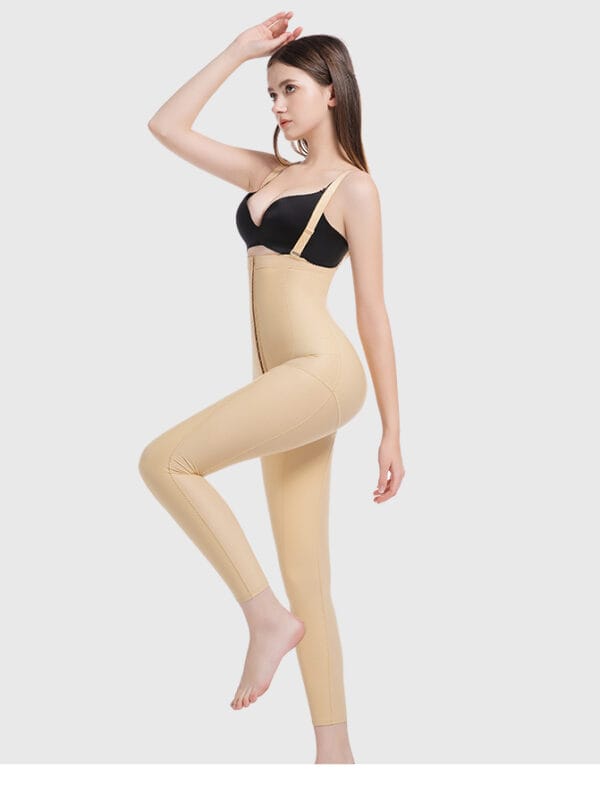
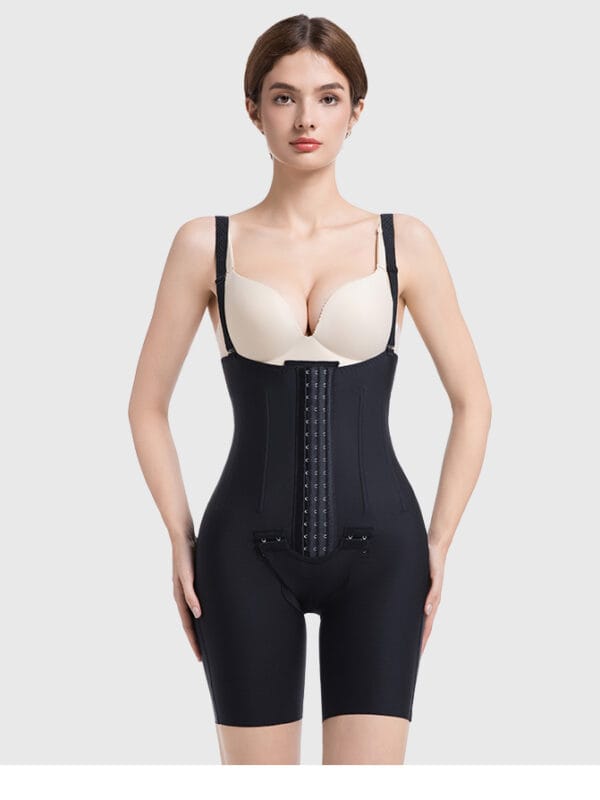
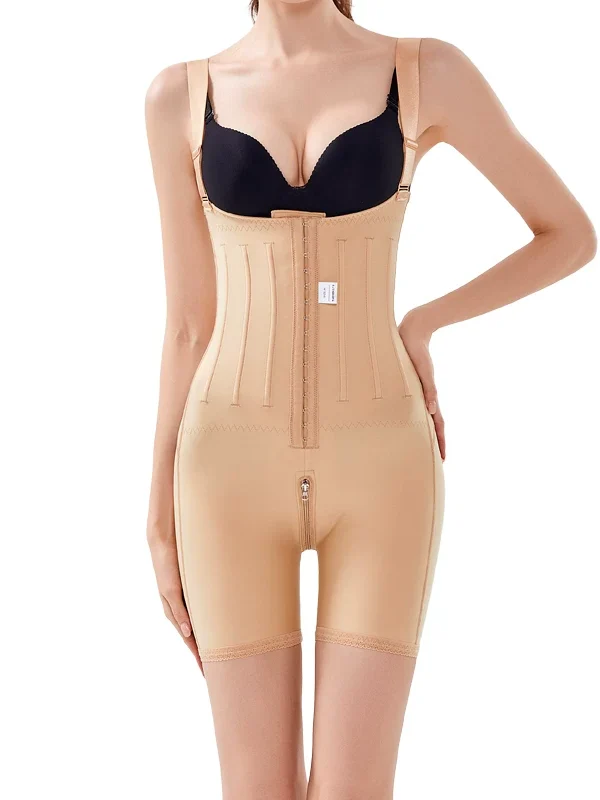
Continue with the procedure and coverage chooser, Stage 1 vs Stage 2 terminology guide and measurement guide.
Sources and evidence notes
- American Society of Plastic Surgeons: 2024 Plastic Surgery Statistics Report — 2023 and 2024 procedure counts; ASPS member surgeons only.
- ASPS: Buttock Enhancement Recovery — support garment and surgeon-directed recovery context.
- Ormseth et al., 2023: The Use of Postoperative Compression Garments in Plastic Surgery—Necessary or Not? — practical review of heterogeneous evidence, possible benefits and complications.
Sources, calculations, product availability and internal links checked August 28, 2026. This page is educational and does not replace diagnosis, postoperative instructions or urgent medical care.