
Substantively reviewed and updated: August 28, 2026 · Evidence and links checked August 28, 2026
Direct answer
The best shapewear for your body is the garment that matches your current measurements, covers the exact area your outfit exposes and remains comfortable when you sit, walk and breathe. Labels such as apple, pear, hourglass or rectangle may describe proportions, but they cannot select a size, torso length, thigh opening or bust construction. Start with the outfit and the job, measure the body points required by the product chart, then test the complete outfit in motion.
- Outfit before silhouette label.
The neckline, hem, fabric and waistband determine which edges must disappear. - Measurements before size name.
Use the exact product chart; do not assume the same letter size across garments. - Coverage before maximum control.
A better architecture usually solves more than simply choosing a tighter garment.
Quick FAQ
What shapewear is best for my body shape?
Start with the outfit and the areas you want covered, then use current measurements to choose the format and size. A body-shape label alone cannot determine torso length, leg opening, bust fit or comfort.
Are apple, pear and hourglass labels enough to choose shapewear?
No. People with the same label can have different waist-to-hip proportions, torso lengths, heights and coverage needs. Treat the label as a conversation shortcut, not a sizing system.
What measurements do you need for shapewear?
Use every measurement requested on the exact product chart. Depending on the garment, that can include bust, underbust, natural waist, fullest hip, torso or thigh circumference.
Should you size down in shapewear?
No. Sizing down can move seams and openings into the wrong places and increase rolling or pinching. Use the current chart and choose a different construction when the measurements do not fit one size.
The evidence-based way to replace “body type” guesswork
Searchers often ask for the best shapewear for an apple, pear, hourglass or rectangle shape. The useful need behind that language is real: they want coverage that works with their proportions. The problem is that a nickname compresses several independent variables into one word. It does not specify the waist, hip or bust circumference; the vertical distance between body landmarks; the garment’s stretch; or where an edge meets the outfit.
The international clothing-size framework is more precise. ISO 8559-1:2017 defines anthropometric measurements used for clothing. ISO 8559-2:2017 bases size designation on body dimensions while leaving garment dimensions to the designer, including allowances for style and cut. ISO 8559-3:2018 notes that body shape and proportions vary significantly and that size tables need flexibility. Together, these standards explain why the same waist measurement does not guarantee the same bodysuit or thigh fit.
ASTM’s D13.55 body-measurement standards list also separates different female size populations instead of presenting one universal chart. The practical conclusion is simple: a body-shape label may help describe where you want coverage, but the selection evidence is the measurement set for the exact garment.
A five-decision fit model
Outfit → goal → measurements → format → movement test
A repeatable clothing-selection process; no silhouette stereotype is required
Method derived from the measurement-first principles in ISO 8559-1, -2 and -3. “Goal” and “movement test” are Qinelle’s apparel-fit workflow, not a medical test.
Use the Qinelle size guide as the starting point, but also open the chart on the specific product page. If waist and hip fall into different rows, do not silently choose the smaller row. Prefer the size that accommodates the larger relevant measurement, then consider a different cut if the remaining area is likely to gap or roll.
Match the garment to the outfit task
| Outfit or fit task | Format to compare first | What to verify |
|---|---|---|
| Waistband or lower-abdomen line under trousers | High-waist brief | Waist height, leg opening, bathroom access and overlap with the trouser waistband |
| Hip and upper-thigh smoothing under a dress | Shaping short | Thigh length, hem visibility, leg-edge comfort and sitting movement |
| Connected torso coverage under a fitted dress | Bodysuit | Torso length, bust design, strap placement, gusset and neckline |
| Own bra needed for fit or neckline | Open-bust bodysuit | Underbust edge, strap interaction and whether the outer neckline conceals both layers |
| Different sizes needed above and below the waist | Separate top and bottom pieces | Whether two waistbands stack, roll or show through the outer garment |
For a broader comparison of formats, use the shapewear types and functions guide. If you are deciding between connected and modular coverage, continue to the one-piece versus separates comparison.
Which measurements matter for each format?
| Format | Usually relevant body points | Common mismatch a single waist value misses |
|---|---|---|
| Brief or thong | Natural waist and fullest hip | Leg opening or rise can still be incompatible |
| Short | Waist, hip and sometimes thigh | Thigh edge may pinch even when waist fits |
| Open-bust bodysuit | Waist, hip, torso and underbust relationship | Shoulder-to-gusset length can pull or sag |
| Built-in-bust bodysuit | Bust plus waist, hip and torso | Cup and torso fit may need different proportions |
| Mid-thigh full-body garment | Bust or underbust, waist, hip, torso and thigh as specified | One size may not accommodate every zone comfortably |
Measure over light clothing or underwear, keep the tape level and avoid pulling it tight enough to indent the skin. The goal is a repeatable body dimension, not the smallest number you can produce. Re-measure after a meaningful body change and whenever a product chart uses unfamiliar landmarks.
What Qinelle’s current format counts can—and cannot—tell you
The August 28, 2026 WooCommerce Authority snapshot contained 247 published products. Within the current in-stock category assignments, it counted 60 Shapewear Bodysuits, 24 Shaper Shorts and 8 Shaping Briefs & Thongs. These counts show assortment breadth, not search demand, effectiveness or a recommendation for a particular body.
Verified in-stock assortment by selected format
Catalog snapshot on August 28, 2026; category assignments may overlap
Source: Qinelle Batch 05 Authority snapshot. Bar widths use 60 as the local maximum. Counts describe listed, published and in-stock category inventory—not units sold or fit outcomes.
Use proportions without turning them into rules
If more of your circumference is carried through the middle, you may prefer connected torso coverage or a waistband that does not land at the fullest point. That is a testable construction preference, not an “apple body” rule. If the fullest hip or thigh is the limiting measurement, a short with a flexible leg edge or a brief without a thigh band may be easier to fit. Again, that is a measurement relationship, not a claim that every “pear” needs the same garment.
For relatively similar waist and hip measurements, do not assume that maximum compression creates shape. Garments redistribute and smooth while worn; they do not permanently change anatomy. A belt-like high waist may create a visible edge where a connected bodysuit would make a more continuous line. Conversely, a bodysuit can be the wrong choice when torso length or bust construction is incompatible.
Run the complete-outfit movement test
- Dress normally. Put on underwear if you plan to wear it, the shapewear, and the actual outer garment.
- Check breathing. You should be able to take a normal breath and speak without restriction.
- Change positions. Sit in a firm chair, bend, reach, walk and climb a few steps if the occasion requires it.
- Inspect every edge. Look for rolling, thigh constriction, strap pressure, visible hems and stacked waistbands.
- Test access. Confirm that closures and bathroom access are realistic before an event or workday.
- Respond to symptoms. Pain, numbness, tingling, breathing difficulty or persistent irritation are reasons to remove the garment.
Cleveland Clinic advises correct sizing and identifies skin, nerve and digestive problems that excessive tightness can aggravate. For a fuller boundary check, read Qinelle’s everyday shapewear safety guide. For dressing technique, use how to put on and wear shapewear.
Three format examples to compare
High-waist brief
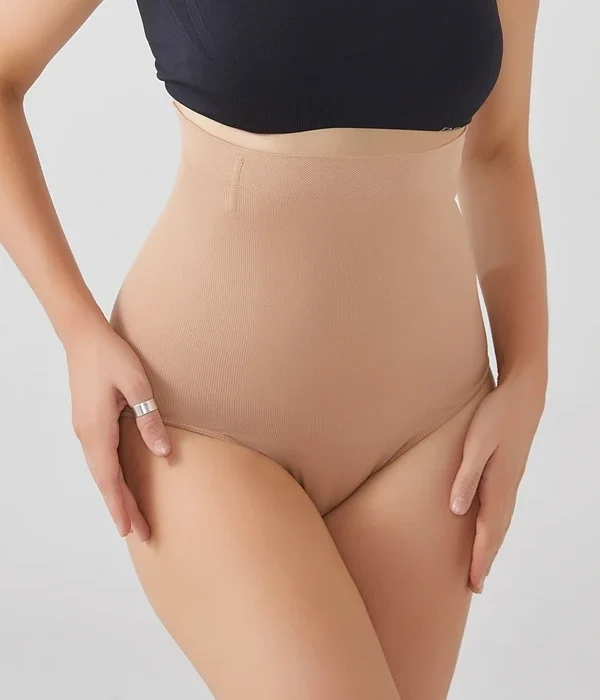
The High-Waist Tummy-Control Shaping Brief is an example of focused waist and lower-torso coverage without a thigh section.
Shaping short
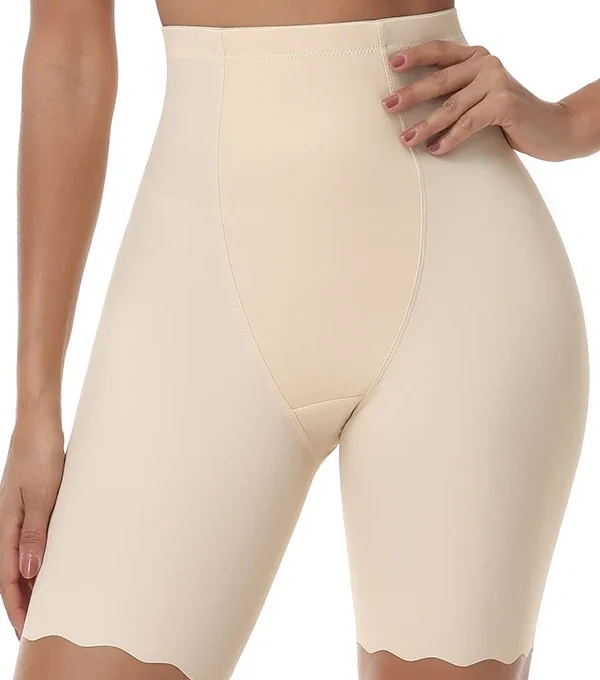
The High-Waist Seamless Shaper Shorts extend coverage across the hip and thigh, adding a leg edge that must be tested.
Bodysuit
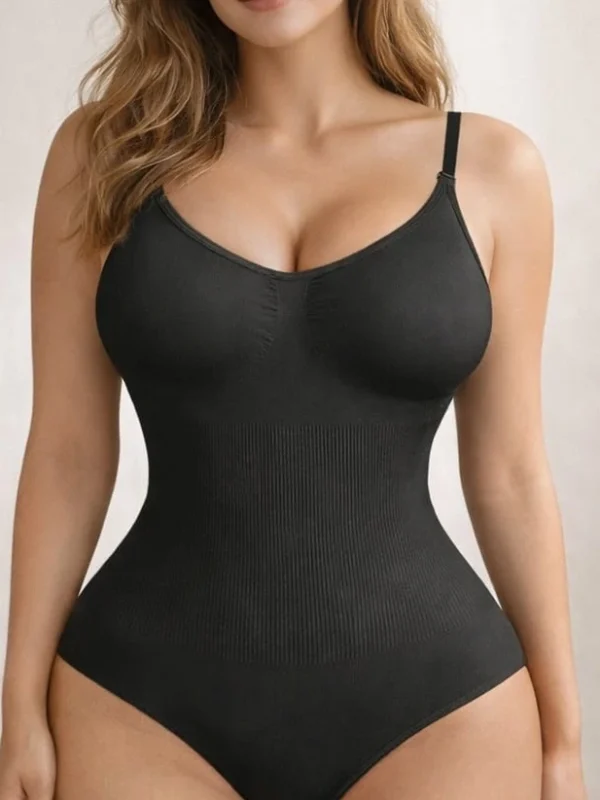
The Seamless Tummy Control Bodysuit connects torso coverage; check bust, strap, torso and gusset compatibility.
Need a complete starting point?
Read shapewear basics, then use the focused shapewear buying guide.
Compare current everyday formats
These published, in-stock products were verified in the August 28, 2026 Authority snapshot. They are construction examples, not promises of fit for a silhouette label. Confirm the live chart and product details before buying.
- Shaper Shorts
High-Waist Seamless Shaper Shorts – Tummy & Thigh
Original price was: $39.00.$29.00Current price is: $29.00.Select options This product has multiple variants. The options may be chosen on the product page - Shaping Briefs & Thongs
High-Waist Tummy-Control Shaping Brief
Original price was: $29.00.$19.00Current price is: $19.00.Select options This product has multiple variants. The options may be chosen on the product page - Shapewear Bodysuits
Seamless Tummy Control Bodysuit for Smooth Everyday Outfits
Original price was: $39.00.$29.00Current price is: $29.00.Select options This product has multiple variants. The options may be chosen on the product page
What this guide supports—and what it does not
Supported decisions
- Choose by outfit, coverage and current measurements
- Compare garment architecture when measurements span sizes
- Use body feedback and movement to validate clothing fit
Not established
- That one silhouette label predicts the best garment
- That sizing down is more effective
- That everyday shapewear permanently changes the body or provides medical treatment
Sources and evidence notes
- ISO 8559-1:2017 — anthropometric body-measurement definitions for clothing.
- ISO 8559-2:2017 — garment size designation based on body dimensions and designer allowances.
- ISO 8559-3:2018 — body-measurement tables, intervals and proportion variability.
- ASTM D13.55 jurisdiction and active standards — distinct body-measurement standards for different apparel populations.
- Cleveland Clinic: A Doctor’s Advice on Wearing Shapewear — correct-size and symptom boundaries.
Sources, product status, catalog counts and internal links checked August 28, 2026. Editorial method: body-shape labels were translated into measurable apparel-fit decisions; no medical suitability, product pressure or permanent reshaping effect was inferred. No clinician review is claimed.