
Substantively reviewed and updated: August 28, 2026
Direct answer
Is “medical-grade” compression shapewear worth buying over standard shapewear? Do not pay more for the label alone. A medical or measured-compression claim should be supported by product-specific documentation, such as a verified pressure range, intended use, or applicable regulatory information. Qinelle does not treat a tight feel, “high compression,” or a Stage 1/Stage 2 label as proof of medical-grade performance. For post-procedure use, choose the garment type and compression level your surgeon or healthcare team specifies.
Everyday shapewear and post-surgery compression garments are not interchangeable. Everyday shapewear is selected for temporary outfit smoothing and personal comfort. A recovery garment is selected for a specific procedure and care plan, with its coverage, construction, fit and wear schedule directed by the surgeon or healthcare team. A product being tight, stretchy or called “compression” does not by itself make it appropriate after surgery.
Everyday shapewear
Choose for your outfit and comfort
- Temporary outfit smoothing
- Comfort-led fit and coverage
- You choose the style
Recovery garment
Choose around the procedure plan
- Procedure-specific coverage
- Closures and access matter
- Provider guidance comes first
Quick FAQ
Can I use regular shapewear after surgery?
Only if your surgeon or care team approves that exact type and fit. Ordinary shapewear may have the wrong coverage, pressure distribution, seams or closures.
Is every post-op garment a medical device?
No. Regulatory status depends on the product, claims and market. Check the actual label and documentation instead of applying one status to every garment.
How many hours should a recovery garment be worn?
There is no safe universal schedule. Follow the instructions for your procedure and contact the treating team if fit, swelling or symptoms change.
What does Stage 1 or Stage 2 mean?
Retailers use those terms to describe different recovery phases or constructions, but they do not replace your surgeon’s instructions or guarantee a measured pressure.
Everyday shapewear vs recovery garments: the key differences
| Dimension | Everyday shapewear | Post-surgery compression garment |
|---|---|---|
| Primary purpose | Temporary smoothing and outfit styling while worn | Procedure-specific support within a clinician-directed recovery plan |
| Who determines use | The wearer, using comfort, outfit and product guidance | The surgeon or treating healthcare team |
| Coverage | Chosen around clothing and target areas | Must correspond to the procedure and areas identified by the care team |
| Construction | May prioritize seamless edges, lightness and appearance under clothing | May prioritize access, adjustable closures, panel placement and changing fit |
| Pressure or support claims | Often described qualitatively; do not assume a verified mmHg value | Use the product’s actual documentation and the clinician’s direction; never infer pressure from a “stage” label |
| Wear plan | Personal and occasion-based, within comfort and care guidance | Procedure- and patient-specific; no universal number of hours or weeks |
| Fit response | Remove or resize if it causes symptoms or cannot stay in place | Contact the care team about pain, circulation concerns, wound interference, sudden fit change or other recovery symptoms |
Why “tight” is not a medical specification
Two garments can feel equally snug while distributing support very differently. Fabric stretch, panel direction, body coverage, seams, closures and garment size all affect the result. A visual inspection cannot establish a pressure level, and Qinelle does not assign a millimeters-of-mercury value to a garment unless the current product documentation actually provides a verified measurement.
UPMC describes pressure ranges in the broader compression-clothing market, but those examples should not be copied onto an untested garment. The safe purchasing question is: what does this exact product label document, and does it match the treating professional’s request?
What a recovery garment may be designed to address
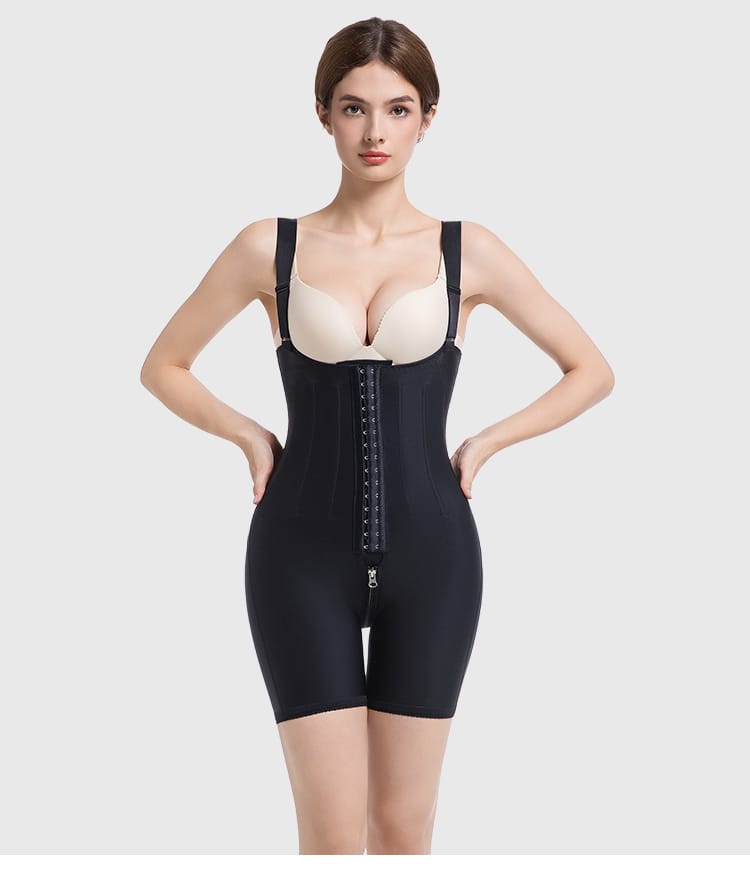
Depending on the procedure and the surgeon’s protocol, a recovery garment may use adjustable hooks, zippers, open-bust construction, targeted panels or an access opening. Those features can make fit changes and dressing easier, but no feature guarantees a clinical outcome. The American Society of Plastic Surgeons advises patients to follow their plastic surgeon’s instructions because garment needs and swelling can change during recovery.
Qinelle can describe a product’s material, closures, coverage and measurements. It cannot diagnose a complication, prescribe compression, set a wear schedule or promise that a garment will prevent swelling, seroma or another medical outcome.
A safer decision path
- Start with written clinical instructions. Ask the care team which areas must be covered, which areas must remain pressure-free, and whether a specific construction is required.
- Match the product documentation. Confirm size range, closure, crotch access, bust design, leg length, seams and any explicitly measured support specification.
- Use current measurements. Post-procedure measurements and fit may change; do not buy only from a pre-procedure dress size.
- Confirm the stage or switch with the surgeon. Do not move to a different garment because a generic week number appeared online.
- Escalate symptoms. Contact the treating team for severe or increasing pain, concerning color or temperature changes, breathing difficulty, wound interference, sudden swelling or any urgent concern.
Questions to ask before buying a post-surgery garment
Coverage
Which procedure areas must the garment cover? Is pressure over the buttocks, an incision, drain or grafted area restricted?
Construction
Should it be open-bust, sleeveless, above-knee or mid-thigh? Are hooks, zipper guards or an open crotch appropriate?
Fit changes
How should measurements be taken, and what changes mean the garment should be adjusted, replaced or reviewed?
Wear plan
When should it begin, pause or stop? What garment—if any—should follow it, and what symptoms require a call?
Do not use a universal hours-or-weeks schedule
Published educational articles often describe example recovery phases. Those examples reflect particular practices, procedures and patients. They cannot determine the correct schedule for a person the author has not examined. Procedures also differ: a garment suitable after one form of liposuction may be inappropriate for a BBL pressure-avoidance plan or for an incision in a different location.
Use the Stage 1 vs Stage 2 comparison to understand garment features, then take those feature questions to your surgeon. For BBL-specific construction, see the BBL Recovery guide.
How to read a product page without overclaiming
| Check | What to look for | What not to assume |
|---|---|---|
| Category | Everyday Shapewear or Recovery Support | That the category alone proves clinical suitability |
| Measurements | Body measurement chart and garment-specific notes | That a usual clothing size transfers directly |
| Closures | Hook rows, zippers, guards and access openings | That more closure rows always mean more effective support |
| Coverage | Bust, torso, back, hip, buttock and leg design | That similar-looking garments place support identically |
| Support language | Documented, product-specific statements | A numeric pressure or medical result not stated and verified |
| Care | Exact care label and drying instructions | That hot washing or machine drying is safe for every elastic fabric |
Qinelle category snapshot
At the August 28, 2026 review, Qinelle’s catalog contained 113 products in Everyday Shapewear and 51 in Recovery Support. These are separate shopping paths. The count is a first-party catalog fact at a point in time, not medical evidence and not a reason to substitute one category for the other.
Everyday shaping examples
Use these for outfit-oriented comparison. They are not presented as substitutes for a clinician-directed recovery garment.
- Shaper Shorts
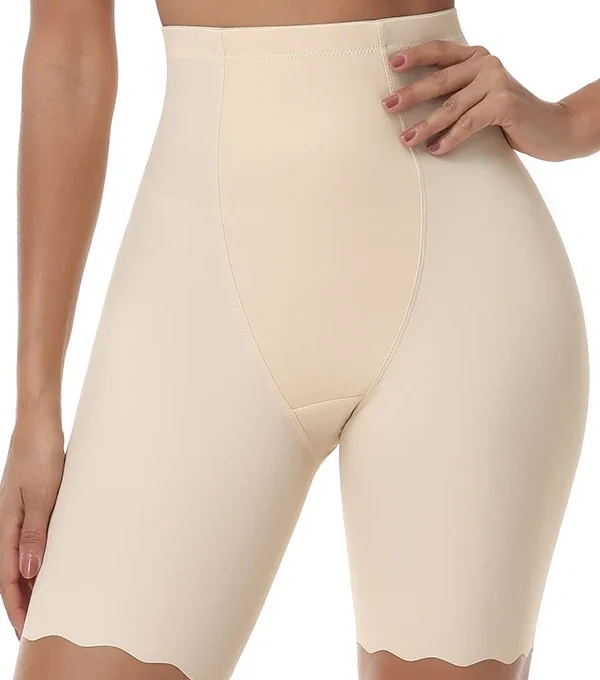
High-Waist Seamless Shaper Shorts – Tummy & Thigh
Original price was: $39.00.$29.00Current price is: $29.00.Select options This product has multiple variants. The options may be chosen on the product page - Shapewear Bodysuits
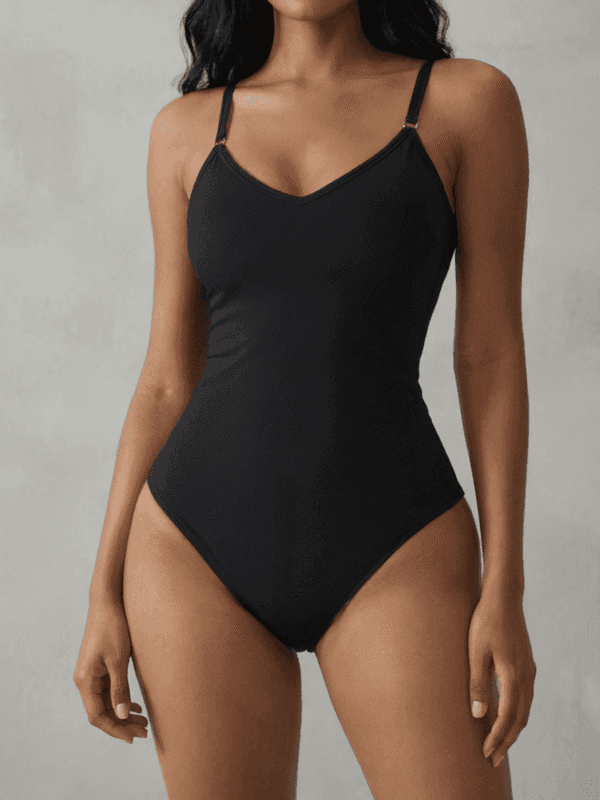
Seamless Adjustable-Strap Shaping Bodysuit – Brief or Thong
Original price was: $49.00.$29.00Current price is: $29.00.Select options This product has multiple variants. The options may be chosen on the product page
Recovery-support construction examples
Compare coverage and closures, then confirm the exact garment and fit with the treating professional before post-surgery use.
- Fajas & Recovery Bodysuits
Open-Bust Mid-Thigh Compression Bodysuit with Front Closure
Original price was: $59.00.$49.00Current price is: $49.00.Select options This product has multiple variants. The options may be chosen on the product page - Fajas & Recovery Bodysuits
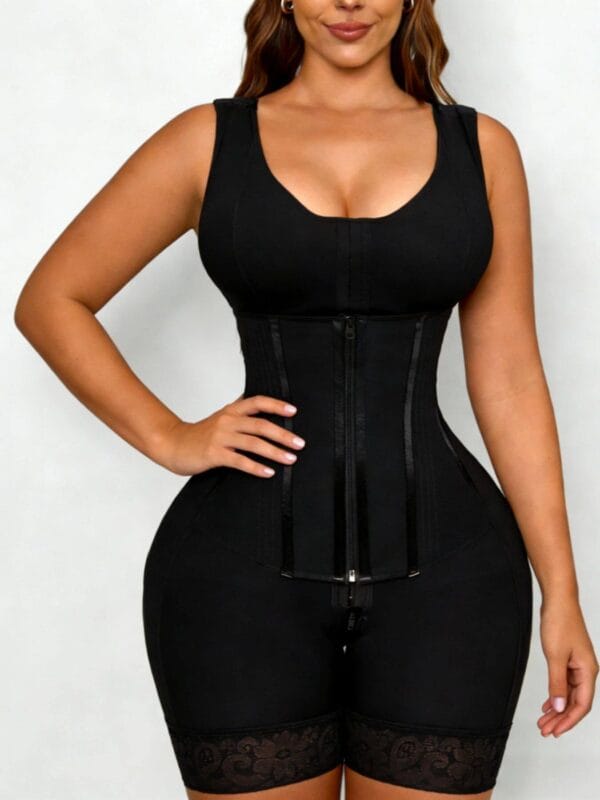
Sleeveless Front-Hook Recovery Bodysuit – Stage 2 BBL-Safe
$89.00Select options This product has multiple variants. The options may be chosen on the product page
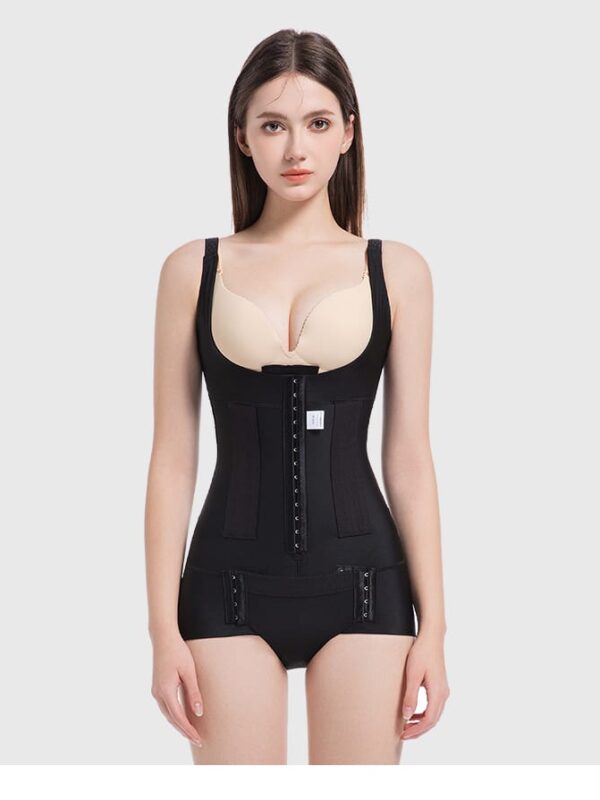
Continue with the Post-Surgery Compression Garments guide and support-level guide.
Sources and review notes
- American Society of Plastic Surgeons: The Importance of Compression After Plastic Surgery — surgeon-directed use and changing fit.
- American Society of Plastic Surgeons: Compression Garments in Recovery — examples of staged protocols, treated here as examples rather than universal rules.
- UPMC HealthBeat: Compression Clothing and Circulation — pressure terminology and professional fitting context.
- Cleveland Clinic: A Doctor’s Advice on Wearing Shapewear — everyday fit and safety context.
Sources and catalog categories checked August 28, 2026. This article is educational and does not replace medical advice.