

Substantively reviewed and updated: August 28, 2026
Direct answer
The main types of everyday shapewear are bodysuits, shaping shorts, shaping briefs or thongs, slips, leggings and waist-focused pieces. Choose by the body area and outfit line you want to smooth—not by buying the smallest size or the firmest-sounding product. A bodysuit creates continuous torso coverage, shorts add thigh coverage, briefs keep the leg free, and a waist cincher focuses on the midsection.
- Start with the outfit: neckline, hem length and fabric reveal which edges need to disappear.
- Match the coverage: choose the garment whose panels actually reach the area you want to smooth.
- Use your measurements: sizing down often creates rolling, digging and visible lines.
Quick FAQ
Which type smooths the whole torso?
A bodysuit gives the most continuous upper-to-lower torso coverage. Check torso length and whether you need an open-bust or built-in-bust design.
Which type works under trousers?
A high-waist brief keeps the thighs free, while shaping shorts can smooth both the waist and upper thighs. Choose according to the trouser fabric and visible edges.
Should shapewear feel very tight?
It should feel secure without pain, numbness, breathing restriction, persistent rolling or deep marks. Follow the product-specific size chart.
Is everyday shapewear the same as a recovery garment?
No. Post-surgery garments have a different purpose and should be selected and worn according to the treating professional’s instructions.
Shapewear types at a glance
| Type | Best starting use | Coverage | Fit tradeoff to check |
|---|---|---|---|
| Bodysuit | Dresses, jumpsuits and outfits where a separate waistband would show | Torso; some versions extend to the thigh | Torso length, bust fit, neckline and bathroom access |
| Shaping shorts | Trousers, skirts and dresses needing waist plus thigh smoothing | Waist, belly, hips and upper thighs | Leg hem placement, inseam length and waistband stability |
| Shaping brief or thong | Lower-belly and waist smoothing without thigh coverage | Waist, belly and hips | Leg opening, waistband height and underwear line |
| Shaping slip | Dresses needing a continuous line without separate leg openings | Torso, hips and sometimes thighs | Hem movement, dress length and bust construction |
| Shaping leggings | Full-leg coverage under longer tops or as an outerwear layer when designed for it | Waist through calves or ankles | Opacity, ankle finish and waistband movement |
| Waist cincher or trainer | Waist-focused structure when the outfit and comfort allow it | Midsection only | Rib and hip placement, closure, sitting comfort and restricted coverage |
1. Bodysuits: continuous smoothing without a separate waistband
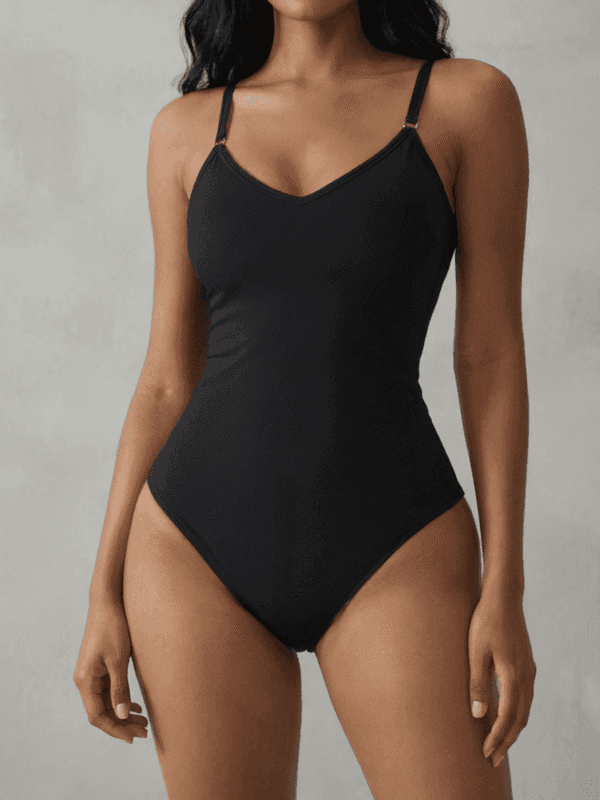
A shapewear bodysuit connects the upper and lower sections, so it can avoid the break created by a high-waist bottom. This makes it a practical starting point under fitted dresses, jumpsuits and tops that reveal waistband edges.
Choose an open-bust bodysuit when you want to wear your own bra and control the neckline. Choose a built-in-bust version only when its cup and torso measurements work for you. A brief-cut leg leaves the thighs free; a mid-thigh leg extends the smoothing area but adds a hem that must sit invisibly under the outfit.
2. Shaping shorts: waist, hip and thigh coverage
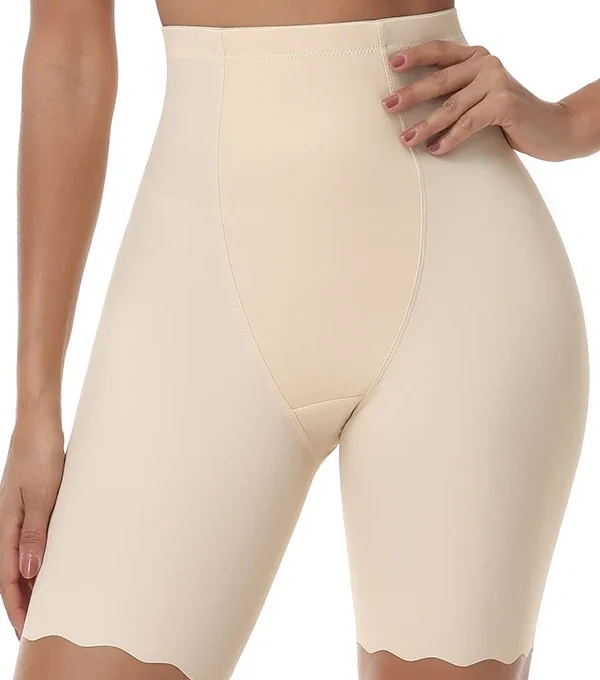
Shaper shorts are useful when the outfit problem crosses more than one area—for example, a waistband line plus upper-thigh friction or a visible transition at the hip. Longer legs can move the hem away from the fullest part of the thigh, while shorter legs may work better under shorter skirts.
Check where the leg opening lands when you sit and walk. If the hem cuts in, rolls or appears through the fabric, a different inseam, edge construction or size may work better. The strongest label on the page cannot compensate for a hem in the wrong place.
3. Shaping briefs and thongs: simpler lower-belly support
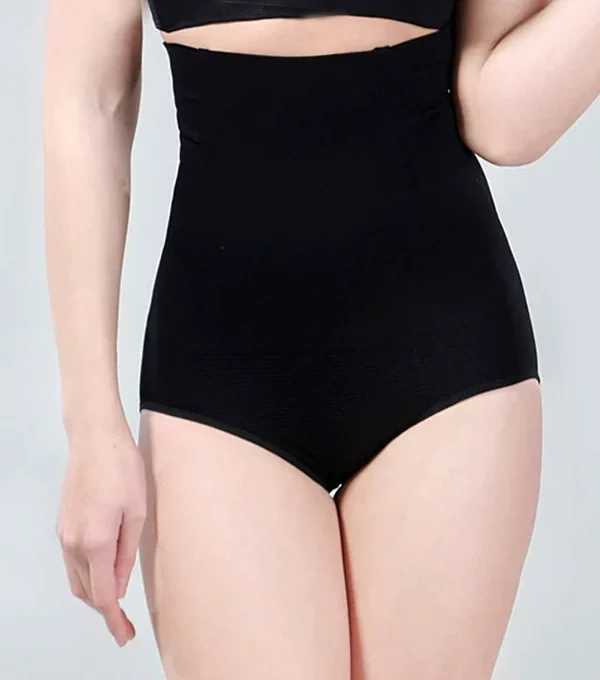
Shaping briefs and thongs concentrate on the waist, lower belly and hip area while keeping the thigh uncovered. They can be easier to pair with trousers and shorter hemlines than shaping shorts.
A full brief provides more back coverage; a thong reduces a rear underwear line. For either style, check whether the waistband ends at a stable part of your torso. A band that repeatedly rolls may be the wrong rise, size or style for your proportions—not a signal to size down.
4. Shaping slips: a dress-first solution
A shaping slip creates a long, continuous surface beneath a dress. It avoids individual leg openings and can reduce the number of garment edges under fine fabric. It is less suitable when the outfit is trousers, when the hem rides up, or when you need targeted thigh separation.
Match the slip length to the dress and test it while walking and sitting. Also check whether the bust is open, built in or designed to work with convertible straps; that construction determines which necklines it can support.
5. Shaping leggings: extended leg coverage
Shaping leggings extend coverage farther down the leg than shorts. Some are designed as underwear layers and others as opaque outerwear, so do not assume the two are interchangeable. Verify opacity, seam placement and the product description before wearing a pair on its own.
Because more fabric contacts the body, movement matters. Bend, sit and walk during the fit check. The waistband should remain stable and the leg should not twist, bunch behind the knee or restrict normal movement.
6. Waist cinchers and trainers: midsection-only structure
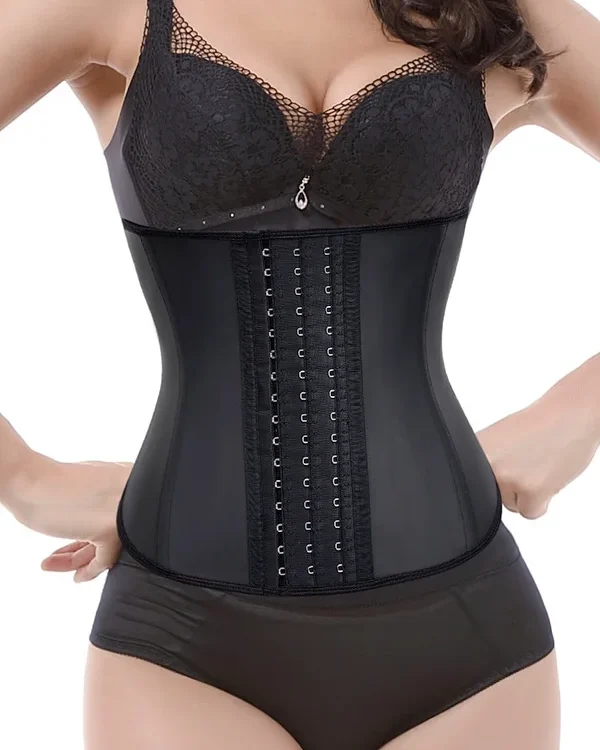
A waist-focused garment covers less of the body and may use hooks, boning or a firmer panel. It can change the waistline of an outfit while it is worn, but it does not smooth the bust, hips or thighs. Cleveland Clinic notes that waist trainers do not produce permanent weight loss or lasting body reshaping and that overly restrictive wear can cause problems.
How to choose the right type in five steps
- Put on the exact outfit. Identify the line you want to change: waist break, lower belly, back, hip, thigh or visible underwear edge.
- Mark the needed coverage. The garment must extend across the entire target area without ending at its most visible point.
- Choose the least complicated format that solves it. A brief may be enough for trousers; a bodysuit may be better when a waistband is the problem.
- Measure now. Use the measurement points and chart on the specific product page. Do not rely only on a usual dress size.
- Movement-test before committing. Sit, bend, walk and breathe normally. Check edges under natural light and the outfit’s actual fabric.
Outfit-to-type decision matrix
| Outfit | Likely starting type | Why | Verify |
|---|---|---|---|
| Fitted dress | Bodysuit, shorts or slip | Provides a more continuous torso-to-hip line | Neckline, dress hem and leg or slip edge |
| High-waist trousers | Brief or shorts | Targets the waistband and lower-belly area | Rise alignment and seated comfort |
| Jumpsuit | Open-bust bodysuit | Avoids a separate top-and-bottom gap | Torso length and bathroom opening |
| Short skirt | Brief or thong | Avoids a long leg hem | Back coverage and underwear line |
| Long knit dress | Longer shorts or slip | Moves edges away from visible hip and thigh transitions | Fabric cling and movement |
Everyday shaping and recovery support are separate categories
Qinelle’s live catalog contained 113 products in Everyday Shapewear and 51 products in Recovery Support when this guide was reviewed. Those counts show breadth, not interchangeability. Everyday pieces are chosen for styling and comfort. Post-surgery compression should match a procedure-specific plan from the surgeon or care team.
If you are shopping after a procedure, use the Post-Surgery Compression Garments guide. For a side-by-side explanation, read everyday shapewear vs post-surgery compression.
Compare four everyday formats
These current catalog examples let you compare a bodysuit, shaper shorts, shaping brief and waist-focused piece. Confirm the latest product details, measurements and availability on each page.
- Shaping Briefs & Thongs
High-Waist Seamless Knit Shaping Brief – Tummy Smoothing
Original price was: $29.00.$19.00Current price is: $19.00.Select options This product has multiple variants. The options may be chosen on the product page - Shaper Shorts
High-Waist Seamless Shaper Shorts – Tummy & Thigh
Original price was: $39.00.$29.00Current price is: $29.00.Select options This product has multiple variants. The options may be chosen on the product page - Waist Trainers & Cincher Belts
Hook-and-Eye Waist Trainer Corset Belt
Original price was: $39.00.$29.00Current price is: $29.00.Select options This product has multiple variants. The options may be chosen on the product page - Shapewear Bodysuits
Seamless Adjustable-Strap Shaping Bodysuit – Brief or Thong
Original price was: $49.00.$29.00Current price is: $29.00.Select options This product has multiple variants. The options may be chosen on the product page
Need a broader path? Start with the Everyday Shapewear guide or the Qinelle size guide.
Sources and review notes
- Cleveland Clinic: A Doctor’s Advice on Wearing Shapewear — everyday fit and safety context.
- Cleveland Clinic: Waist Trainers — What You Should Know — limits of restrictive waist-focused products.
- UPMC HealthBeat: Compression Clothing and Circulation — distinction between ordinary tight clothing and clinically directed compression.
Catalog counts were taken from Qinelle’s product taxonomy on August 28, 2026. Product details and availability can change.