
Post-Surgery Compression Garment Fit & Construction Guide
A practical, non-medical reference for understanding how recovery garments are built—and how coverage, closures, seams, stretch, measurements and garment architecture can change the way a garment fits and feels.
Two Garments Can Look Similar and Behave Very Differently
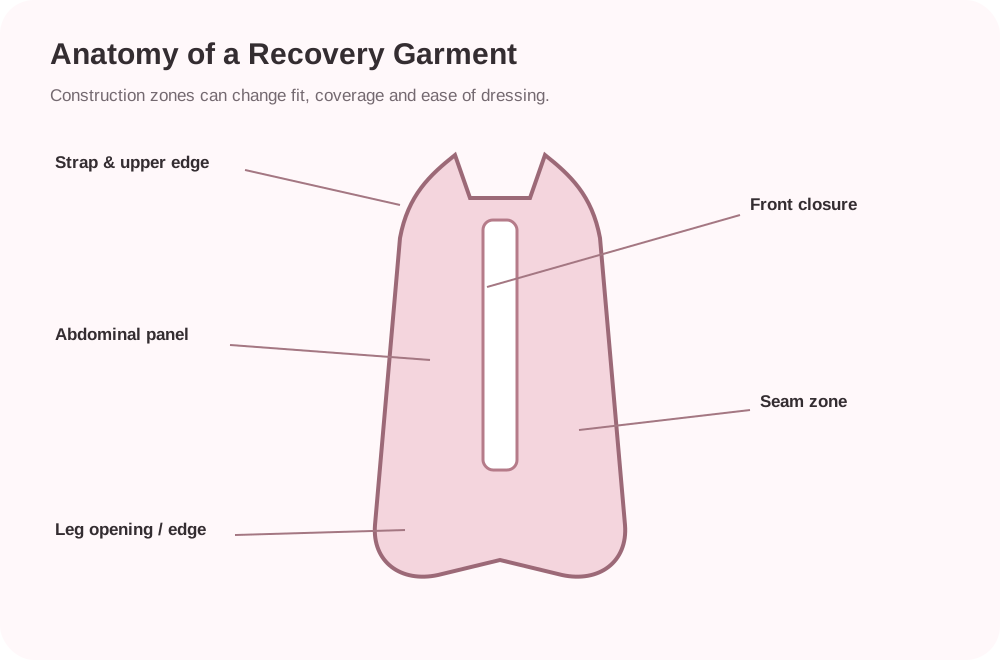
A recovery garment is a textile system wrapped around a three-dimensional, moving body. Its fit is influenced by much more than the size printed on the label. Fabric stretch and recovery, panel placement, seams, edge construction, closures, garment length and the wearer’s body measurements all contribute to how the garment behaves.
This matters because a garment can feel different at the waist, hip, thigh or chest even when those areas are part of the same piece. Understanding the construction gives you a better framework for comparing garments before choosing one.
“Tighter” Is Not a Complete Fit Strategy
Garment pressure cannot be predicted reliably from a size label alone. Engineering research on compression-garment design has modeled pressure using multiple variables, including body circumference, fabric strain and material stiffness.
That is why simply choosing a smaller garment does not provide a reliable or universal way to determine the right postoperative fit.
A better fit check
- Start with your current body measurements.
- Use the product-specific size guide.
- Check the body areas the garment is designed to cover.
- Look for severe folding, concentrated digging or hardware sitting in an uncomfortable location.
- Follow any sizing or compression instructions given by your care provider first.
Choose Coverage Around the Area the Garment Is Intended to Support
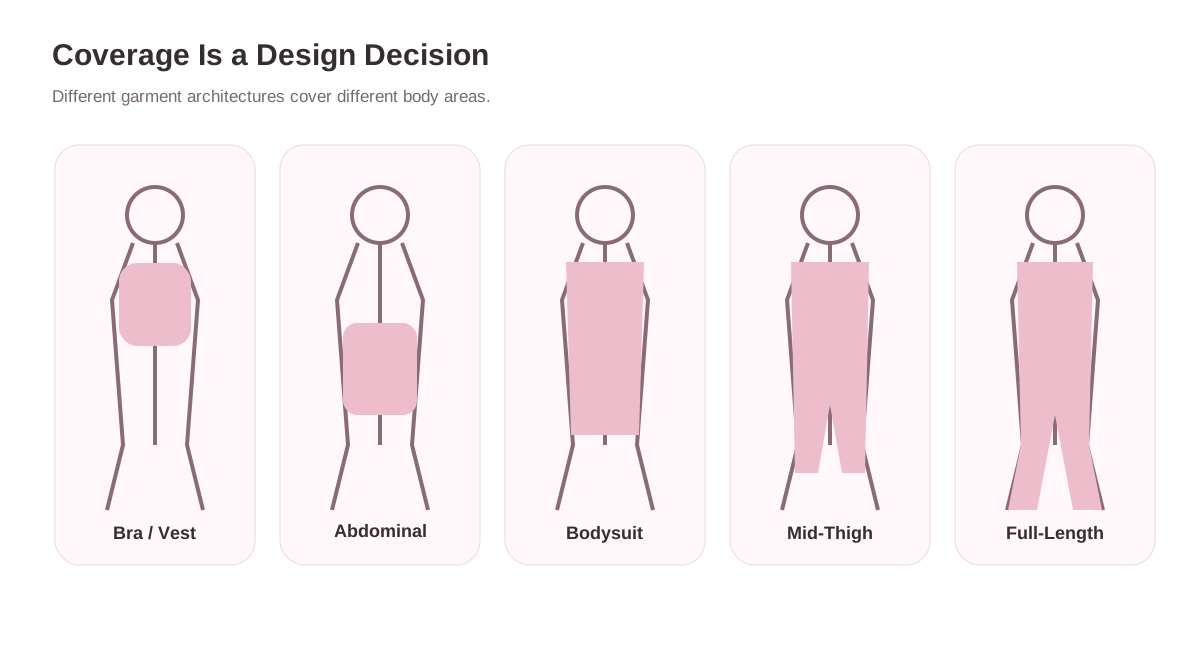
Recovery garments come in different architectures because not every garment is designed to cover the same areas. A bra or vest, abdominal garment, bodysuit, mid-thigh garment and full-length garment solve different clothing-design problems. For a product example with this kind of coverage, see the Open-Bust Mid-Thigh Compression Bodysuit with Front Closure, which combines open-bust construction, mid-thigh coverage and a front closure.
Front Hooks, Zippers, Side Closures and Access Openings
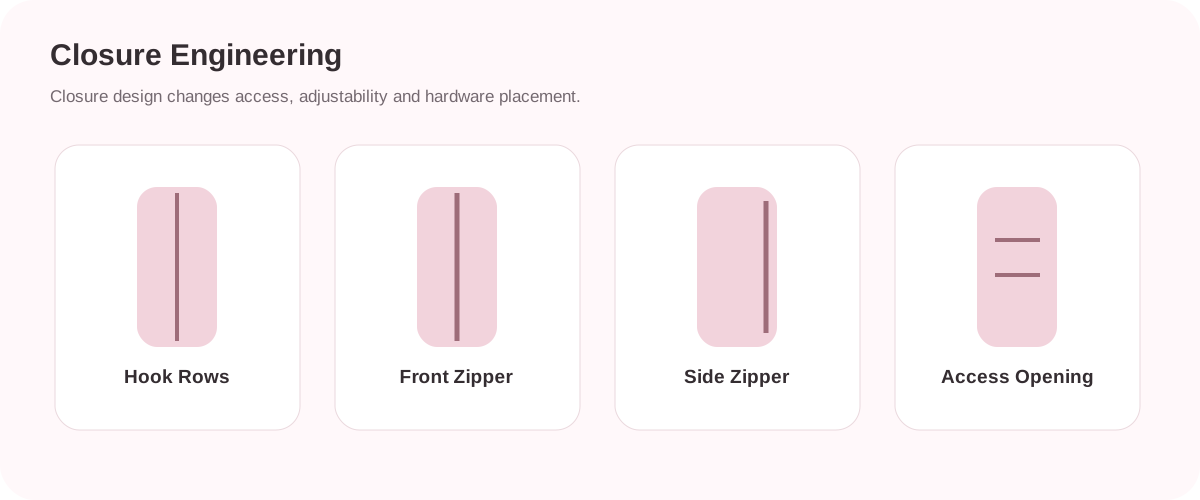
Closures are not just cosmetic. They influence how a garment is put on, how much movement is required during dressing, whether the front panel remains uninterrupted and where hardware sits against the body.
| Construction | Practical characteristic | What to inspect |
|---|---|---|
| Front hook rows | Can provide incremental fastening positions. | Hook spacing, backing layer, edge finish and whether hardware sits flat. |
| Front zipper | Provides a direct opening path through the front of the garment. | Zipper guard, pull accessibility and whether the zipper sits over a sensitive area. |
| Side zipper | Allows the front panel to remain comparatively uninterrupted. | Side seam location, zipper backing and how the side of the body bends. |
| Adjustable rows | Adds more than one fastening position. | Whether tension remains reasonably even instead of concentrating at one point. |
| Access opening | Can reduce the need to remove the entire garment for routine access. | Opening placement, edge construction and coverage around the opening. |
Why the Small Construction Details Can Change Comfort
Seam placement
A seam adds thickness and structure. Where possible, compare where prominent seams sit relative to areas that bend, curve or are especially sensitive during recovery.
Edge tension
Waistbands and leg openings are narrow zones. Their sensation can differ from the larger fabric panel because force is concentrated over a smaller edge area.
Rolling
Rolling can be influenced by edge construction, torso or thigh shape, garment height, fabric recovery and how the garment meets a changing body contour.
Folding
Repeated folding may indicate excess length, uneven tension, a mismatch between garment architecture and body shape, or movement at a high-flex area.
Stretch Is Not One Number
Stretch direction
Many knitted textiles behave differently across width, length and diagonal directions. The pattern orientation therefore matters.
Resistance to stretch
Two fabrics can extend to a similar distance while requiring different force to get there. That difference changes the wearing sensation.
Recovery
After stretching, the ability of the textile to return toward its original dimensions influences how consistently it holds its shape.
Panel reinforcement
A reinforced zone can behave differently from a single-layer zone even when both are part of the same garment.
Knit density
Yarn selection and knit construction influence thickness, extensibility, surface feel and air movement.
Moisture & heat
Breathability and moisture management can matter to comfort, especially when a garment is worn for extended periods under clothing.
Translate What You Notice Into Garment Checks
| What you notice | Possible garment-fit explanation | What to check |
|---|---|---|
| Waist edge repeatedly rolls | Edge tension, torso length, garment height or body-contour mismatch. | Current measurements, waistband construction and garment height. |
| Leg opening feels much tighter than the panel above it | Concentrated edge tension or opening circumference. | Thigh measurement, edge finish and product size guide. |
| Large fabric folds form during normal movement | Excess garment length, uneven tension or a high-flex placement. | Garment length, body measurements and where the fold occurs. |
| Zipper hardware feels exposed | Insufficient backing or hardware placement. | Whether the design includes a zipper guard or protective layer. |
| Garment shifts significantly | Coverage, length or body-shape mismatch. | Garment style, anchor points, straps and relevant measurements. |
| Garment is unusually difficult to put on | Closure layout, access design or sizing may not suit the wearer. | Fastening method, product-specific instructions and care-provider guidance. |
These are garment-fit possibilities, not medical diagnoses. New or concerning symptoms during recovery should be discussed with your care provider.
A Better Way to Read a Recovery-Garment Size Chart
- Measure the body as it is now. Do not rely only on a familiar clothing size from another brand or from before a procedure.
- Identify the actual coverage. A garment that covers waist, hip and thigh may need several measurements rather than only the waist.
- Compare the measurements that matter for that garment. Use the product-specific guide because sizing systems are not universal.
- If you fall between sizes, use the product’s own fit guidance. Do not automatically assume the smaller option is more appropriate.
- Put procedure-specific instructions first. If your surgeon or care provider prescribed a particular garment, pressure level or sizing approach, follow that guidance.
Care Helps Protect Stretch and Shape
Elastic textiles are repeatedly stretched during dressing and wear. Heat, harsh laundering, snagging and aggressive handling can shorten the useful life of elastic fibers and finishes.
- Follow the care label supplied with the individual garment.
- Use gentle washing practices when the label allows them.
- Avoid unnecessary high heat when drying elastic garments.
- Close hooks and zippers before washing when appropriate to reduce snagging.
- Inspect stretched edges, damaged closures and persistent loss of shape over time.
What Garment Construction Can Explain—and What It Cannot
Garment construction can help explain coverage, fit, closure usability, textile stretch behavior, seam placement and where tension may concentrate.
It cannot determine the correct postoperative compression protocol for an individual person, the right pressure level for a procedure, how long a garment should be worn or whether a garment is medically appropriate.
The evidence is procedure-dependent
A 2024 systematic review of post-abdominoplasty compression found only five included trials totaling 130 patients and concluded that the available evidence supporting abdominal binders was weak.
A broader 2023 plastic-surgery review found that evidence varied substantially by procedure and outcome. That is why this guide stays focused on clothing construction instead of promising medical outcomes.
Check the Garment in the Positions You Actually Use
A garment that looks smooth while standing still can behave differently when the body sits, bends, walks or changes posture. Garment evaluation is therefore more useful when it includes ordinary movement rather than only a mirror check in one position.
The goal of this check is not to decide whether a postoperative garment is medically appropriate. It is to observe whether the clothing construction remains reasonably stable across the areas it is designed to cover.
Five things to observe
- Whether the waistband or upper edge stays in position during sitting and standing.
- Whether closures remain aligned rather than twisting sharply to one side.
- Whether large folds repeatedly develop at the waist, hip or thigh crease.
- Whether straps, leg openings and garment edges remain flat without concentrated digging.
- Whether panels remain positioned over the body areas they are intended to cover.
Changing several variables at once makes it difficult to tell whether a difference comes from sizing, closure adjustment, garment construction or body position.
Standing
Check overall garment length, panel alignment, closure position and whether the garment edges sit flat before movement begins.
Sitting
Observe what happens where the torso and thigh bend. This is often where excessive length, folding or edge movement becomes easier to see.
Walking
Check whether the garment shifts progressively, whether leg openings migrate and whether straps or closures remain in their intended positions.
Garment-fit observations cannot determine the medical cause of pain, swelling, numbness, skin changes or other postoperative symptoms. Contact your surgeon or care provider about new or concerning symptoms.
Evidence & Further Reading
- Arkoubi AY. Effect of Compression Garments on Post-Abdominoplasty Outcomes: A Systematic Review of the Current Evidence. JPRAS Open. 2024. PubMed record.
- Ormseth BH, Livermore NR, Schoenbrunner AR, Janis JE. The Use of Postoperative Compression Garments in Plastic Surgery—Necessary or Not? A Practical Review. Plastic and Reconstructive Surgery – Global Open. 2023. PubMed record.
- Leung WY, Yuen DW, Ng SP, Shi SQ. Pressure Prediction Model for Compression Garment Design. Journal of Burn Care & Research. 2010. PubMed record.
- American Society of Plastic Surgeons. Finding comfort after breast surgery: A guide to compression bras and postsurgical garments. ASPS patient education.
- American Society of Plastic Surgeons. Recovery After Surgery. Procedure-specific postoperative instructions should guide garment use and duration. ASPS recovery guidance.