
Qinelle · Occasion dressing
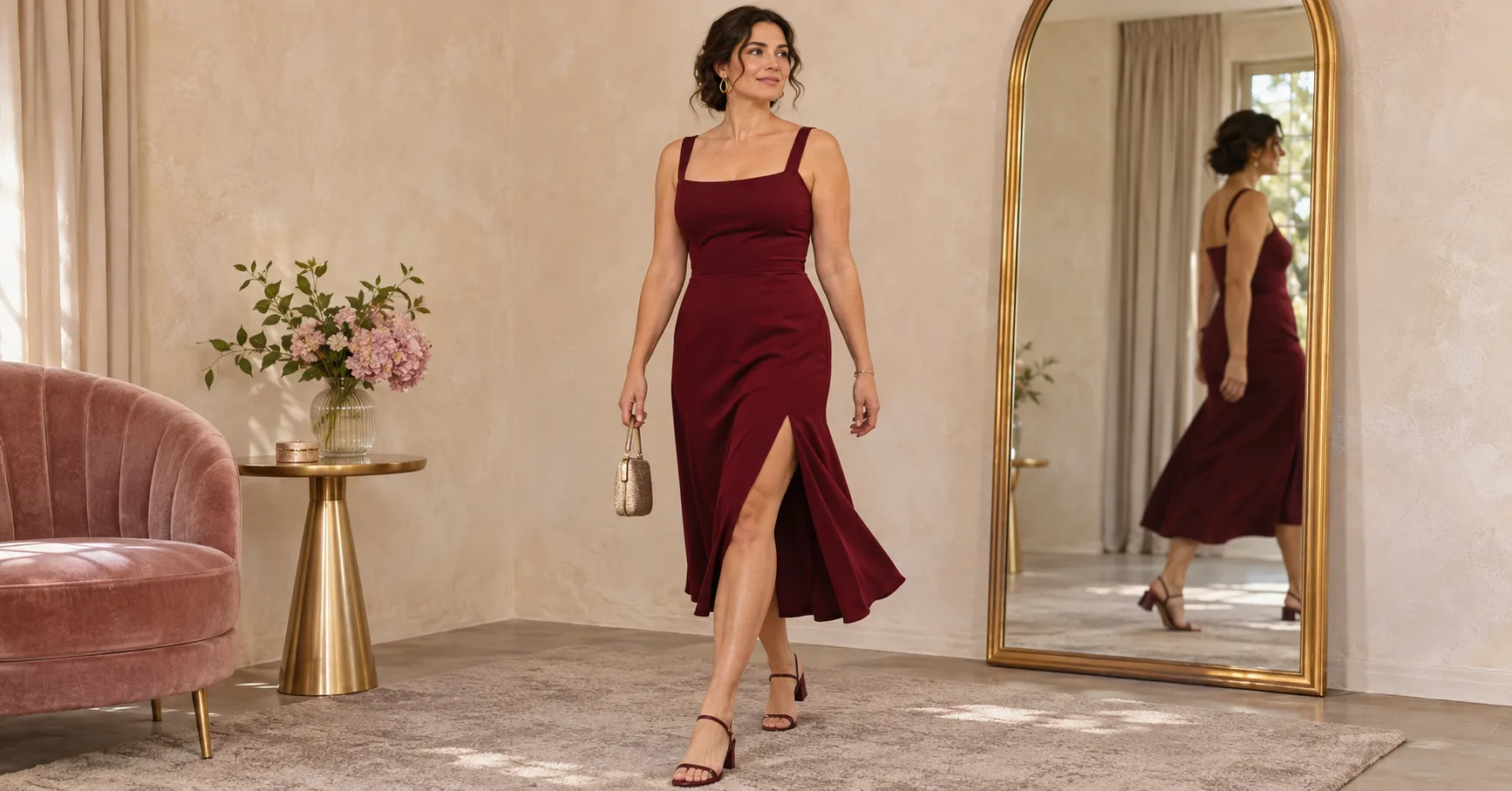
The best underwear or shapewear for a high slit dress is the pair that stays inside the dress’s actual coverage when you walk, sit and climb a step. For a thigh-high slit, a thong or brief is often easier to conceal than shorts. For a slit that opens toward the hip, even a brief’s side panel can show. The dress’s neckline, back and lining then decide which options remain.
You may not need shapewear at all. If your usual underwear is comfortable and the dress falls the way you want, there is no extra requirement to add compression. Use a shaping layer when it solves a specific problem: a waistband line, rear coverage, or a smoother surface beneath fitted fabric.
Check the slit in motion before choosing a garment
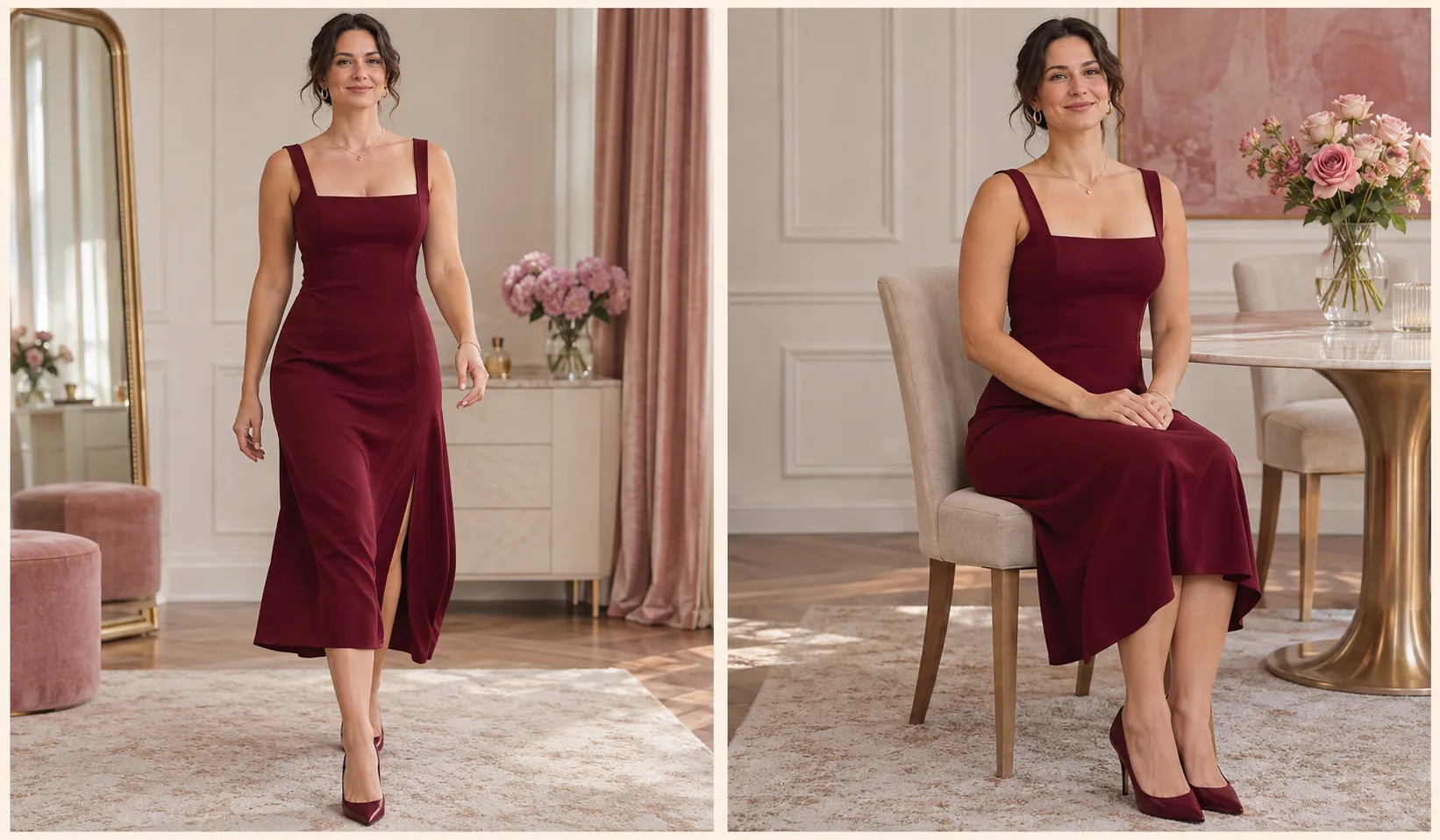
Put the dress on with simple underwear and look at where the slit opens naturally. Do not hold the fabric closed for the test. Walk across the room, sit in a chair, and step onto a low stair while holding a rail if needed. A front slit can open differently from a side slit, and a wrap front can move across the body as you sit.
Notice three things: the highest point that becomes visible, whether the lining opens in the same place, and whether the two sides overlap or separate. A static measurement from the hem misses those differences.
Now try the candidate undergarment. Its leg edge, side panel and waistband all need to stay within the area the dress covers. If you are repeatedly rearranging it during this short check, the combination needs another look.
Match the cut to the coverage you need
| Dress detail | A useful starting point | What may rule it out |
|---|---|---|
| Thigh-high slit with a covered back | Brief or thong without thigh fabric | The leg opening or hip panel shows in motion |
| Very fitted skirt with visible rear lines | Thong-style underwear or shaper | You dislike thong coverage or the side sits too low |
| Slit plus a low back | Low-back bodysuit, if its straps also fit the dress | Back edge, cups or straps remain visible |
| Moderate slit and a preference for thigh coverage | Shorts only after a movement check | Shorts appear as the slit opens |
| Hip-high slit or side cutouts | Minimal underwear compatible with the exact dress | Most high-rise shaping panels remain exposed |
“High cut” and “low back” describe different parts of a garment. A thong can still have wide fabric at the hip, and a low-back bodysuit can still have straps that show at the shoulder.
Compare the styles in this guide
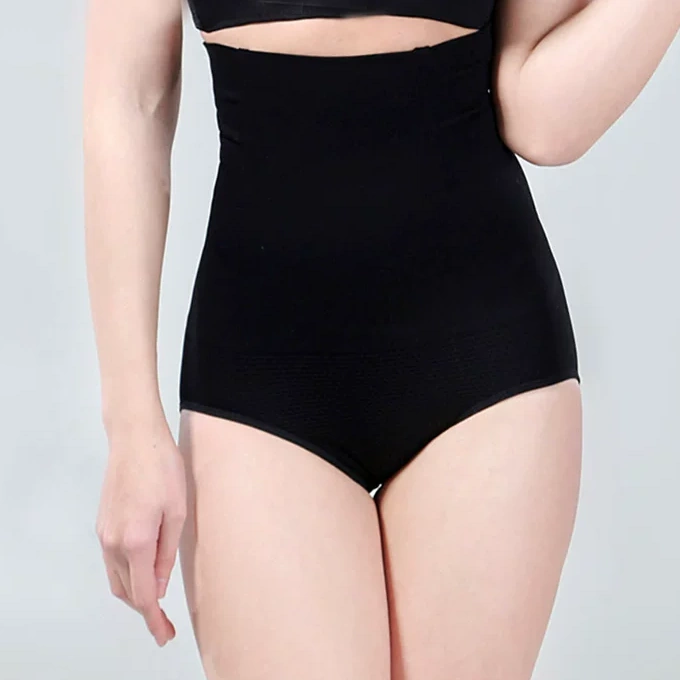
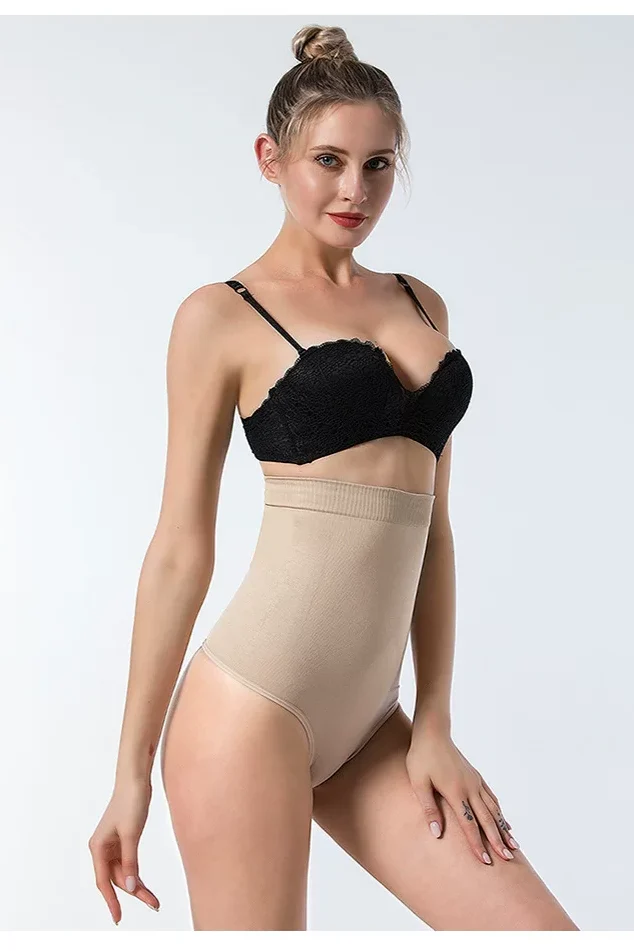
High-waist brief
Full brief back; no thigh panel.
Fit check: The leg edge and tall waist must stay inside the dress coverage.
See back coverage
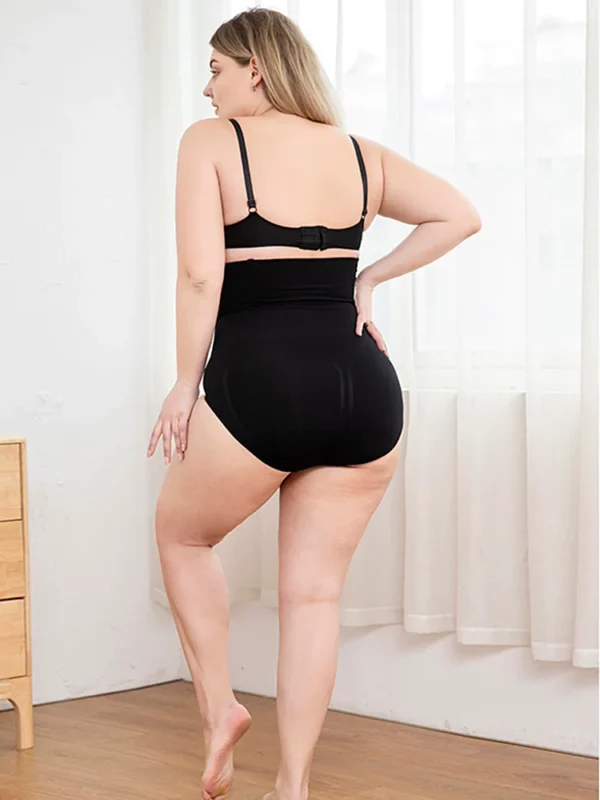
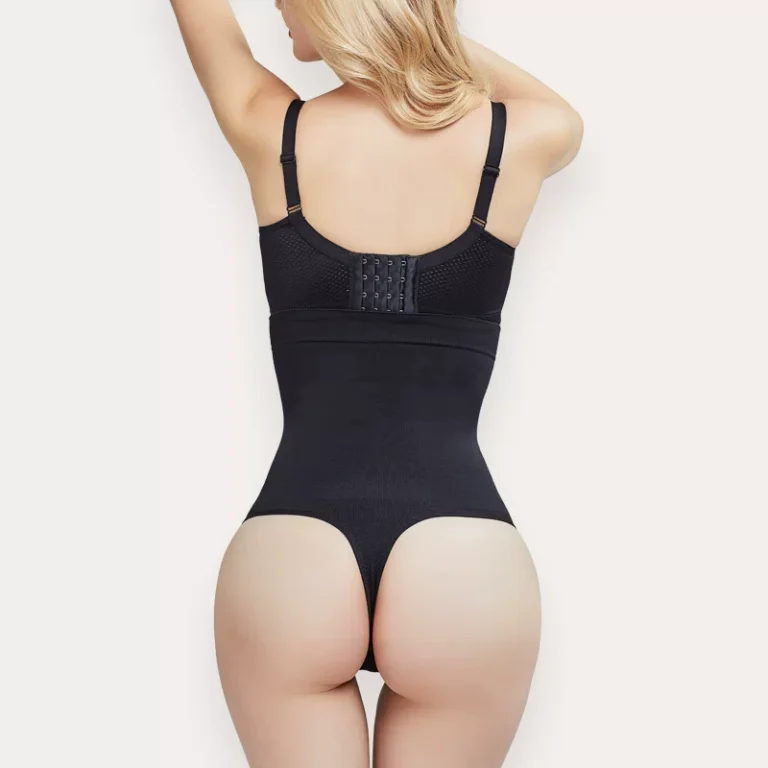
High-waist thong
Less fabric across the seat.
Fit check: The waist is high. This is not a low-back solution.
See back coverage
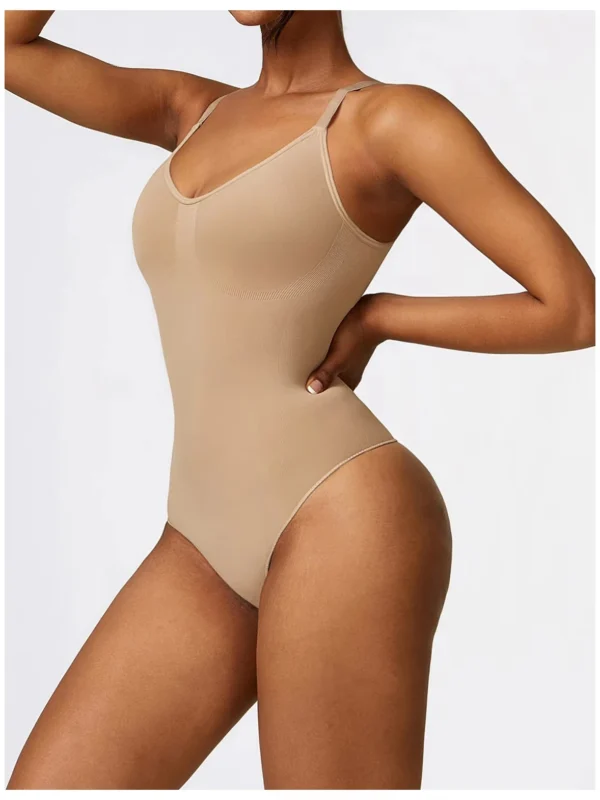
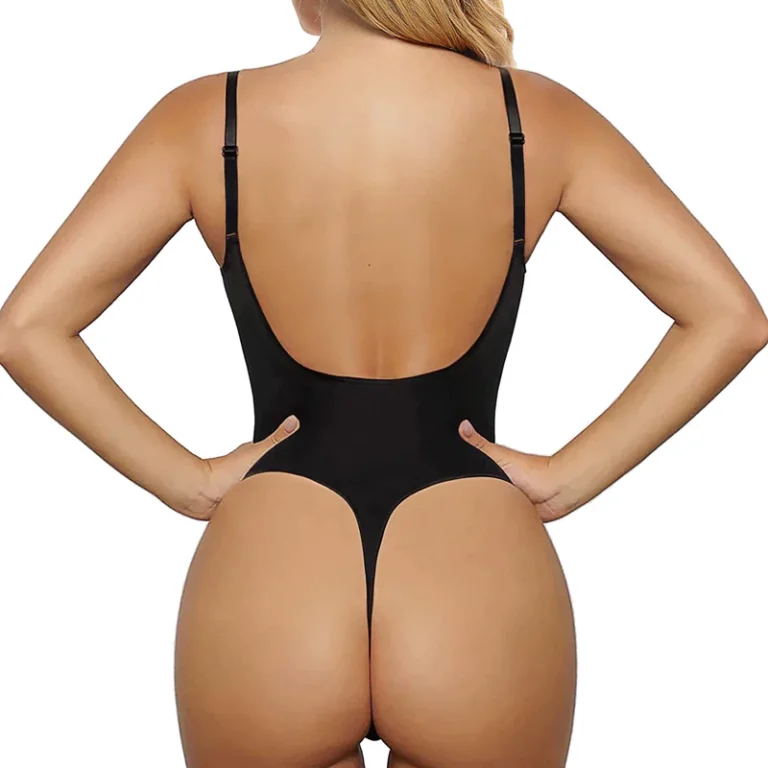
Low-back bodysuit
Lowered back with a thong bottom.
Fit check: Adjustable shoulder straps still need to be concealed.
See back coverage
Product images are from the current Qinelle listings. Open a style to check available colors, sizes and its individual measurements.
Choose a brief when rear coverage matters most
A shaping brief gives you seat coverage without a panel extending down the thigh. It is worth trying when the slit is the main obstacle to wearing shorts, but you prefer the feel of a traditional brief.
The High-Waist Seamless Knit Shaping Brief has a tall waist and full brief back. It may suit a dress that covers the back and hips while opening farther down the leg. Its rise can extend toward the underbust depending on torso length.
That coverage is also its limitation. The waistband can show through a low back, and the brief edge can remain visible beneath thin or tightly stretched fabric. “Seamless” does not mean invisible in every dress. Check the leg openings in the exact dress and lighting you plan to wear it in.
Choose a thong when the rear edge is the problem
A thong removes the broad brief edge across the seat. It does not remove every possible line: the waistband, hip panels and front construction still sit underneath your dress.
The High-Waist Seamless Thong Shaper offers high-rise coverage through the waist and abdomen with a thong back. Its tall waistband makes it a candidate for a covered-back dress when you want less fabric across the seat. It will not solve a low-back coverage problem.
Use the current size information carefully. Some sizes share a measurement range, and an exact S range is not supplied. If that leaves your fit uncertain, contact Qinelle support before ordering. A smaller size should not be used as a shortcut to a smoother finish.
A thong also leaves the inner thighs uncovered. If thigh contact is your main concern, consider whether a lower slit or a different dress gives you more room for the coverage you actually want.
Solve the back and neckline at the same time
A low-back dress changes the shortlist. A tall waistband can be visible even when the slit looks perfect, while a strapless neckline can expose the straps of an otherwise suitable bodysuit.
The Low-Back Thong Shaping Bodysuit combines a lowered back, adjustable straps and a thong bottom. It is worth comparing when both rear panty lines and back coverage are concerns. It is not a strapless solution, and a dress cut lower than the bodysuit will still reveal it.
Torso length matters here as much as waist size. Straps that need to be tightened excessively may pull the back or gusset out of a comfortable position. The product currently lacks a verified numeric measurement chart; ask for fit guidance if the available information does not resolve your choice.
For an open shoulder or very low neckline, use the separate strapless versus adhesive bra guide alongside this coverage check. One undergarment does not have to solve every part of the outfit.
Check the fabric rather than trusting the color name
Under a light or partly sheer dress, a shade close to your skin may be less noticeable than bright white. Under a dark, well-lined dress, more colors may work. The right choice still depends on the actual fabric, stretch and lighting.
Try the dress near a window, under indoor lights, and in a photo if you expect event photography. Check for edges and contrast at the front, side and back. If satin is revealing every ridge, see what to wear under a satin dress. For embellishment and lining concerns, use the sequin dress guide.
Do not cut the legs off shaping shorts to hide them above a slit. That changes the finished garment and can create an edge that curls or frays. Choose a cut designed to end where you need it.
Common high slit dress questions
Can I wear shaping shorts under a high slit dress?
Sometimes. The slit needs to cover the shorts during walking and sitting, not only when the dress hangs still. Try the exact pairing; do not rely on the garment being described as “short” or “mid-thigh.”
Will a thong shaper be invisible?
Not necessarily. It reduces fabric across the seat, but the waistband and side panels can still show. Very fine, unlined or tightly stretched dresses may reveal almost any edge.
What works with a slit that reaches the hip?
The dress may leave too little coverage for conventional high-waist shapewear. Check the underwear’s side position as carefully as the leg opening. If the shaping panel remains visible, ordinary underwear or a different dress construction may be the more comfortable choice.
Should I size down for more smoothing?
Choose using the product’s guidance and your current measurements. Excess tension can create new edges and make the garment harder to wear. The useful result is a dress you can move in comfortably.
Bring the dress’s slit, back and neckline into the same decision. Then compare under-dress options by the coverage you need, rather than choosing the strongest compression first.