
Waist-to-ankle recovery support
Full-Length Support Without a Bulky Front Closure
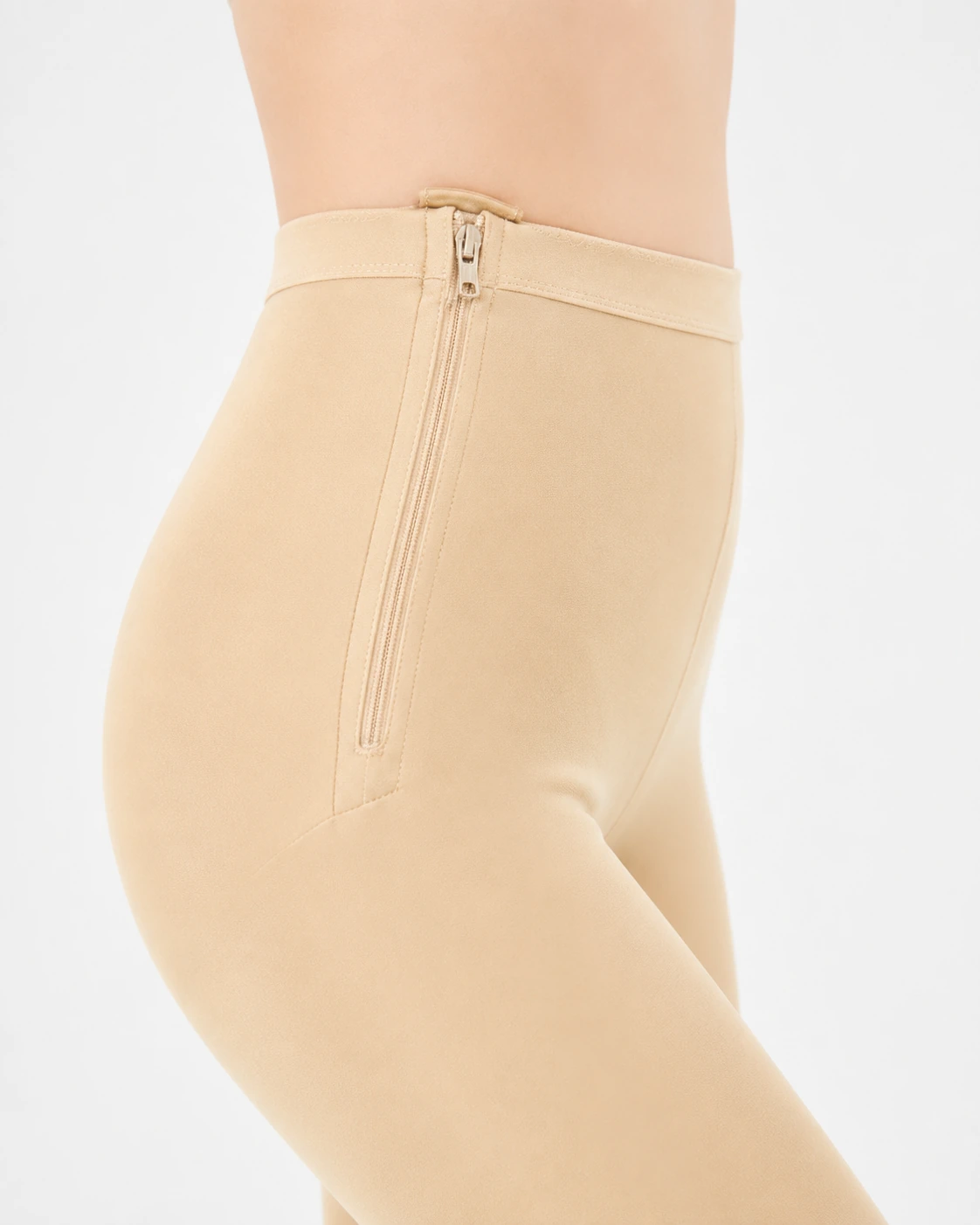
When you want coverage from the high waist to the ankles, the small construction choices matter. These post-surgery compression leggings use a clean front, a discreet zipper at the side waist and shaped rear seams, giving you a streamlined alternative to styles with a wide front hook panel.
The design is intended for recovery-stage wear only when this garment type and closure position fit your provider-approved plan. It offers close, continuous lower-body coverage, but it does not replace provider care, professional fitting or instructions related to your procedure.
At a glance: high-rise coverage, full-length legs, side-waist zipper, shaped rear seams, Black or Skin Color, and five storefront sizes from S through 2XL.
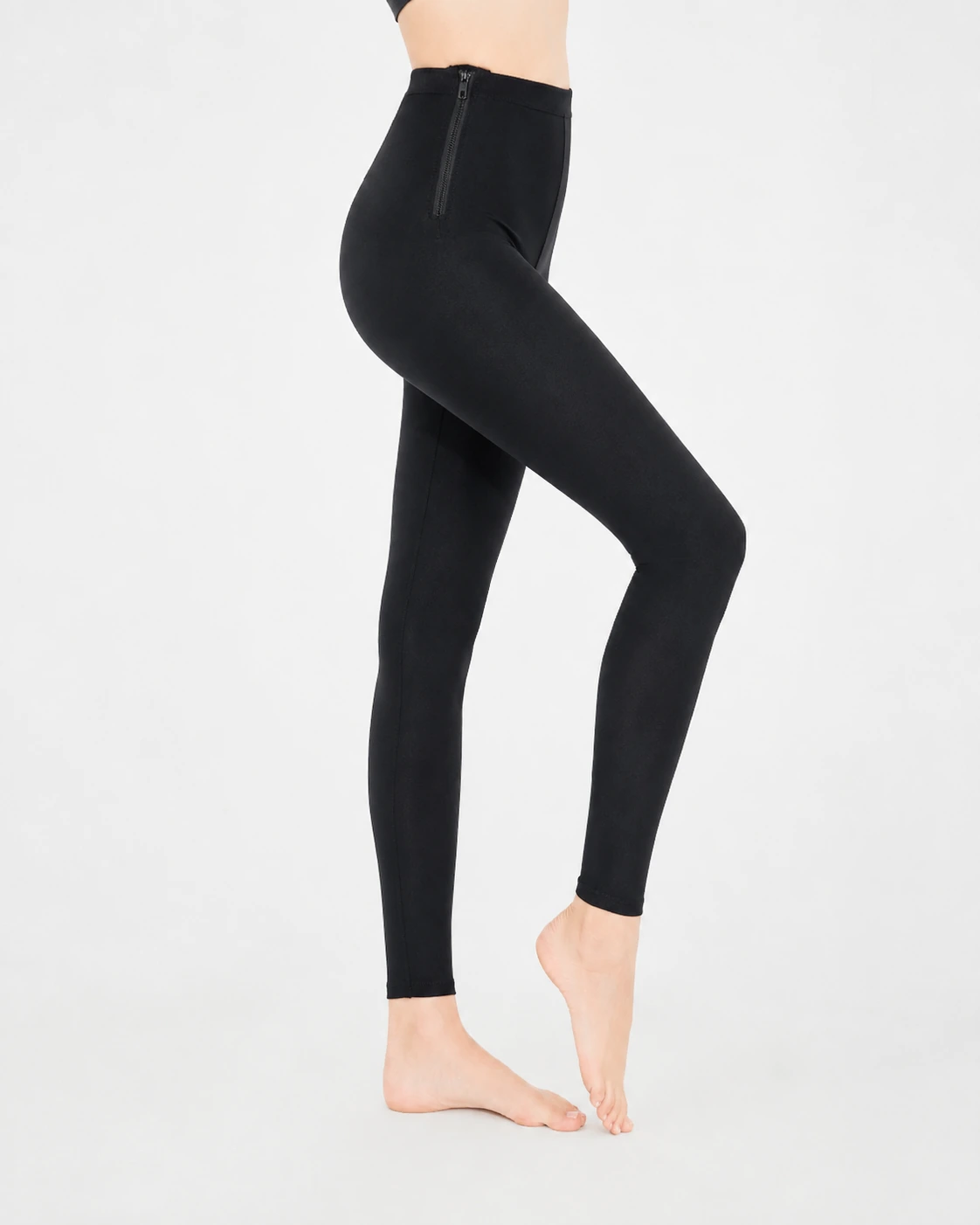
The Four Buying Decisions This Style Solves
A recovery legging should be chosen by structure and fit—not by a promise that one garment works for everyone. Use these four questions to decide whether Product 8391 belongs in your recovery wardrobe.
Do you need full leg coverage?
This silhouette runs from a high waistband to the ankles. It is more extensive than shorts or capri styles and avoids the coverage break that can occur around the knee or mid-calf.
Is a side closure suitable?
The zipper sits at the upper side waist rather than across the center front. Confirm that this location does not conflict with an incision, tenderness or a closure restriction in your care plan.
Can you size from measurements?
Use both waist and upper-thigh measurements. Height, weight and a usual clothing size cannot show how two people carry swelling or how their proportions differ.
Do you need torso coverage?
This is a lower-body garment. It does not include an open-bust top, shoulder straps, upper-back support or a bodysuit-style connection above the waist.
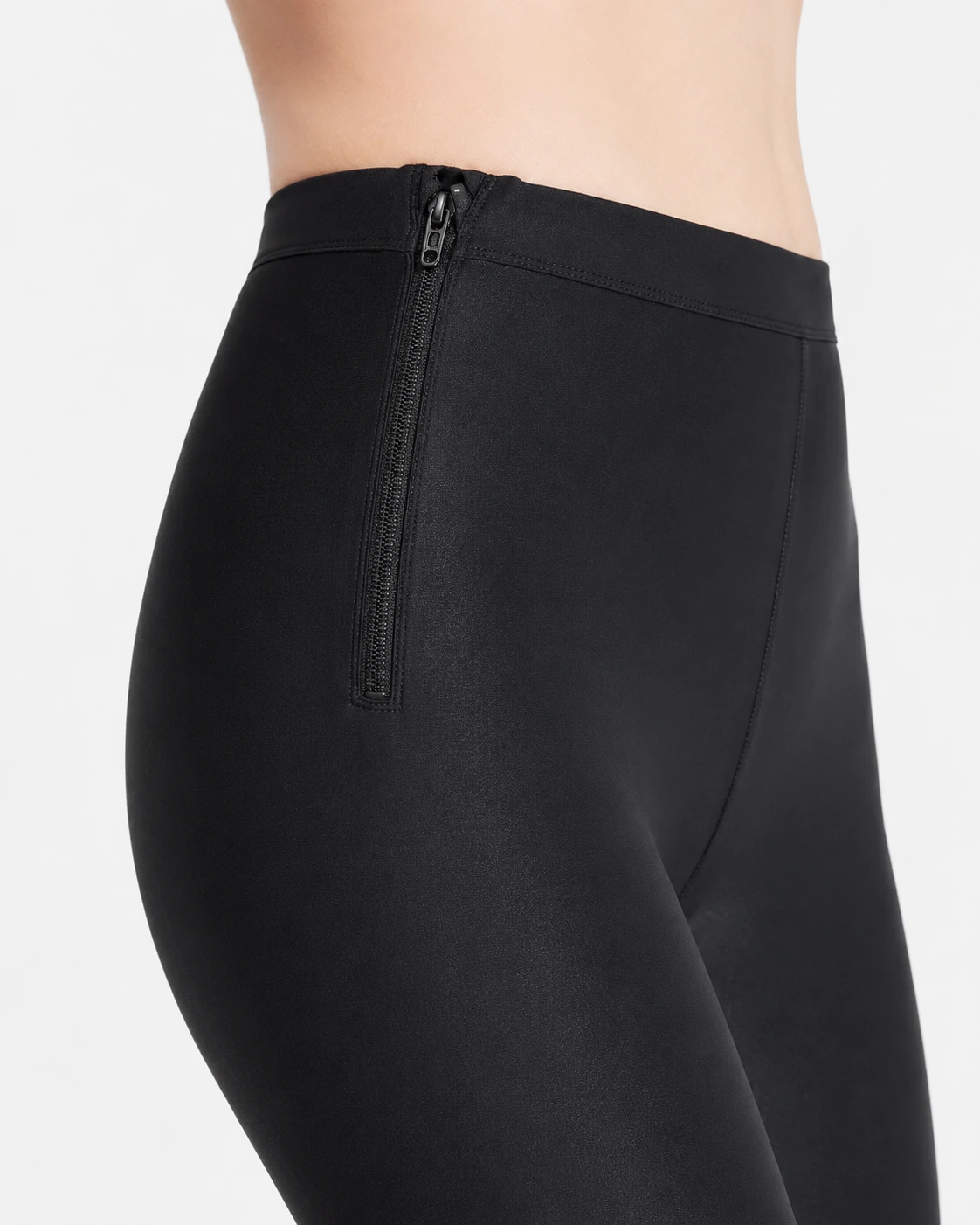
Dressing access
A Side Zipper That Keeps the Front Visually Clean
Pulling a close-fitting full-length garment over the hips can be the hardest part of dressing. Opening the side zipper creates additional access at the upper waist, so you can work the leggings upward gradually instead of relying on a single forceful pull at the waistband.
Once closed, the zipper remains positioned at the side rather than creating a broad hook-and-eye panel down the front. That difference may appeal to customers who prefer a simpler front appearance under loose clothing.
Important limitation: “easier to put on” does not mean effortless for every body or recovery stage. Mobility, swelling, hand strength and tenderness can all change the dressing experience. Assistance may still be appropriate when your provider recommends it.
Continuous lower-body coverage
One Streamlined Line From High Waist to Ankle
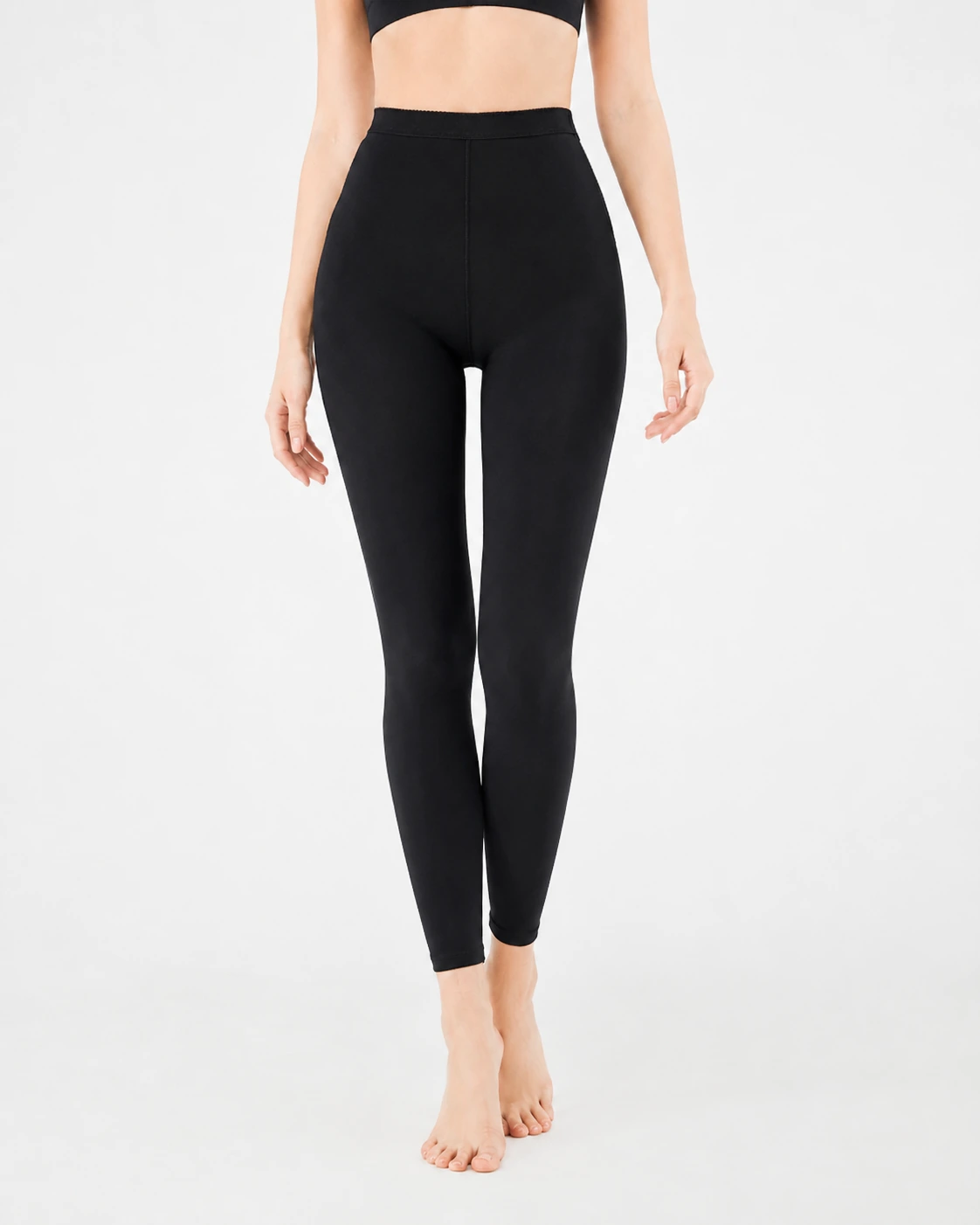
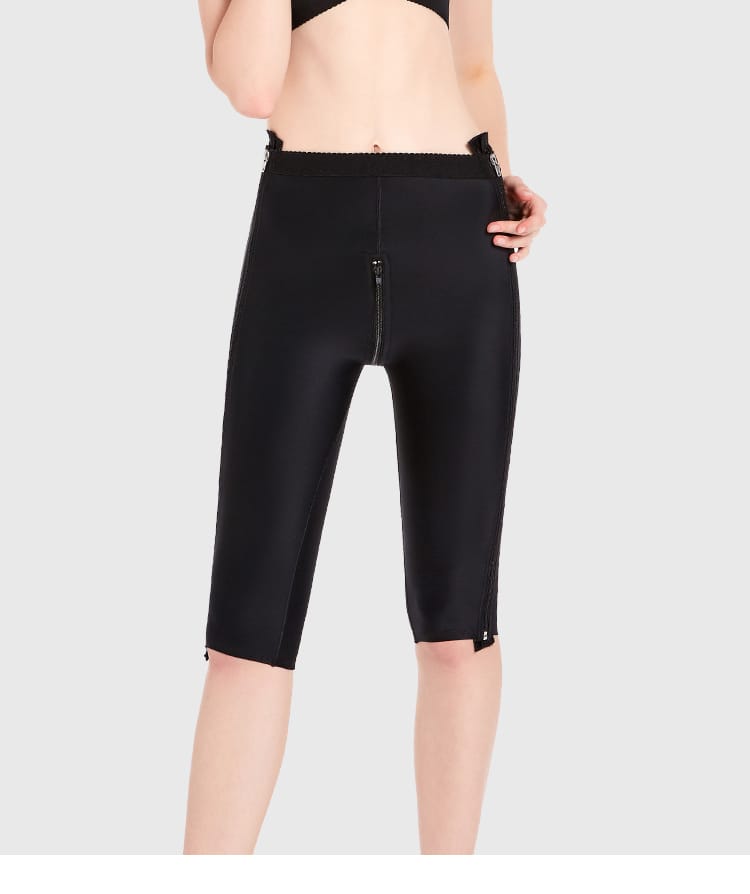
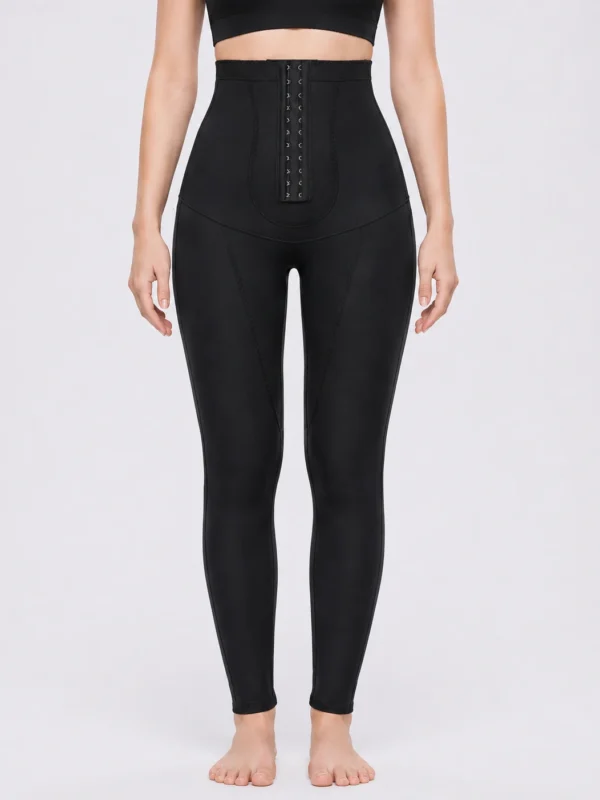
The front view shows a high-rise waistband and full-length legs with no short hem cutting across the thigh. This makes Product 8391 a more complete lower-body option for customers whose approved garment plan calls for coverage beyond the hips and upper legs.
The close leg shape follows the body through the thigh, knee, calf and ankle. Fit should feel secure and even rather than sharply pinching at one point. New numbness, unusual discoloration, escalating pain or other concerning symptoms should not be dismissed as a normal “break-in” period; remove the garment and follow your care provider’s instructions.
The design does not include an open crotch, a front hook panel or an upper-body section. Those are not omissions to ignore—they are structural differences that should match the practical needs of your recovery routine.
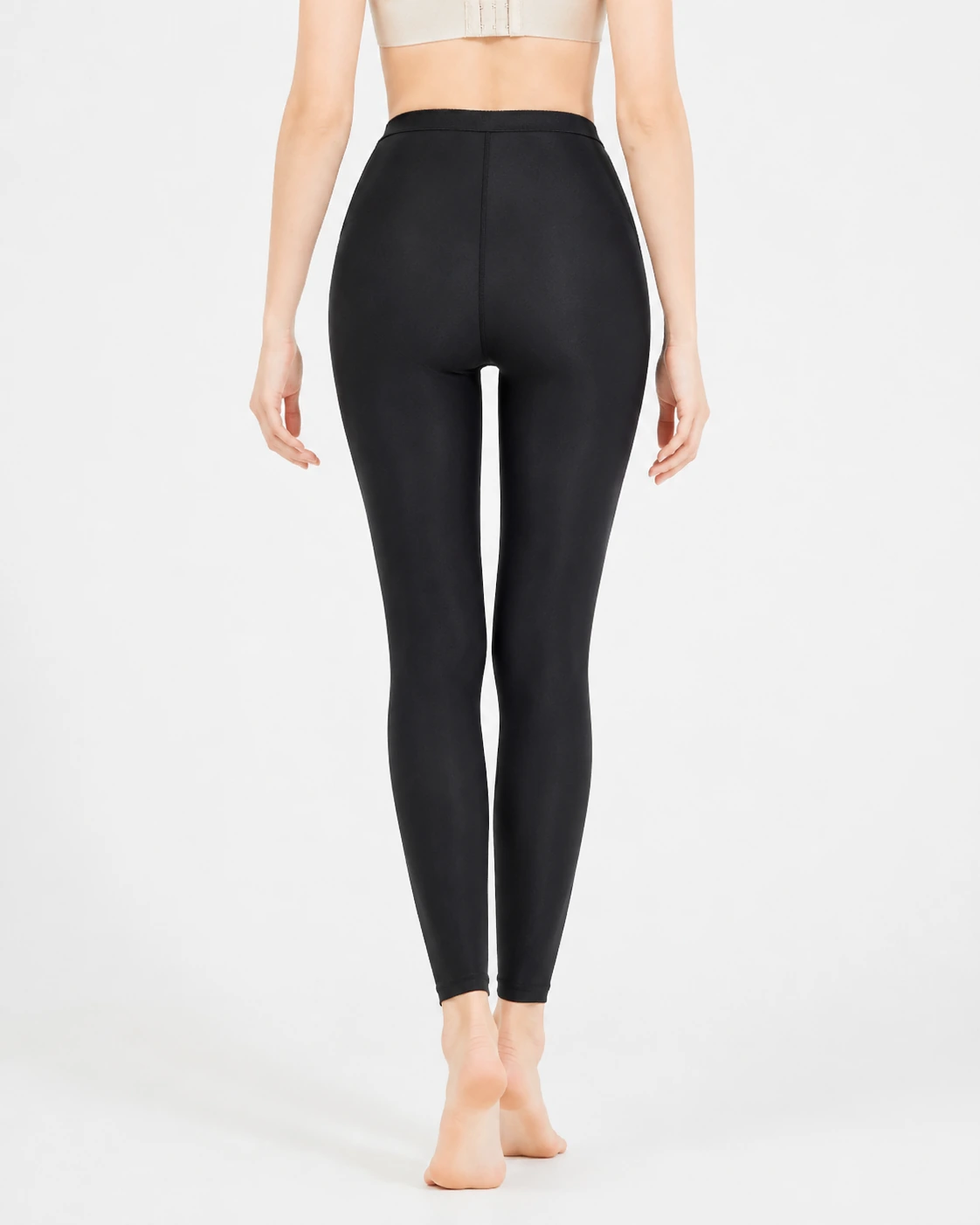
Rear construction
Shaped Seams Follow the Natural Back Contour
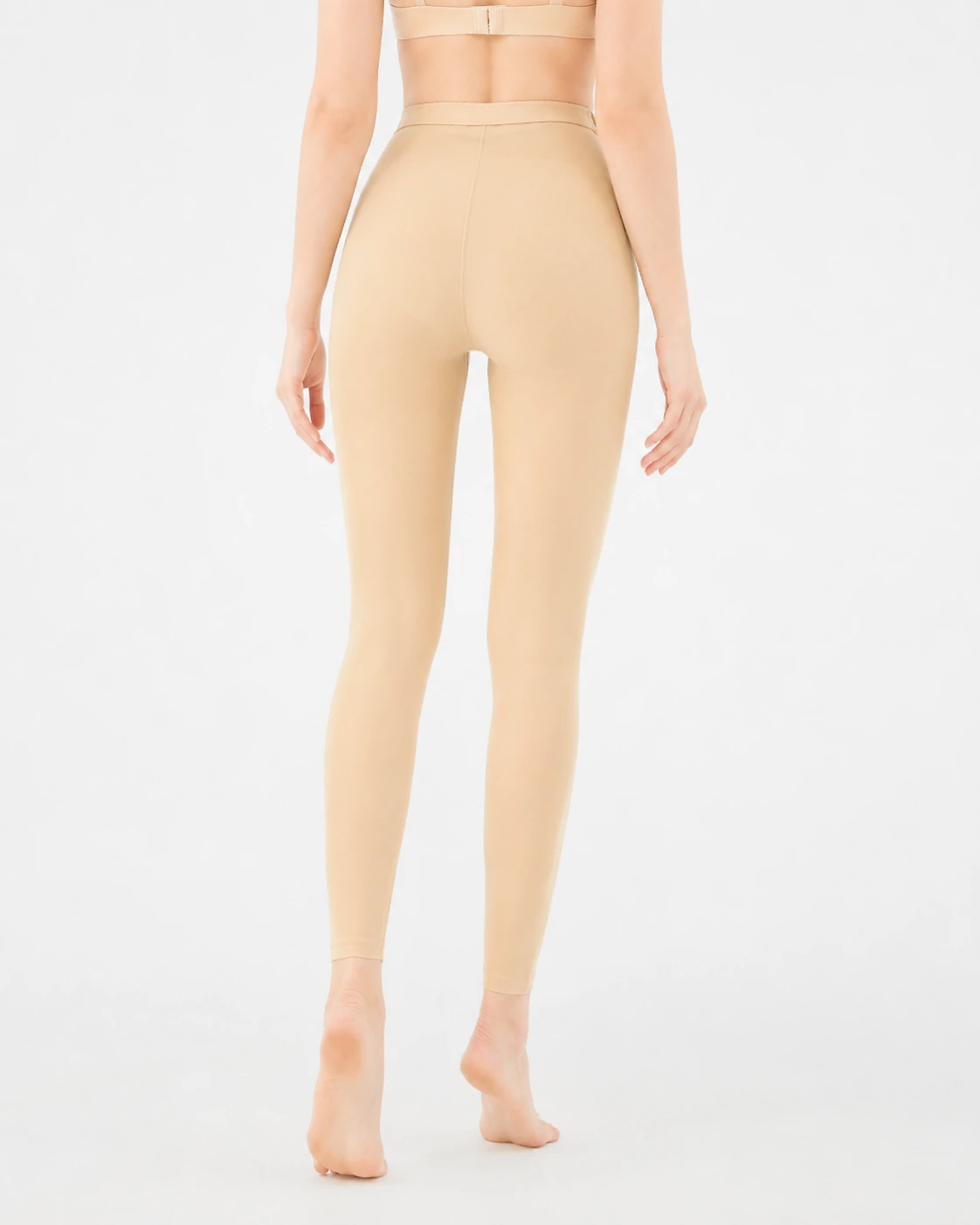
Curved seams at the back help the garment follow the seat instead of relying on one flat panel. The goal is a smoother, more deliberate silhouette while the high waist and full legs maintain continuous coverage.
Seams shape the garment only while it is being worn, and the visual result will vary with anatomy, swelling, size selection and what you wear over the leggings. A closer fit can also make seam lines more noticeable under very thin or highly fitted clothing.
For the most balanced result, settle the fabric gradually over the hips and seat before closing the zipper. Twisted legs, a waistband pulled higher on one side or fabric gathered behind the knee can create uneven pressure that is not part of the intended fit.
Black or Skin Color: Same Construction, Different Styling Role
Both storefront colors use the same size chart and the same high-waist, side-zip, full-length construction. Choose by the clothing you expect to wear over the garment rather than assuming one color changes the support level.
Black
A practical choice under dark trousers, long tops and deeper-colored outfits. Black can visually emphasize lint, light-colored fibers and some surface marks, so follow the care label and store the garment cleanly.
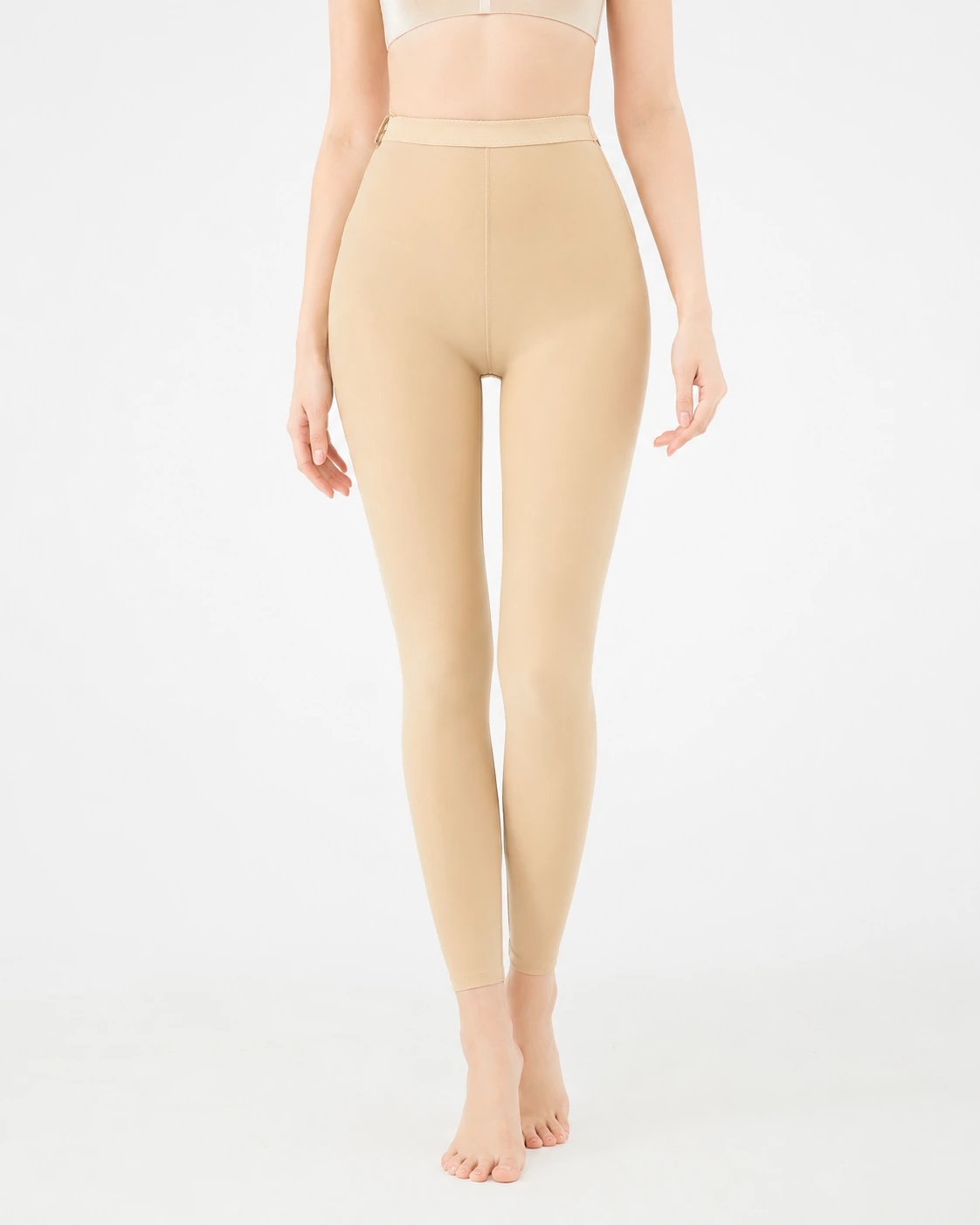
Skin Color
A lighter option for wearing beneath pale or neutral clothing. “Skin Color” is the storefront color name; the shade will not disappear under every fabric or match every skin tone exactly.
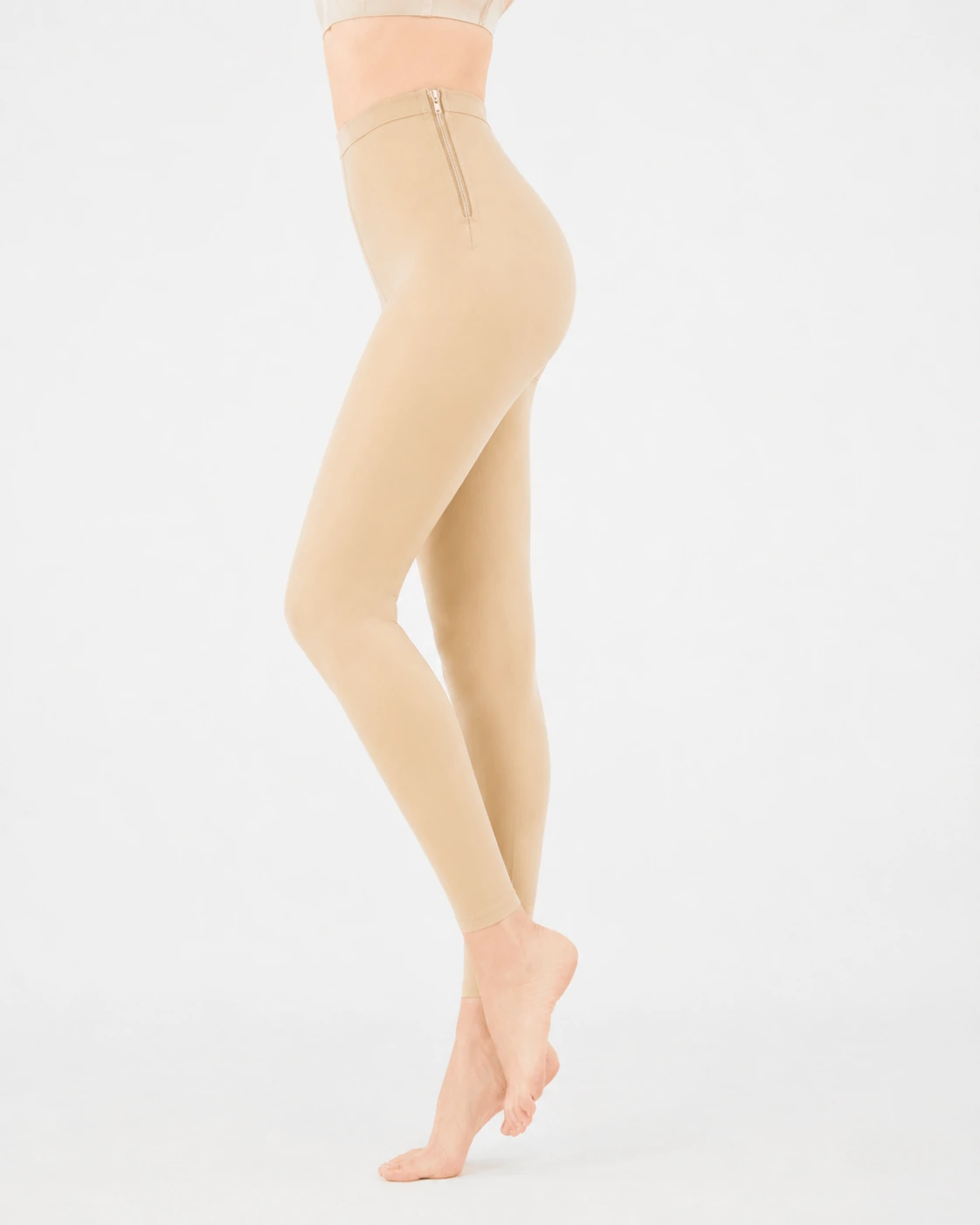
Skin Color Views: Side, Back and Zipper Detail
These separate views make it easier to inspect the same construction in the lighter color before ordering.
Size From Your Waist and Upper Thigh—Not Height or Weight Alone
The current storefront matrix is Black and Skin Color in S, M, L, XL and 2XL. Measure close to the body while wearing thin clothing or no bulky layers. Keep the tape level, and do not pull it tight enough to indent the skin.
| Size | Waist | Upper thigh |
|---|---|---|
| S | 63–68 cm / 24.8–26.8 in | 49–51 cm / 19.3–20.1 in |
| M | 69–74 cm / 27.2–29.1 in | 51–53 cm / 20.1–20.9 in |
| L | 75–80 cm / 29.5–31.5 in | 54–56 cm / 21.3–22.0 in |
| XL | 81–86 cm / 31.9–33.9 in | 57–60 cm / 22.4–23.6 in |
| 2XL | 87–92 cm / 34.3–36.2 in | 61–64 cm / 24.0–25.2 in |
Waist
Measure around the waist area where the high waistband will sit. Keep the tape horizontal and relaxed.
Upper thigh
Measure around the fullest part near the top of the thigh. Measure both sides if swelling is uneven and use the larger measurement.
Between two sizes
If waist and thigh point to different sizes, use the larger result as your starting reference. Provider guidance takes priority when swelling or procedure-specific fit changes the decision.
The chart is a selection guide and cannot predict an identical fit for every body. Contact support before ordering if your measurements fall outside the listed ranges.
A calmer dressing sequence
How to Put On Full-Length Compression Leggings
- Open the side zipper fully. Check that the zipper path is clear and that the legs are not twisted.
- Gather one leg at a time. Step in carefully and bring the fabric over the foot and ankle before moving higher.
- Work upward in small sections. Smooth the calf, knee and thigh rather than pulling forcefully from the waistband.
- Set the back seams. Make sure the rear construction follows the seat and that fabric is not gathered behind the knees.
- Position the high waist evenly. The waistband should not be significantly higher on one side.
- Close the zipper slowly. Keep nearby fabric and skin away from the zipper path. Do not force the closure if the edges cannot meet without excessive pulling.
When removing the leggings, open the zipper first and roll the garment downward gradually. Avoid pulling only from the ankle or using sharp objects near the fabric.
What a More Balanced Fit Looks Like
Encouraging signs
- The waistband sits evenly without one side being pulled higher.
- The zipper closes smoothly without fabric catching.
- The legs feel consistently close rather than sharply tighter at one band.
- You can move within the limits already approved for your recovery stage.
Pause and reassess
- The zipper cannot meet without force or immediately slides downward.
- The waistband rolls repeatedly because the garment is overstretched or positioned unevenly.
- Fabric bunches behind the knee or twists down one leg.
- The garment creates new or worsening symptoms that your provider has not told you to expect.
Best For, Not Ideal For, and When to Choose Another Style
Best For
- Provider-approved recovery plans that call for high-waist, full-length lower-body coverage.
- Customers who prefer a side-waist zipper instead of a wide front hook panel.
- People whose waist and upper-thigh measurements fall within the published S–2XL chart.
- Customers choosing between Black and Skin Color with the same construction and sizing.
Not Ideal For
- A care plan that requires compression above the waist or across the upper torso.
- An incision or sensitive area positioned where the side zipper will sit.
- Customers who require an open-crotch construction or a shorter shorts/capri length.
- Measurements outside the current chart without professional sizing guidance.
Choose Another
Choose full-length front-hook leggings when your care plan or dressing preference calls for a front closure.
Choose shorter shaping shorts when you do not need waist-to-ankle coverage.
Choose an open-bust recovery bodysuit when lower-body coverage must connect to an upper-torso section.
Care and Daily Handling
Follow the sewn-in care label because that label is the most specific instruction for the garment you receive. Close the zipper before cleaning unless the label instructs otherwise, and protect the zipper from snagging other items. Avoid cleaning methods, temperatures or chemicals that conflict with the label.
After cleaning, inspect the zipper, waistband and major seams before wearing again. A damaged closure or opened seam can change how the leggings sit and should not be ignored. Keep the garment away from rough hooks, sharp nails and abrasive surfaces when dressing or storing it.
Frequently Asked Questions
Are these leggings full length?
Yes. They use a high-rise waistband and extend to the ankles. They are longer than recovery shorts or capri styles.
Where is the closure positioned?
A discreet zipper is positioned at the upper side waist. Confirm that this location is appropriate for your incision placement and recovery plan.
How should I choose a size?
Measure both your waist and the fullest part of your upper thigh, then compare both results with the chart. If they indicate different sizes, use the larger result as your starting reference.
Do Black and Skin Color use the same sizing?
Yes. Both storefront colors use the same S–2XL matrix, measurements and garment construction.
When can I start wearing them after a procedure?
Start time and daily wear duration depend on your procedure, incision location and individual plan. Wear them only when this garment type has been approved by your healthcare provider.
What should I do if the zipper will not close smoothly?
Do not force it. Check that the legs are pulled up evenly, the back seams are positioned correctly and no fabric or skin is caught. Recheck your measurements and contact support or your provider when the fit remains uncertain.
Can these replace an upper-body recovery garment?
No. Product 8391 is a lower-body legging. It does not provide chest, shoulder, upper-back or open-bust coverage.
How should I care for the leggings?
Follow the sewn-in care label, close and protect the zipper during cleaning when consistent with that label, and avoid heat or cleaning methods the label does not permit.
Vanessa D. –
Very comfortable for everyday wear. Compression level is moderate which I wanted.
Megan P. –
Exactly what I needed for special occasions and daily outfits.
Ruth Q. –
Bought this for postpartum support and it has been a game changer.
Olivia K. –
Provides good compression and holds everything in place. Size chart was accurate.
Amber S. –
The hooks are sturdy and the fabric holds up well after multiple washes. A little hard to put on at first but you get used to it. Really helps with swelling.
Tiffany W. –
Good quality for the price. Compression is consistent throughout the day. Would size up if you’re between sizes — I went true to size and it’s quite snug.
Rachel S. –
This helped a lot during my recovery. Supportive without being too tight.
Megan R. –
Post-tummy tuck and this is the only garment that gives me the right compression without being too tight. The zipper makes it easy to get on and off.
Megan P. –
Instant shaping effect and looks great under dresses.
Jessica L. –
Doctor recommended wearing compression and this one worked perfectly for me.
Barbara V. –
Slim and smooth under clothes with no visible lines. Really pleased.
Chelsea G. –
Decent but not exceptional. Compression loosened a bit after a few washes.
Nicole P. –
Tried three other brands before this one. The sizing is accurate and the material doesn’t roll down or bunch up. Wearing it 12+ hours a day and still comfortable.