
Substantively reviewed and updated: August 28, 2026
Direct answer
There is no universal week when every BBL patient should switch to a Stage 2 faja. “Stage 2” is a retail description for a more structured recovery-garment category, not a standardized medical timetable. Change garments only when your surgeon or healthcare provider says it is appropriate. When shopping, compare current measurements, coverage, rear construction, closures and comfort—not the stage label alone.
- Provider first: your surgeon decides whether and when to change garments.
- Re-measure: recovery-related size changes can make an earlier garment loose or poorly positioned.
- Construction matters: compare coverage, closure access and the design around procedure-specific areas.
Compare Three BBL Stage 2 Faja Formats
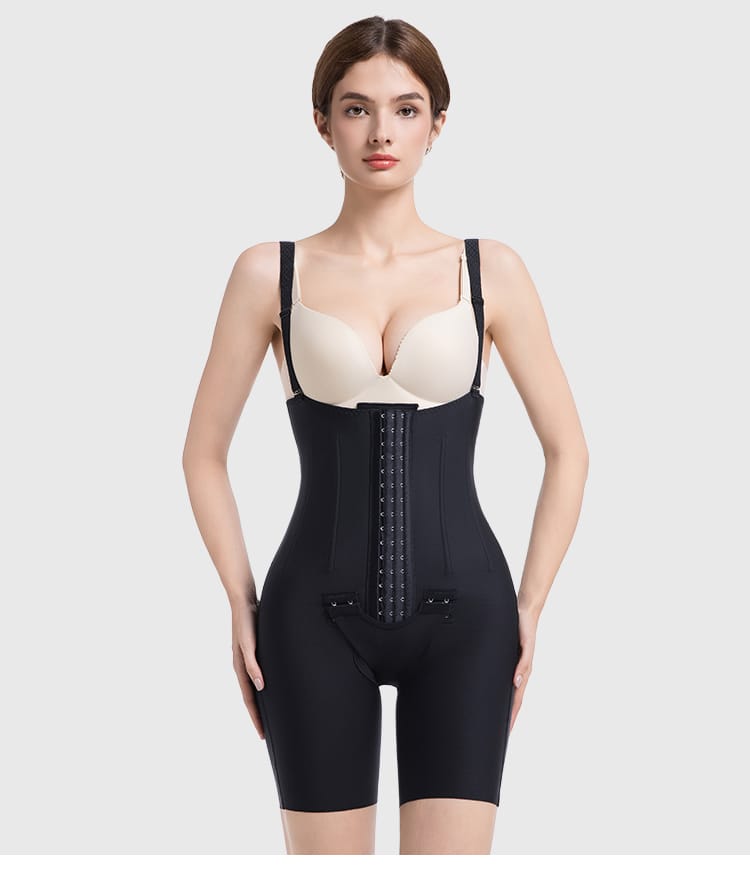
See three Qinelle BBL recovery formats early, then use the guide below to compare timing questions, current measurements, coverage, rear construction and closures. Confirm procedure-specific suitability with your provider.
- Recovery Sets
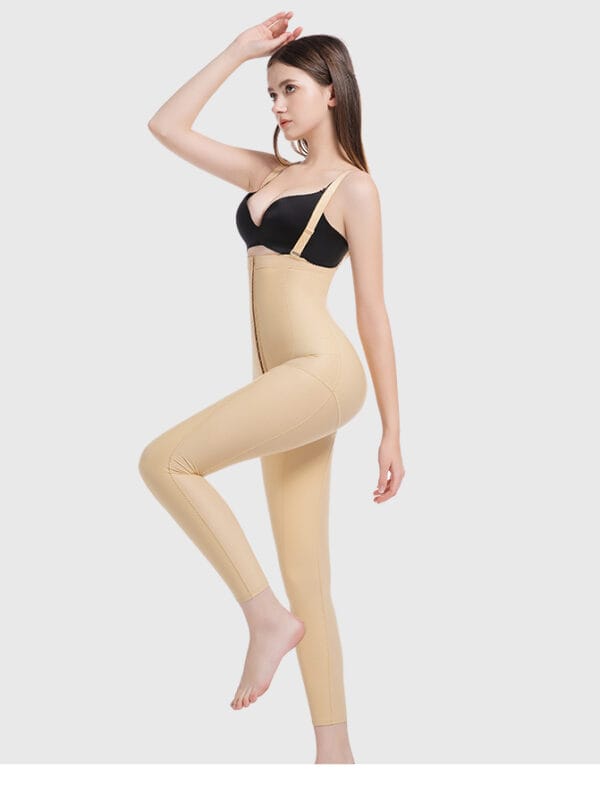
Post-Op Compression Bra & Leggings Set – BBL-Safe
$89.00Select options This product has multiple variants. The options may be chosen on the product page - Fajas & Recovery Bodysuits
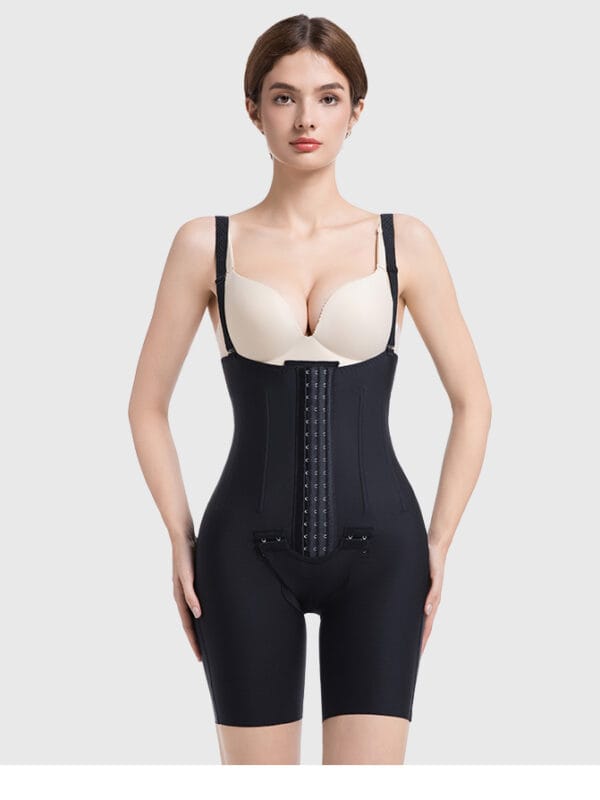
Sleeveless Front-Hook Recovery Bodysuit – Stage 2 BBL-Safe
$89.00Select options This product has multiple variants. The options may be chosen on the product page - Fajas & Recovery Bodysuits
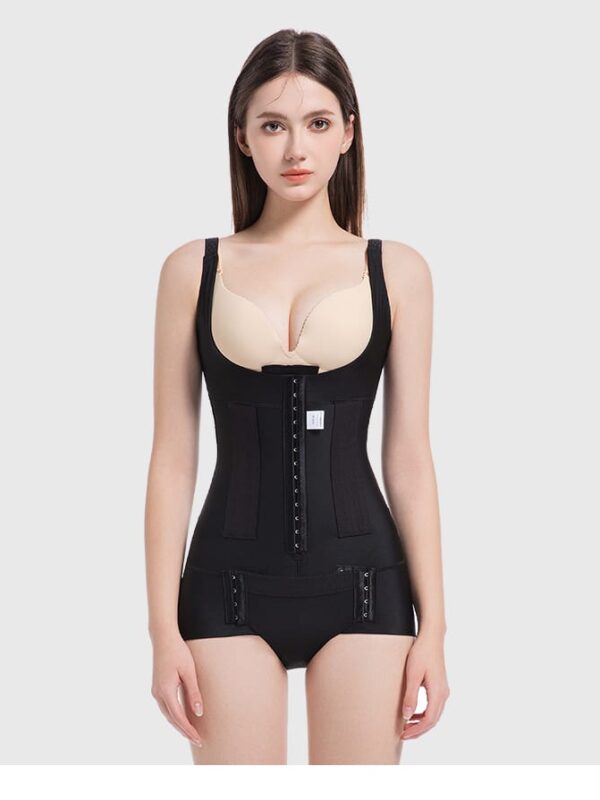
Sleeveless Open-Bust BBL Recovery Compression Bodysuit with Front Hooks
$99.00 Select options This product has multiple variants. The options may be chosen on the product page
Compare all BBL recovery garments or use the broader post-surgery compression garment guide.
Quick FAQ
When should I switch to a Stage 2 faja after BBL?
Only after your surgeon or care team has reviewed your recovery and cleared the change. Online week-by-week rules are not personal medical guidance.
Should I size down?
No. Use current measurements and the exact product chart. A smaller size does not automatically create safer or more useful support.
Does Stage 2 guarantee a specific pressure?
No. The label alone does not prove a measured mmHg rating or identical construction across brands.
Can Qinelle tell me which faja my recovery requires?
Qinelle can compare product construction and fit information; your provider must approve procedure-specific use.
What does “Stage 2 faja” actually mean?
In retail listings, Stage 1 and Stage 2 are shorthand for different recovery-garment designs. A Stage 2 product may feel more structured, offer multiple closure positions or be shaped for a later point in a recovery plan. But the label is not a universal clinical standard, and two products carrying the same label can differ in fabric, seams, panels, length, openings and coverage.
Before changing garments
Current garment
Review the fit and coverage you have now.
Provider clearance
Change garments only when your surgeon or healthcare provider says it is appropriate.
Re-measure
Use the measurements requested by the exact product chart.
Compare construction
Check coverage, closure access, rear construction and comfort.
Key point: Stage labels are retail shorthand, not a universal medical timetable.
The American Society of Plastic Surgeons has published examples of surgeons using Stage 1 and Stage 2 garments at different points, while also emphasizing that patients should follow their own board-certified plastic surgeon’s instructions. Treat published time ranges as context—not as clearance to change your garment.
Stage 1 vs Stage 2: compare the garment, not the calendar
Compare the garment — not the stage label
Fit
Current measurements and the exact product size chart.
Coverage
Where the garment begins and ends across the body.
Closure
Adjustment rows, openings and practical access.
Construction
Rear design, seams, panels and garment structure.
Comfort
Movement, pressure points and your provider’s instructions.
| Decision area | Earlier/current garment | Candidate Stage 2 garment | Who decides? |
|---|---|---|---|
| Timing | Already part of your current plan | Only after clearance | Your surgeon or care team |
| Size | May change as swelling and measurements change | Use current measurements and its own chart | You measure; provider advises recovery suitability |
| Coverage | Matches the initial plan | May use a different torso, hip or leg format | Provider approves; shopper compares construction |
| Closure | Current hooks, zipper or opening | May provide additional adjustment positions | Shopper compares access and usability |
| Pressure | Do not infer from “Stage 1” alone | Do not infer from “Stage 2” alone | Use verified product information and provider guidance |
For a broader construction comparison, use the Stage 1 vs Stage 2 compression garment guide.
Five fit checks before you buy
- Measure again. Record the measurements requested by the exact product chart. Do not reuse a pre-surgery size or assume all Qinelle products share one chart.
- Confirm the coverage map. Compare where the garment begins and ends across the abdomen, back, hip and thigh areas.
- Review the rear construction. Ask your surgeon whether the seat design and pressure distribution are appropriate for the areas involved in your procedure.
- Check closures and bathroom access. Make sure you can use the front closure, adjustment rows and any access opening without twisting or forcing the garment.
- Perform a symptom check. A garment should not cause severe pain, numbness, breathing difficulty or a new concerning skin problem.
How should a Stage 2 faja feel?
It may feel secure and structured, but “tighter” is not automatically “better.” The product must fit the current body measurements and sit smoothly without severe edge pressure, bunching or twisting. Sizing down to chase stronger compression can move pressure to the wrong places and make closures, seams and openings sit incorrectly.
The American Society of Plastic Surgeons advises patients to contact their surgeon when a recovery garment becomes loose as swelling changes. That does not mean every loose garment should automatically be replaced with a smaller “Stage 2” product; it means fit changes should be reviewed in the context of the recovery plan.
Choose the coverage format your provider approves
Connected bodysuit
Creates continuous torso-to-hip or torso-to-thigh coverage. Check torso length, bust format, crotch access and the rear-panel design.
Open-bust bodysuit
Allows a separate bra while maintaining connected lower-torso coverage. Check whether the under-bust edge and straps sit comfortably.
Separate top and bottom
May be easier to size when upper- and lower-body measurements differ. Check for gaps, overlap and whether separate pieces match the provider’s plan.
Longer leg coverage
Can extend coverage beyond the upper thigh. Compare inseam, hem position and whether the length matches the treated areas.
Qinelle’s current BBL recovery comparison
The following evidence comes from Qinelle’s live catalog snapshot on August 28, 2026. It compares format and currently published product information; it does not assign a medical stage or recovery schedule.
| Product | Format | Visible decision cues | Current listed price |
|---|---|---|---|
| Sleeveless Front-Hook Recovery Bodysuit – Stage 2 BBL-Safe | Connected sleeveless bodysuit | Front-hook format; compare torso, hip and leg coverage | $89 |
| Sleeveless Open-Bust BBL Recovery Compression Bodysuit with Front Hooks | Open-bust connected bodysuit | Separate-bra flexibility; front-hook access | $99 |
| Post-Op Compression Bra & Leggings Set – BBL-Safe | Separate top and bottom | Independent upper/lower pieces; verify overlap and sizing | $89 |
Questions to take to your surgeon
- Am I cleared to change garment type, fit or support level now?
- Which areas should be covered, and are there areas where pressure should be limited or avoided?
- Is an open-bust, connected bodysuit or separate-piece format more appropriate for my procedure?
- Does the rear-panel construction of this product match your instructions?
- What symptoms or fit changes should prompt me to stop and contact the office?
Care and rotation without inventing a universal schedule
Follow the care label on the exact garment and the hygiene instructions given by your provider. If you are considering a second garment for wash-day rotation, confirm that it has the same approved coverage and fit rather than assuming any product labeled Stage 2 is interchangeable.
Do not change wear hours based on a retailer’s generalized schedule. Your provider’s instructions control.
Sources and medical-review boundary
- American Society of Plastic Surgeons: Why Compression Garments Are Your Best Friends in Recovery — surgeon examples of stage terminology and explicit provider-first guidance.
- American Society of Plastic Surgeons: The Importance of Compression After Plastic Surgery — fit changes as swelling decreases.
- American Society of Plastic Surgeons: Six Things to Know About BBL Recovery — procedure-specific recovery context.
Sources checked August 28, 2026. This article provides product and fit information, not diagnosis or individualized postoperative instructions.