
Built-In Cup Compression Bra Top
One Garment for Cups, Upper-Body Coverage and Front Access
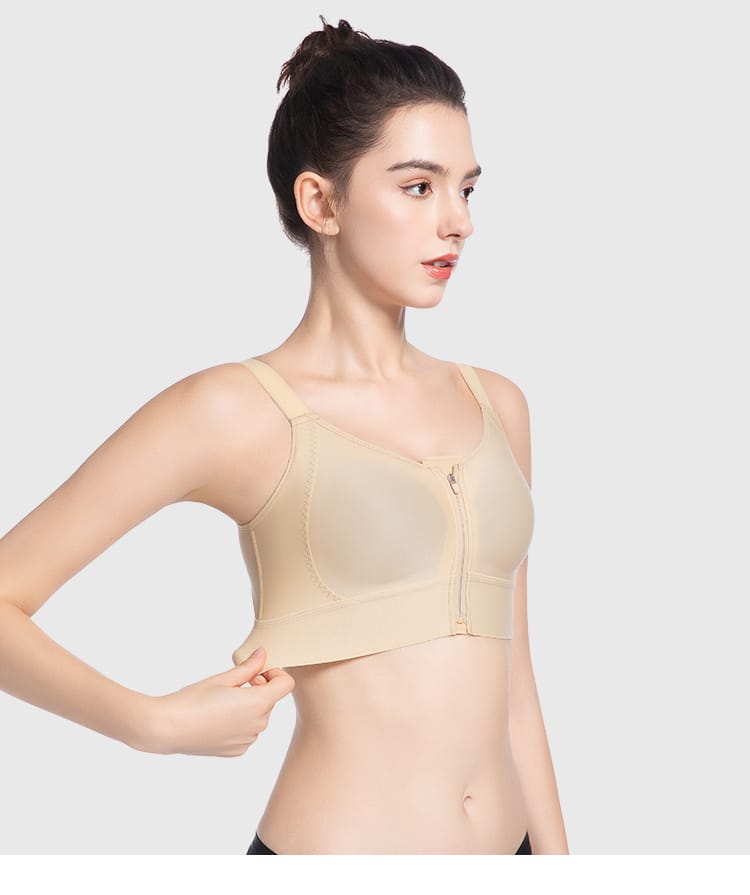
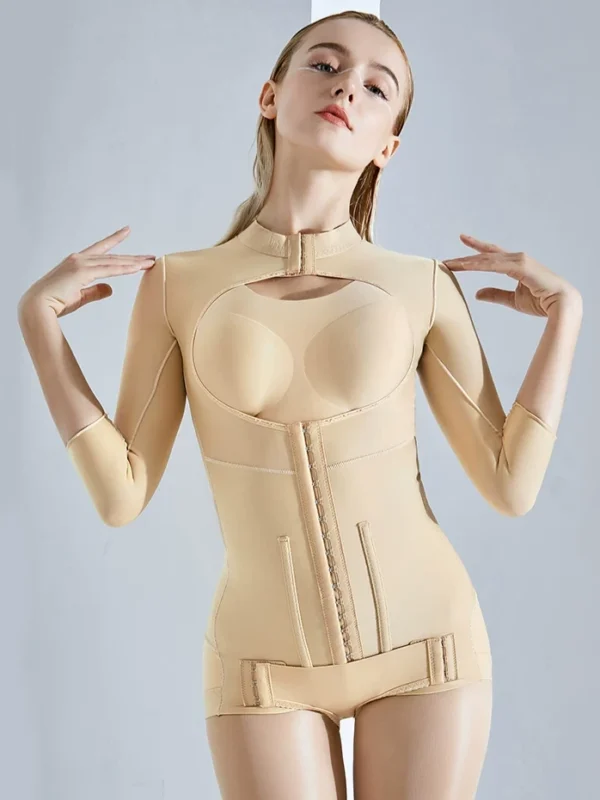
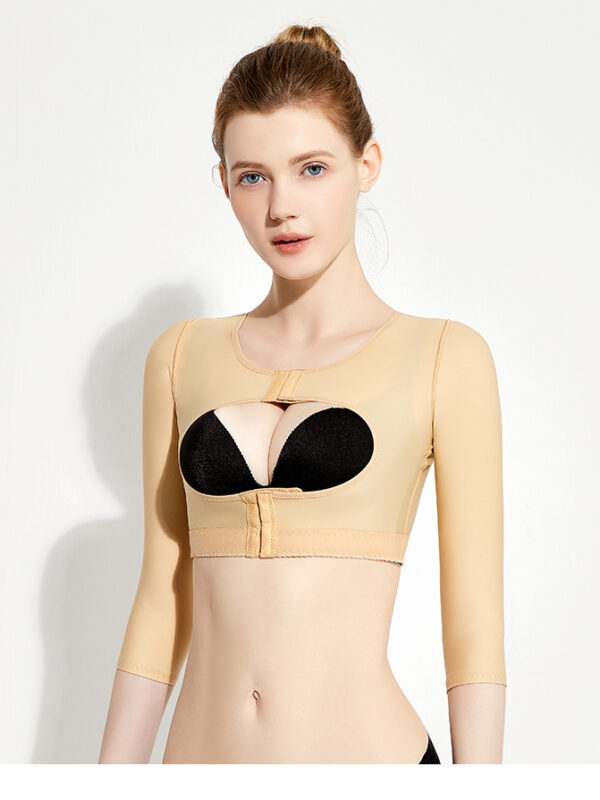
This cropped compression bra top is designed for shoppers who want an integrated cup structure together with coverage through the shoulders, upper arms and upper back. The integrated cups are part of the garment rather than a separate layer. The front body closes with hooks and eyes, while the sleeves extend to around the elbows.
Built-in cups are included
The cup structure is part of the garment, so the listing does not depend on a separate bra to create the photographed front shape.
Front hooks instead of a body zipper
The center lower panel uses hooks and eyes, matching the confirmed product construction.
More arm coverage than a short sleeve
The sleeves continue to around the elbows, covering the upper arms without extending to the wrists.
Two bust measurements guide the size
Upper bust and lower bust should be compared together. A usual bra or shirt size is not enough to describe the integrated cups and lower band.
What This Product Actually Is
This is a cropped compression bra top with built-in cups, an adjustable upper-chest strap, elbow-length sleeves and a front hook-and-eye closure. It is a self-contained cup-and-sleeve upper-body garment rather than a layered bra-and-top combination or a bodysuit.
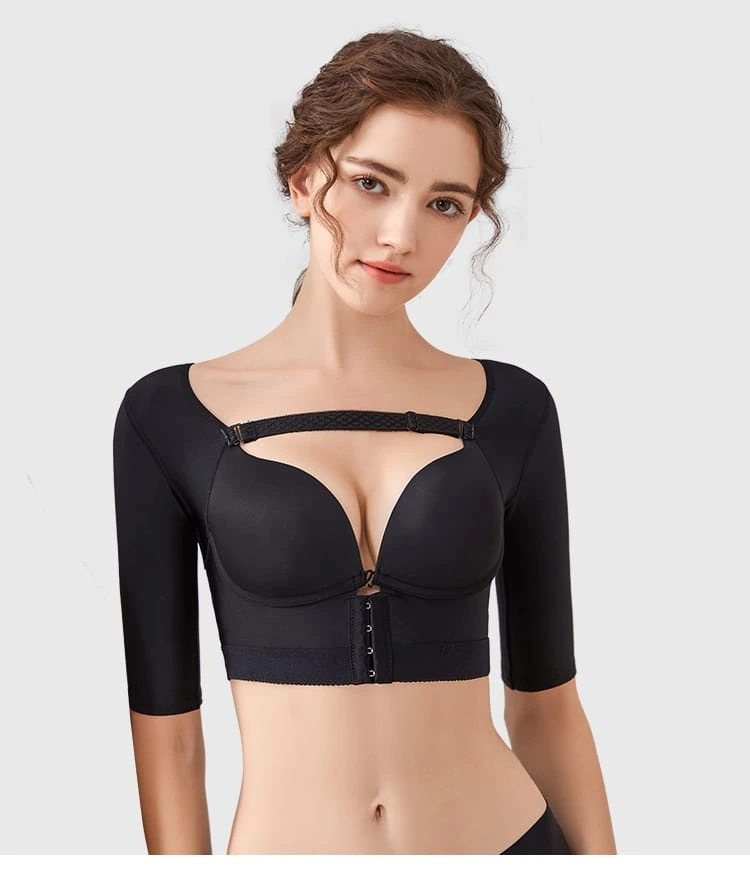
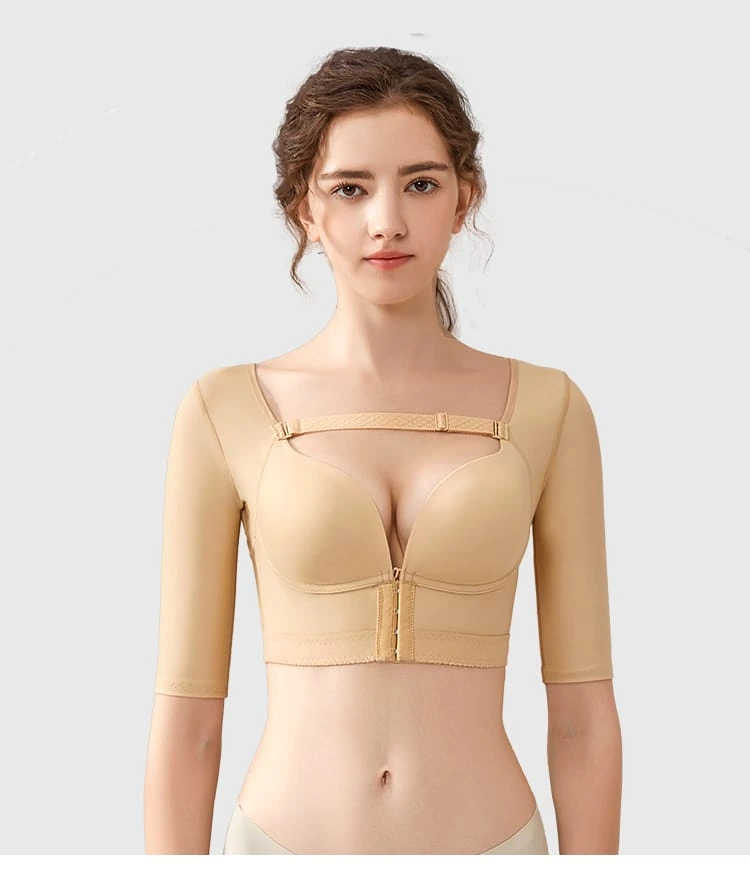
Black and Beige share the same design. The integrated cups shape the bust area, the narrow upper strap spans the top of the cup opening, the front hooks close beneath the cups, and the cropped body ends below the bust rather than continuing over the abdomen or hips.
Best For
- Shoppers who want built-in cups and upper-body coverage in one garment.
- People who prefer a front hook-and-eye opening over a closed pull-on top.
- Those who want coverage through the shoulders, upper arms and upper back.
- Shoppers whose upper-bust and lower-bust measurements fall within the live S–2XL chart.
- People choosing between Black and Beige in the same construction.
- Layering beneath loose clothing when a cropped body and integrated cups suit the intended outfit.
Coverage Map
Integrated bust cups
The cup structure is built into the front. No separate cup garment is included or required to create the basic cup shape.
Upper-chest strap
A narrow adjustable strap spans the upper front and helps keep the shoulder sections aligned.
Elbow-length sleeves
The sleeves cover the upper arms and finish around the elbows. They are longer than ordinary short sleeves and shorter than wrist-length sleeves.
Smooth upper back
The rear panel runs continuously across the shoulder blades and upper back without a rear body closure.
Cropped lower band
The body ends beneath the bust. It does not cover the waist, abdomen, hips or lower back.
Front hook-and-eye panel
The lower center front uses several hook-and-eye positions for closure and placement beneath the cups.
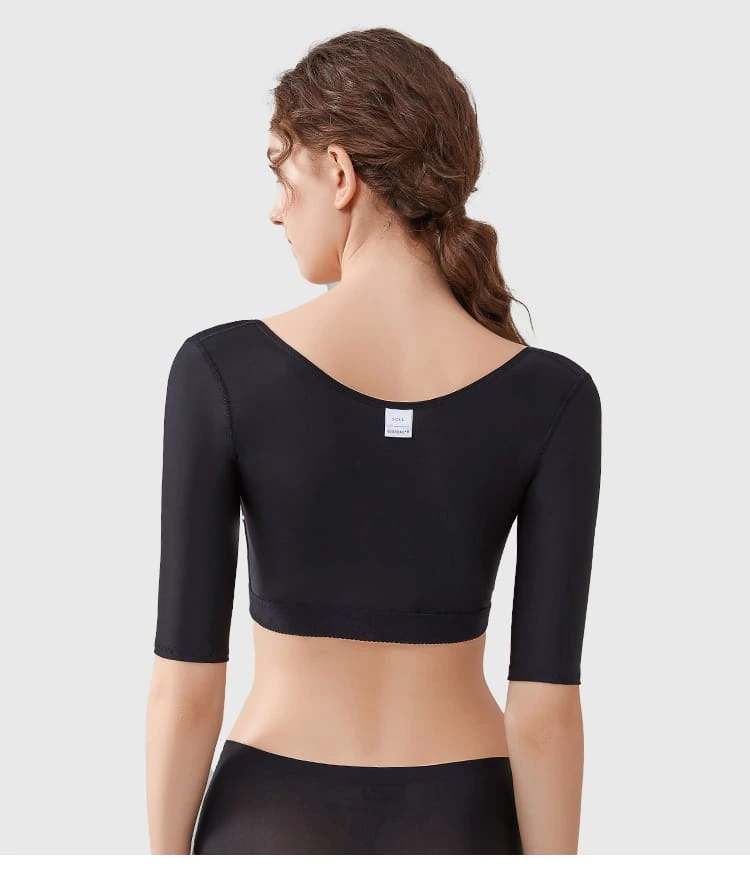
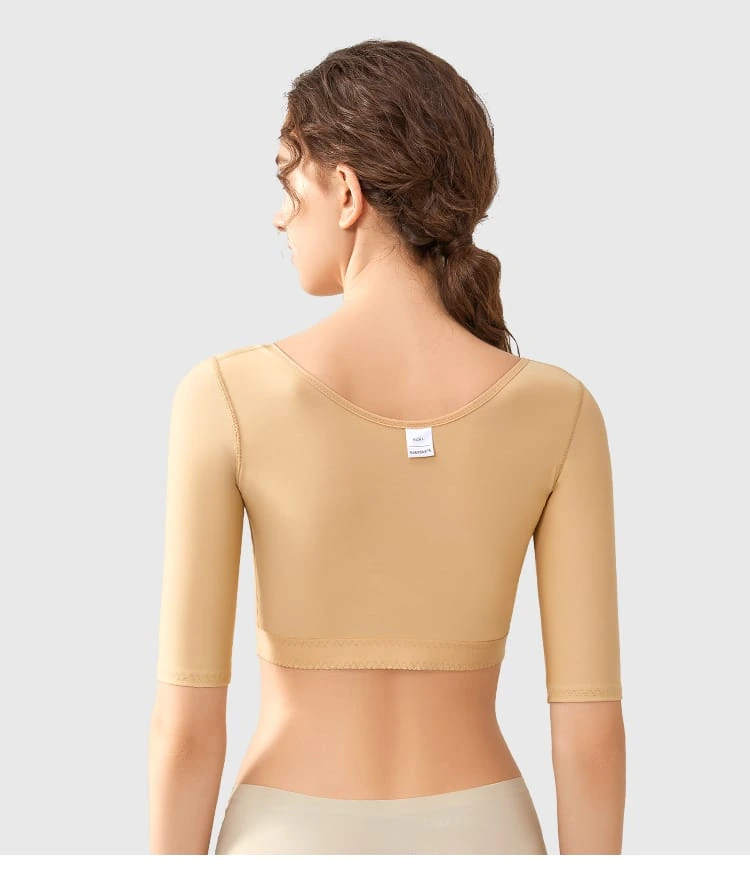
How the Built-In Cup Structure Should Sit
The cup edge should surround the bust rather than cut across the fullest area. The center front should stay aligned, and the lower cup seam should remain supported by the band beneath it. The garment does not use a separate letter-cup selector, so the upper-bust and lower-bust measurements must be considered together.
Upper cup edge
The edge should follow the bust shape without creating a sharp horizontal line or visible overflow.
Center placement
The center front should remain near the middle of the chest instead of twisting toward one side.
Lower cup seam
The seam beneath the cups should sit above the lower band and should not fold under itself.
Lower band
The band should remain level around the torso. A rising band can change how the cups sit even when the upper-bust reading appears correct.
Front Closure and Upper Strap
Front hook-and-eye closure
Open the front panel completely before dressing. After the shoulders, sleeves and cups are positioned, close the hooks from the bottom upward. Begin with the loosest comfortable row. The panel should lie flat beneath the cups rather than pulling diagonally toward one side.
Upper-chest strap
Adjust the upper strap only after the body panel is closed and the cups are centered. The strap should help balance the shoulder sections; it should not be shortened aggressively to compensate for a loose or incorrectly positioned lower band.
Confirmed body closure
The confirmed product images show a hook-and-eye body closure, and the page describes that photographed construction consistently.
Current Color and Size Matrix
| Color | S | M | L | XL | 2XL |
|---|---|---|---|---|---|
| Black | Available | Available | Available | Available | Available |
| Beige | Available | Available | Available | Available | Available |
There are ten live combinations: Black and Beige in S, M, L, XL and 2XL. XS appears in the source chart but is not sold as a live variation on this listing, so it is intentionally excluded from the selector and customer-facing table.
Size Guide
| Size | Upper Bust | Lower Bust |
|---|---|---|
| S | 81–87 cm / 31.9–34.3 in | 68–73 cm / 26.8–28.7 in |
| M | 87–93 cm / 34.3–36.6 in | 73–78 cm / 28.7–30.7 in |
| L | 93–99 cm / 36.6–39.0 in | 78–83 cm / 30.7–32.7 in |
| XL | 99–105 cm / 39.0–41.3 in | 83–88 cm / 32.7–34.6 in |
| 2XL | 105–111 cm / 41.3–43.7 in | 88–93 cm / 34.6–36.6 in |
Compare both readings. When upper bust and lower bust point to adjacent sizes, begin with the larger live size. When they are several rows apart, repeat both measurements and pay particular attention to whether the lower band can remain level while the cup edge sits around the bust.
How to Measure
Upper bust
Wrap the tape around the fullest part of the bust while standing naturally. Keep the tape level across the back and avoid compressing the tissue.
Lower bust
Measure directly beneath the bust where the lower band is expected to sit. Keep the tape level, close to the body and free of twists.
Wear a light, unpadded layer
A bulky or heavily padded garment can change the reading. Use a thin layer or measure according to the intended fit instructions.
Repeat both measurements
Take each reading twice. A large difference usually means the tape moved, tilted or tightened between attempts.
Do not substitute a usual cup letter, shirt size or dress size for these measurements. The live chart is based on upper-bust and lower-bust circumference.
Step-by-Step Dressing Guide
- Open the front hooks and loosen the upper-chest strap.
- Guide one arm into each sleeve without twisting the fabric.
- Set the shoulder seams near the natural shoulder points.
- Center the rear panel across the upper back.
- Position the integrated cups around the bust and smooth the lower cup seams.
- Keep the lower band level beneath the bust.
- Close the front hooks from the bottom upward, beginning with the loosest comfortable row.
- Adjust the upper-chest strap so it remains level and does not pull the shoulders inward.
- Smooth the sleeves from the upper arms toward the elbows.
- Raise the arms gently, bend the elbows and take several normal breaths.
Remove the garment in reverse order. Open the upper strap and all front hooks before drawing the sleeves away from the arms.
Five-Minute Fit Check
- The integrated cups surround the bust without cutting across the fullest area.
- The center front remains aligned rather than twisting sideways.
- The lower band stays level and does not climb up the back.
- The hook panel lies flat without forming a hard diagonal ridge.
- The upper-chest strap stays level and does not press sharply into the skin.
- The sleeves lie smooth through the upper arms and elbows.
- The shoulder seams remain near the natural shoulder points.
- The back panel stays centered during gentle arm movement.
- Normal breathing and comfortable elbow movement remain possible.
Sharp pinching, numbness, skin color change, breathing restriction or a closure that cannot lie flat are signs to remove the garment and reassess the size and placement.
Fit Troubleshooting
- Cup edge cuts across the bust: reposition the cups and lower band; when the edge still crosses the fullest area, compare the upper-bust reading with the next size.
- Lower band rises at the back: recenter the rear panel and confirm that the lower-bust measurement falls within the selected row.
- Front hooks pull diagonally: reopen the panel, level the band and begin again from the bottom hook.
- One cup sits differently: smooth each side separately and check whether the entire garment is rotated.
- Upper strap pulls the shoulders inward: lengthen the strap and recenter the back panel.
- One sleeve feels tighter: compare both arms and check for twisting before changing size.
- Back panel bunches: lower the band and smooth the rear fabric from the center outward.
Size Selection Examples
These examples show how to read the chart; they do not replace your own measurements.
- Upper bust 85 cm and lower bust 71 cm: both readings fall in S, so S is the first size to compare.
- Upper bust 91 cm and lower bust 79 cm: the upper bust points to M while the lower bust points to L. Begin with L and check that the cup edge does not gap.
- Upper bust 98 cm and lower bust 84 cm: the upper bust points to L and the lower bust points to XL. Begin with XL and check the cup and band together.
- Upper bust 104 cm and lower bust 87 cm: both readings sit within XL, near the upper end of the row.
- Upper bust 109 cm and lower bust 91 cm: both readings fall in 2XL, the largest live option.
How the Main Parts Work Together
The integrated cups, lower band, upper strap, sleeves and back panel affect one another. Tightening one area cannot correct a different area that is twisted or incorrectly placed. Position the shoulders and back first, then the cups, then the lower band and front hooks, and adjust the upper strap last.
Cups and lower band
The cups should sit around the bust while the lower band remains beneath them. A rising band can make the cups appear too small or too high.
Upper strap and shoulders
The strap helps stabilize the upper opening but should not be used to pull the garment inward aggressively.
Sleeves and back panel
Twisted sleeves can rotate the back panel. Smooth the sleeves before judging the rear fit.
Front hooks and center alignment
The hooks should close in a straight vertical line. A diagonal line usually means the body is off center.
Cup, Band and Sleeve Balance During Movement
A correct first impression should still hold after gentle movement. Once the cups are centered and the lower band is level, raise each arm slowly, bend both elbows, turn the torso slightly and sit down for a moment. The cup edges should remain around the bust, the lower band should stay beneath the cups, and the back panel should remain centered. Movement should not pull the front hooks into a diagonal line or force the upper-chest strap to carry the entire garment.
When raising the arms
The lower band may shift slightly, but it should return to its level position without rolling sharply upward. A persistent rise can indicate that the band placement or size needs another check.
When bending the elbows
The sleeve ends should move with the arms without creating a hard fold at the elbow crease. Smooth the fabric from the upper arm downward before judging tightness.
When sitting
The cropped lower edge should remain beneath the cups rather than folding into the cup seam. Recenter the band before tightening any hook position.
When turning the torso
The center front and upper strap should stay reasonably level. If the garment rotates, reopen the hooks, center the back panel and dress again instead of pulling one side tighter.
Evaluate the cups, lower band, sleeves and back as one system. A tight upper strap cannot correct a loose band, and a tighter hook row cannot correct twisted sleeves. Small placement adjustments should be completed before deciding whether another size is needed.
Material and Support: What Is Confirmed
The images confirm integrated cups, a smooth close-fitting textile, stitched sleeve and body edges, an adjustable upper strap, a continuous back panel and front hook-and-eye hardware. The available source does not provide a verified fiber percentage, numerical pressure level or separate cup-letter system.
Because those specifications are not confirmed, this page focuses on visible construction, exact circumference values and practical fit checks. Shoppers who require a particular fiber, allergy-related material detail or numerical pressure range should obtain that information before purchase.
Important Limitations
This page does not assign a compression stage, guarantee a particular physical result or provide a universal wear schedule. The garment should be selected and positioned according to the confirmed measurements and the instructions relevant to the shopper’s own situation.
Stop and reassess when the garment causes sharp pain, numbness, skin color change, breathing restriction or a closure that cannot lie flat.
Not Ideal For
This style is not ideal when you need a cup-free upper-body layer for your own separate bra, a full abdominal or lower-body garment, wrist-length sleeves, a different front-fastening system, a separate letter-cup selector, a size outside S–2XL or a bodysuit that continues below the waist.
Choose Another Style If
- You want a cup-free upper-body layer designed around your own separate bra.
- You need a garment that covers the abdomen, hips or thighs.
- You need sleeves that extend to the wrists.
- You prefer no front hooks or no upper-chest strap.
- Your upper-bust or lower-bust measurement is outside the live chart.
- You require a separate letter-cup selection that this listing does not provide.
Care Notes
- Close the hooks before washing so they do not catch the fabric.
- Place the garment in a laundry bag and use cool water with mild detergent.
- Air dry away from direct heat.
- Do not pull the garment by the upper-chest strap.
- Inspect the hooks, cup seams, underarm seams and sleeve edges before wearing.
- Store the garment flat or lightly folded with the hooks secured.
FAQ
Are the bra cups included?
Yes. The garment includes its own integrated cup structure. It is not an cup-free top that requires a separate bra.
What type of front closure does it use?
The lower front panel closes with hooks and eyes, matching the confirmed product images.
How long are the sleeves?
The sleeves extend to around the elbows. They provide more arm coverage than a cap or short sleeve but do not reach the wrists.
Are Black and Beige the same construction?
Yes. Both colors use the same integrated cups, upper-chest strap, front hook-and-eye closure, cropped body and elbow-length sleeves.
How do I choose a size?
Measure both upper bust and lower bust. When the two readings point to adjacent sizes, begin with the larger live size and check the cup, band and sleeve placement together.
Why is XS not shown?
XS appears in the source chart but is not a live variation on this product page. The available range is S–2XL.
Is cup sizing listed separately?
No separate letter-cup system is provided. Use the upper-bust and lower-bust measurements in the live chart and check that the integrated cup shape sits around the bust without cutting across it.
How should I wash it?
Close the hooks, place the garment in a laundry bag, wash in cool water with mild detergent and air dry away from direct heat.


Emily R. –
Feels supportive but still breathable. Definitely exceeded my expectations.
Lauren C. –
The fabric is very gentle on the skin and the fit is smooth under clothing.
Megan P. –
Gives a very smooth silhouette. I feel more confident wearing it.
Nicole D. –
Provides good compression and holds everything in place. Size chart was accurate.
Amanda T. –
Secure fit and very comfortable even for long hours after surgery.
Nicole P. –
Good quality for the price. Compression is consistent throughout the day. Would size up if you’re between sizes — I went true to size and it’s quite snug.
Amber F. –
Very comfortable for everyday wear. Compression level is moderate which I wanted.
Kayla D. –
Tried three other brands before this one. The sizing is accurate and the material doesn’t roll down or bunch up. Wearing it 12+ hours a day and still comfortable.