

Substantively reviewed and updated: August 28, 2026 · Medical review boundary: garment education, not an individual recovery prescription
Direct answer
After a tummy tuck, wear the dressing, elastic bandage or compression garment specified by your surgical team, with loose outer clothing that does not rub incisions, drains or swollen areas. The operation, drain plan and surgeon’s protocol determine coverage and timing. Do not substitute a retail “Stage 1,” “Stage 2,” mmHg value or week-by-week schedule for written postoperative instructions.
- Use the written order: confirm garment type, coverage, wear/removal and bathing instructions before purchase.
- Protect access: seams, waistbands and closures must not interfere with incisions, drains or inspection.
- Evidence is limited: compression is common, but research does not support a guaranteed complication or outcome benefit.
Quick FAQ
What clothes should I wear home after a tummy tuck?
Follow the facility’s instructions. Loose, easy-to-open outer clothing is often practical, while the prescribed dressing, wrap or garment remains the clinical decision.
How long should I wear compression?
Ask your surgeon. ASPS specifically recommends asking how long the pressure garment should be worn; no single online schedule applies to every tummy tuck.
Is an abdominal binder better than a bodysuit?
Neither is universally better. A binder is localized and adjustable; a bodysuit adds connected hip or thigh coverage and more seam, closure and torso-length variables.
Can I size down for more compression?
No. Use current measurements and the exact product chart, then obtain approval. Smaller is not a verified pressure prescription and can shift boundaries.
Current demand: tummy tuck remains a major procedure
The American Society of Plastic Surgeons’ 2024 statistics report records 171,064 abdominoplasty procedures performed by ASPS member surgeons, compared with 170,110 in 2023. The 954-procedure increase is 0.56% after calculation, so the evidence supports continued demand—not a dramatic surge.
Abdominoplasty (tummy tuck)
ASPS member-surgeon procedure counts · United States · 2023 vs 2024
Source: American Society of Plastic Surgeons, 2024 Plastic Surgery Statistics Report, pages 6–8. Counts marked by ASPS as member-surgeon procedures only. Calculation: (171,064 − 170,110) ÷ 170,110 × 100. Volume does not measure recovery-garment effectiveness.
What authoritative guidance actually says
ASPS tummy-tuck recovery guidance says dressings or bandages may be used and a patient may be wrapped in an elastic bandage or compression garment. It also tells patients to ask the surgeon how long to wear the pressure garment, how to care for incisions and drains, when to bathe and when to resume activities.
Those statements support a surgeon-led choice. They do not establish a universal “first garment,” a fixed number of hours per day, a standard Stage 1-to-Stage 2 week, or one pressure level for every patient.
What the research says about compression after abdominoplasty
A 2024 systematic review of post-abdominoplasty compression garments included five trials totaling 130 participants and concluded that the available evidence supporting beneficial use was weak. A separate 2023 peer-reviewed practical review of postoperative compression found highly heterogeneous evidence by procedure and outcome; it reported no demonstrated effect on seroma rate across the evidence it reviewed and emphasized possible discomfort, venous stasis and skin problems.
Evidence snapshot—not a treatment recommendation
The numbers describe the 2024 systematic review’s evidence base.
Source: Arkoubi et al., 2024, “Effect of Compression Garments on Post-Abdominoplasty Outcomes: A Systematic Review of the Current Evidence.” Study count and participants describe the review, not Qinelle products and not an individual expected outcome.
A four-question garment decision flow
Before you choose a format
Complete these steps with the surgical team; do not make the garment the prescriber.
Decision support only. The operation and care plan may require additional restrictions.
Compare garment formats by access and coverage
| Format | Coverage and access | Advantages to evaluate | Variables to resolve |
|---|---|---|---|
| Elastic wrap or abdominal binder | Localized abdominal coverage; adjustable overlap | Easier localized adjustment and removal | Upper/lower edge, overlap, fastener, rolling and drain/incision contact |
| High-waist brief bodysuit | Abdomen, waist and brief coverage | Connected coverage without a separate thigh hem | Rise, torso length, gusset, leg opening and closure position |
| Mid-thigh bodysuit | Connected abdomen, hip and upper-thigh coverage | May match multi-zone coverage when specifically requested | Torso length, leg hem, seams, bathroom access and treated-area boundaries |
| Full-body or long-leg garment | Connected torso and longer lower-body coverage | Fewer gaps when broad connected coverage is prescribed | Whether extra coverage is needed, leg length, mobility, closures and heat |
| Separate pieces | Two or more localized garments | Each area may be sized or accessed separately | Overlap, gap, waistband pressure and whether separate coverage is permitted |
What Clothes to Wear After a Tummy Tuck: Loose, Easy-Access Options
Choose outer clothing around access and comfort rather than a fashion deadline. A loose front-opening top or dress can reduce the need to pull clothing over the torso. Soft, relaxed trousers or a skirt may be easier to position than a tight fixed waistband. Slip-on footwear may reduce bending, if the care team allows it.
These are practical clothing features, not recovery milestones. Your team’s instructions for movement, assistance, drains and wound care determine what is appropriate. Keep all clothing and garment edges away from locations the team has told you not to cover or rub.
Useful clothing criteria
- Easy to open and remove
- Loose through the operated area
- Compatible with drains and inspection
- Clean, dry and free of rough interior details
Claims clothing cannot make
- “Prevents” a surgical complication
- “Guarantees” less swelling or pain
- “Retracts” skin or improves the final result
- Replaces follow-up, wound care or medical advice
How to check fit without diagnosing recovery
- Confirm identity. Match the exact product, size and construction approved by the team. A similar-looking garment may have different panels or boundaries.
- Position, do not over-tighten. Smooth fabric and align closures as instructed. Do not size down or add boards, foam or extra wrapping unless prescribed.
- Inspect access points. Check that the approved garment does not block a drain, wound observation or bathroom opening.
- Follow the symptom plan. Use the care team’s written instructions for pain, swelling, skin, wound, drainage, breathing and emergency concerns.
- Reassess before switching. Changing measurements, looseness or a retail “stage” label is a reason to ask—not automatic clearance.
When to contact the surgical team
Keep the surgeon’s postoperative contact and emergency instructions available. Contact the team for symptoms, wound or drain changes, garment interference, or fit concerns according to those instructions. Seek urgent or emergency care for any symptom the team identifies as an emergency.
Questions to ask before discharge or purchase
- What exact garment or wrap should I use, and who provides the first one?
- Which areas should it cover, and which incisions, drains or areas require special access?
- Is an abdominal-only binder, brief bodysuit, thigh-length garment or separate set preferred?
- Is there a verified pressure specification, or only a construction and fit requirement?
- What are my wear, removal, bathing and cleaning instructions?
- What triggers refitting or replacement, and who should approve a retail stage change?
Compare three abdominal coverage formats
| Product | Catalog format | Provider questions to resolve |
|---|---|---|
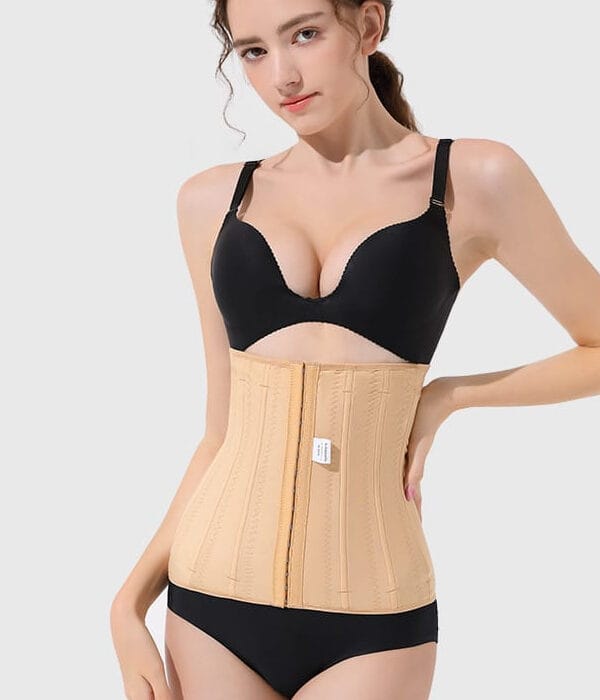
| High-Waist Post-Surgery Abdominal Compression Belt | Localized adjustable abdominal coverage | Edge placement, overlap, closure tension and incision/drain contact |
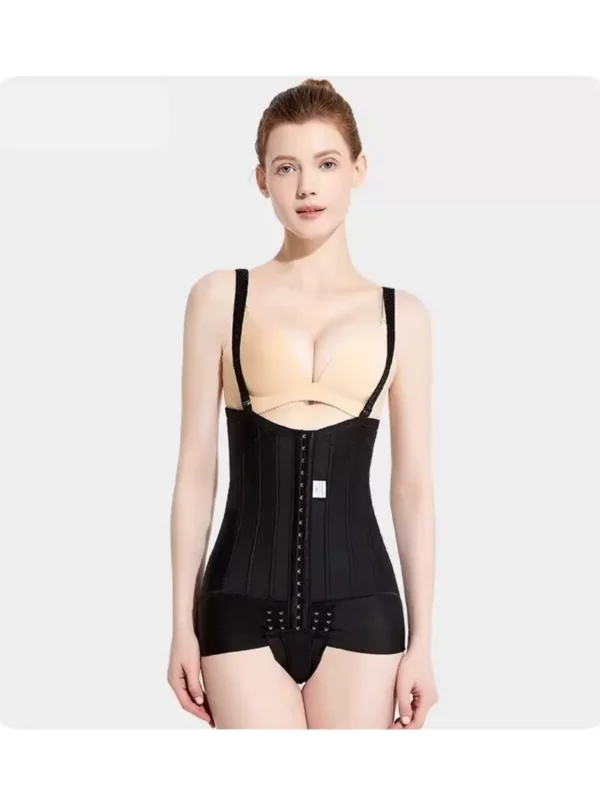
| High-Waist Open-Bust Post-Surgery Compression Brief Bodysuit | Connected torso and brief coverage | Torso length, gusset, leg opening, upper edge and access |
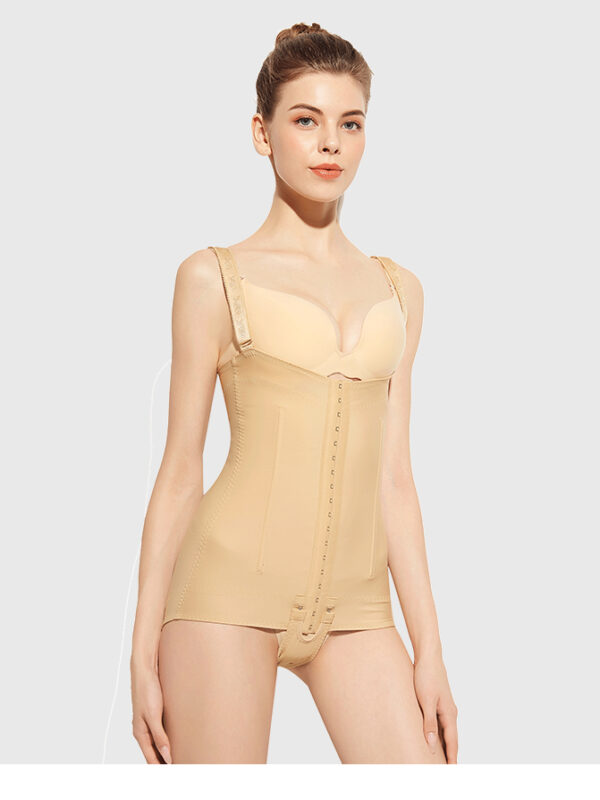
| Post-Lipo Open-Bust Full-Body Compression Garment with Hook Closure | Connected torso and longer lower-body coverage | Whether broad coverage is prescribed, hook position, leg length and treated-area match |
Inspect the three coverage formats
Use these products to compare construction only. A “post-surgery” product name is not evidence that the item is correct for a specific tummy tuck or recovery phase.
- Fajas & Recovery Bodysuits
High-Waist Open-Bust Post-Surgery Compression Brief Bodysuit
$79.00Select options This product has multiple variants. The options may be chosen on the product page - Waist & Abdominal Support
High-Waist Post-Surgery Abdominal Compression Belt
$79.00Select options This product has multiple variants. The options may be chosen on the product page - Fajas & Recovery Bodysuits
Post-Lipo Open-Bust Full-Body Compression Garment with Hook Closure
$79.00Select options This product has multiple variants. The options may be chosen on the product page
Ready to compare tummy tuck recovery garment formats?
After your surgical team has confirmed the coverage, access and construction you need, compare Qinelle recovery options by abdominal coverage, closures and fit.
Continue with the post-surgery garment coverage guide, liposuction compression guide for combined-procedure questions and the measurement guide.
Sources and evidence notes
- American Society of Plastic Surgeons: 2024 Plastic Surgery Statistics Report — 2023 and 2024 procedure counts and 2024 ranking.
- ASPS: Tummy Tuck Recovery — dressing, compression and surgeon-question context.
- Arkoubi et al., 2024: Effect of Compression Garments on Post-Abdominoplasty Outcomes — systematic review; five trials, 130 participants and weak overall evidence.
- Ormseth et al., 2023: The Use of Postoperative Compression Garments in Plastic Surgery—Necessary or Not? — practical review of benefits, limitations and possible complications.
Sources, calculations, product availability and internal links checked August 28, 2026. This page is educational and does not replace the surgical team’s plan, diagnosis or urgent care.