

The Qinelle Dress Edit · Fabric-first styling guide
The short answer: Under a satin dress, start with the smoothest, least bulky layer that meets your needs—not necessarily the firmest shapewear. A seamless brief or shaping half slip may work best under thin, fluid satin; high-waist shorts offer more thigh coverage if their hems stay hidden; a bodysuit can give a continuous torso line if its straps, neckline and back work with the dress.
You’ve found the satin dress. Now comes the question that rarely gets answered at the fitting-room mirror: What should I actually wear underneath it? Thin or bias-cut satin can reveal a waistband, the edge of a shaping short, the outline of a bra or the contrast between fabric and skin. Stronger compression does not automatically solve any of those issues.
This guide helps you compare four real options—seamless briefs, shaping shorts, a smoothing bodysuit and a shaping half slip—using the cut of your dress, the areas where it clings and what feels comfortable when you move. Whether you’re planning a holiday party, wedding guest outfit or a simple slip-dress look, the goal is a layer that lets you enjoy wearing the dress.

Start with your dress, not the shapewear label
Keep the layer light
Try a smooth brief or shaping half slip first. Avoid bulky lace, heavy waistbands and textured closures where the dress skims your hips.
Check the thigh line
Shaping shorts can cover more of the tummy, hips and thighs, but only if the leg openings stay invisible when you sit and walk.
Consider one continuous piece
A seamless bodysuit avoids a separate waistline. Check its straps, back height and brief edges against your neckline and dress cut.
Less coverage may be better
A smooth brief is often more practical than shorts or a half slip whose hems could become visible with movement.
Why satin makes underlayers more noticeable
Satin’s smooth, reflective surface highlights changes in texture and contour. A loose, lined satin dress may conceal underwear easily; a thin, unlined, bias-cut dress often follows the body closely. That means there are three separate problems to solve: visible edges, fabric transparency and movement. A product can help with one without solving the others.
Before shopping, examine the dress in daylight. Is it actually sheer, or are the marks you see raised seams? Does the fabric cling at the waist, across the seat or around the mid-thigh? Does the dress ride upward when you walk? Answering those questions is more useful than shopping by compression level alone.
Shaping briefs vs shorts vs bodysuits vs half slips
| Underlayer | Good starting point for | Main edge to check | Important trade-off |
|---|---|---|---|
| Seamless high-waist brief | Short satin dresses; light tummy smoothing | Waist and brief opening | No thigh coverage; a brief edge can still show |
| High-waist shaping shorts | Fitted midi dresses; tummy and upper-thigh coverage | Waist plus both leg hems | Hems may show through thin satin or a high slit |
| Seamless brief bodysuit | Continuous tummy-and-torso coverage | Neckline, straps, back and brief line | Not necessarily suitable for open-back dresses |
| Shaping half slip | Skirt-style coverage without two shorts-leg openings | Waistband and single lower hem | Less useful for thigh-to-thigh friction than shorts |
Remember: “Seamless” does not mean that the garment disappears beneath every fabric. Even a flat hem can show under close-fitting satin, so the best choice is the one that passes a real dress fitting.
Four Qinelle options, with the reasons to choose—or skip—them
These are different silhouettes at accessible prices, not a list of products claiming to be universally “the best.” Prices and available color/size ranges were checked against the Qinelle catalog in November 2026. Select your current variation on the product page before ordering.
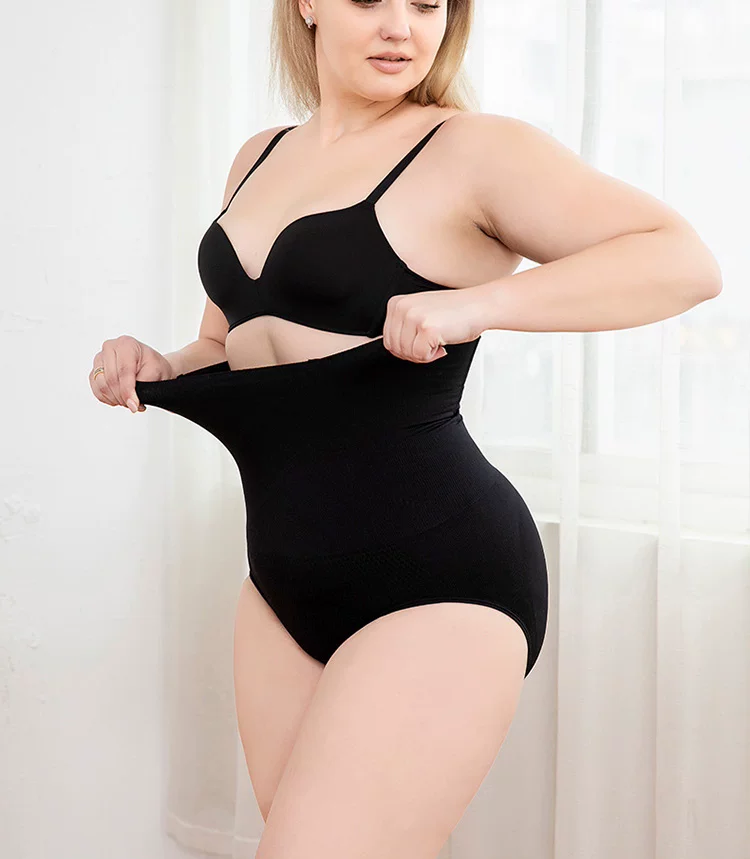
High-Waist Seamless Knit Shaping Brief
Why consider it: Brief-style coverage avoids a mid-thigh hem under a mini or slit dress. Four colors; sizes XS–2XL.
Check before buying: The brief opening and waistband may still outline under very thin satin. It does not help with inner-thigh friction.
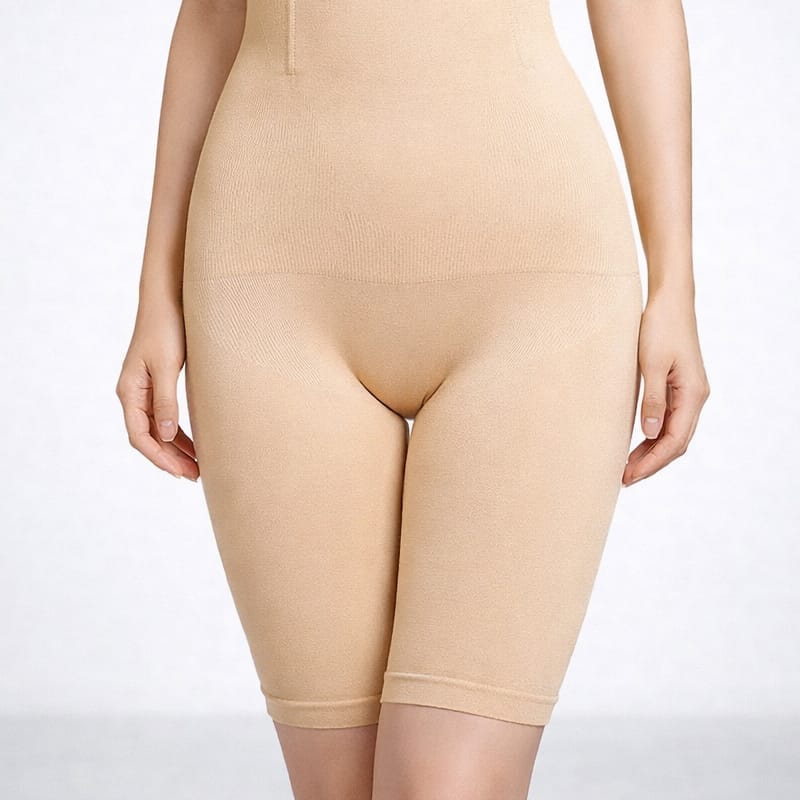
High-Waist Tummy Control Shaper Shorts
Why consider it: A high waist and mid-thigh coverage for dresses, skirts and trousers. Black and Skin color; seven sizes from XS/S through 6XL.
Check before buying: Under thin or bias-cut satin, inspect both leg hems while walking and sitting. “Stay in place” is a design goal, not a guarantee for every body or fabric.
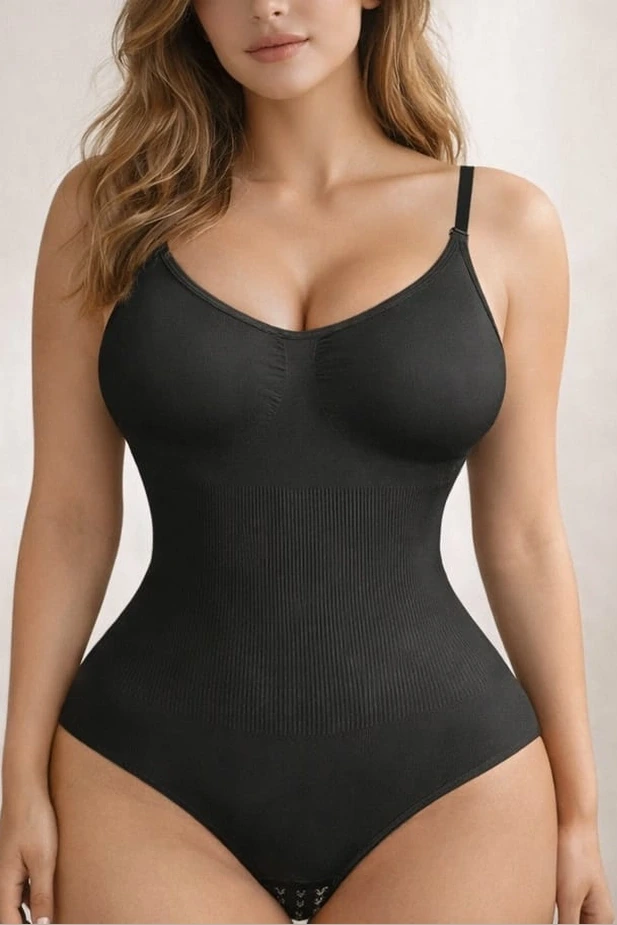
Seamless V-Neck Brief Shaping Bodysuit
Why consider it: A one-piece tummy-and-waist layer with adjustable straps and a brief bottom; six colors and sizes S–3XL.
Check before buying: A standard V-neck and back may be visible with plunging, low-back or strappy dresses. This is not a substitute for a bra without checking the bust fit.
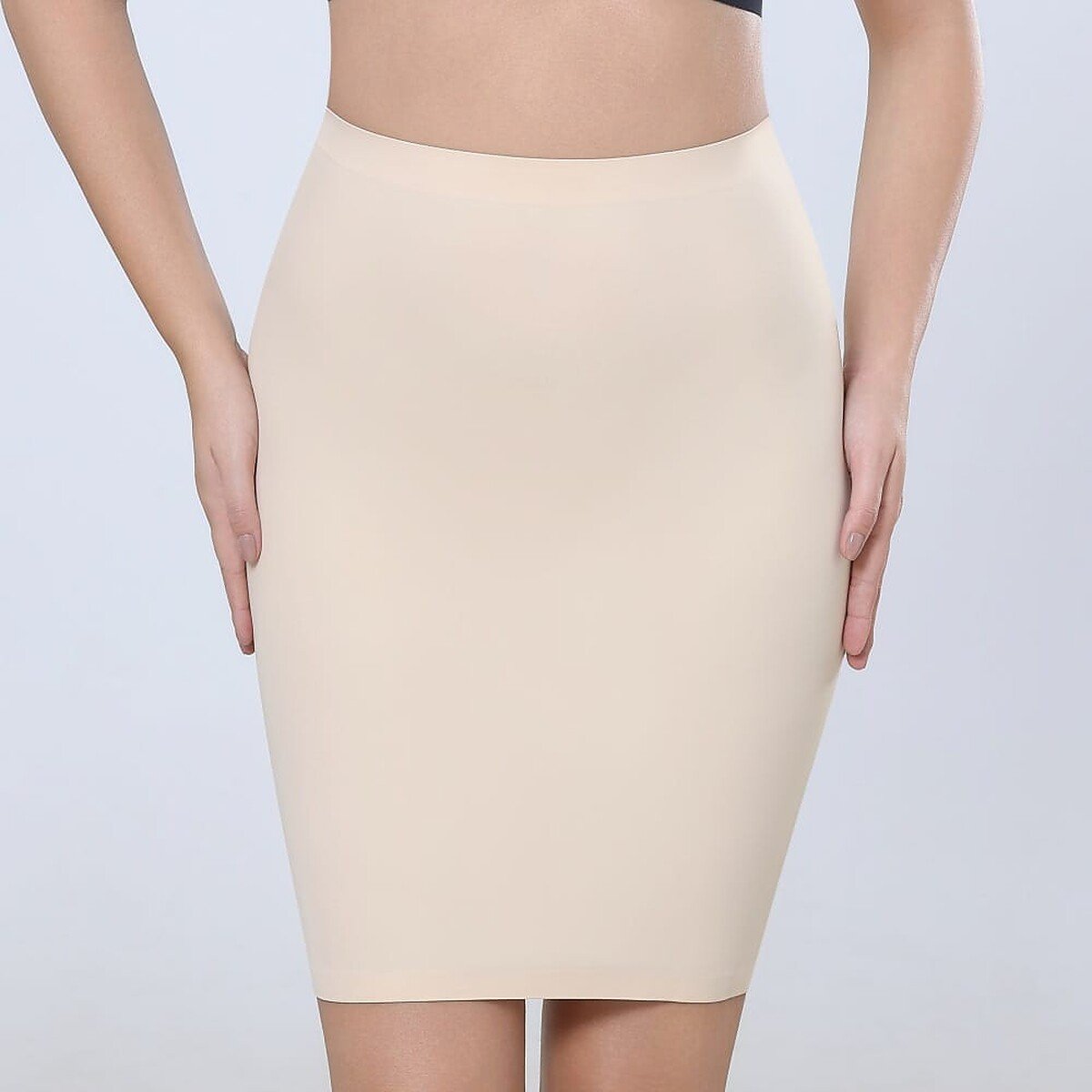
High-Waist Shaping Half Slip for Dresses
Why consider it: Skirt-style smoothing from waist to upper thigh without separate shorts-leg openings. Black, Beige and Brown; sizes S–XL.
Check before buying: The single bottom hem can still show through satin or peek out of a slit, and a half slip does not provide the same thigh separation as shorts.
Which option works with your specific satin dress?
For a fluid satin slip dress
Begin with a smooth, close-to-skin underlayer and check whether the fabric needs extra opacity rather than stronger shaping. A seamless brief or shaping half slip may be enough. If the dress is low at the back, don’t assume a standard bodysuit will stay hidden. For very thin, unlined fabric, a properly fitted lining or separate slip can work better than compression.
For a fitted satin midi or bodycon dress
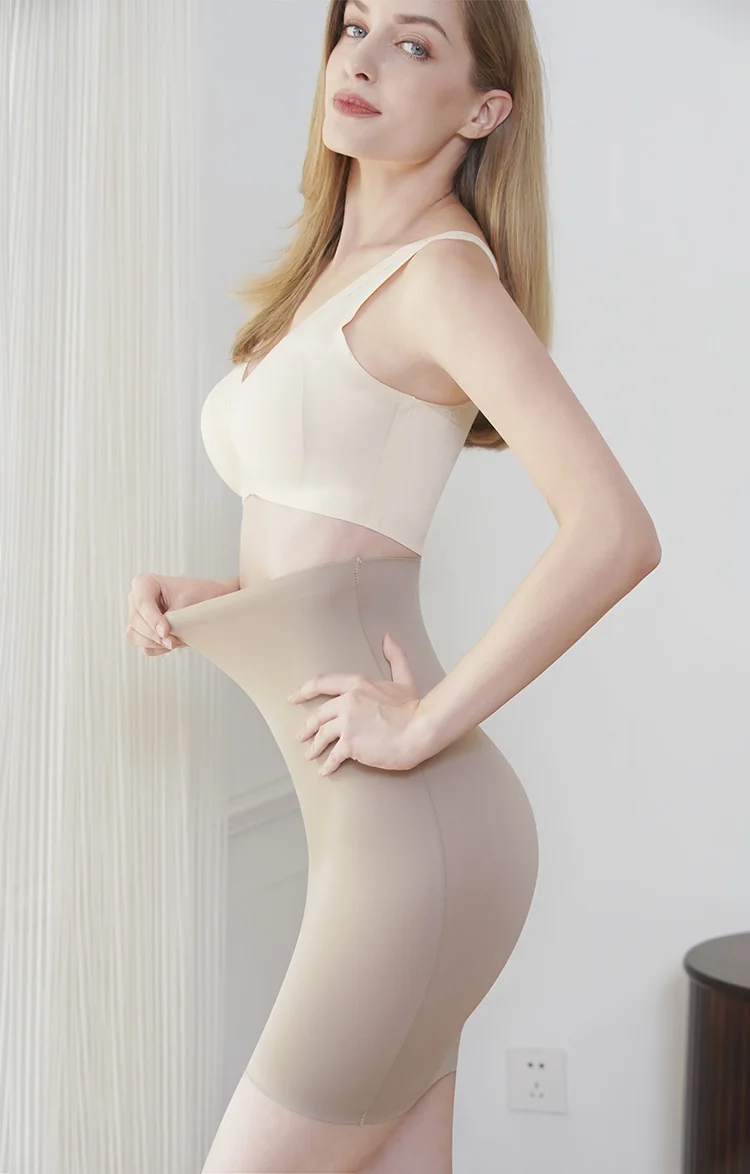
If your goal includes tummy and upper-thigh coverage, shaping shorts may make sense. But look at where their leg openings end relative to the dress’s tightest point. A smooth bodysuit can reduce the separate waist edge; a half slip may be worth comparing when individual leg hems show. Try all choices while seated, not only standing in front of a mirror.
For a satin mini dress or a high side slit
Pay attention to the shortest part of the hem and how far the slit opens in motion. A brief often makes a more discreet starting point than thigh-length shorts or a half slip. If you choose shorts, do a full walk-and-sit test to confirm they stay covered.
For a lined or relaxed A-line satin dress
You may not need shapewear at all. If the lining provides sufficient coverage and the fabric drapes cleanly, comfortable underwear may be the simplest solution. Buy an underlayer to solve a specific fit issue, not because every party dress is supposed to have one.
The five-minute satin dress fit test
Try this before you remove tags or commit to an outfit for an event:

- Wear the actual dress. Check the neckline, back depth, slit and shortest hem. A good underlayer for one dress may be wrong for another.
- Look in normal daylight. Face the light, turn sideways and check the back. Ask whether you see a dark color, a raised seam or a waistband indentation; each needs a different solution.
- Walk, sit and stand again. Look for shorts legs creeping up, a half-slip hem showing, a waistband folding or straps emerging at the shoulder.
- Check a photo. Take a natural-light photo and, if you’ll be photographed at an event, a second photo with similar indoor lighting. A garment that looks smooth in one light can look different in another.
- Choose comfort over tighter compression. You should be able to breathe, sit and move normally. If an edge digs in or rolls, compare another size or silhouette instead of automatically sizing down.
What color shapewear works under champagne, white or dark satin?
For a pale or slightly sheer satin dress, a color close to your own skin tone is often less visible than bright white underwear. The correct shade varies from person to person; beige is not universal. Dark fabric is usually more forgiving of black underlayers, but opacity and lighting still matter. Compare the actual underlayer under the dress in daylight before deciding.
Color won’t hide a raised seam. If you can feel the edge through the dress or see its silhouette in side light, try a different edge placement, fabric or garment length.
What if shapewear still shows, rolls or feels uncomfortable?
The waistband shows
Check your size and where the waist edge meets the dress. Try a one-piece layer or a smoother, differently placed waistband; avoid stacking several tight waistbands.
The leg hems show
Try a brief, a half slip, or shorts with a different leg length. There’s no benefit to extra coverage if its outline becomes the most visible part of the outfit.
The dress clings or looks sheer
A non-shaping slip or lining may address transparency and fabric cling better than a stronger shaping garment. Also check whether the dress itself needs a different fit.
The garment digs or rolls
Consult the product-specific size guide and choose a comfortable fit. Pain, tingling or restricted breathing are reasons to remove the garment, not to tolerate more pressure.
For more help with rolling and garment placement, read How to Put On and Wear Shapewear Without Rolling or Digging. If your main concern is lower-abdomen coverage rather than satin fabric, our separate Apron Belly Shapewear Guide compares coverage by garment type.
Common questions about shapewear beneath satin
Is a bodysuit better than shapewear shorts under a satin dress?
Not automatically. A bodysuit removes a separate waistband and can smooth the torso, but its straps, back and brief edges must work with the dress. Shorts offer thigh coverage, but their leg openings can show. Choose by the dress’s cut and the edges you need to keep hidden.
Can I wear a half slip under a tight satin dress?
Yes, provided its waist and bottom hem stay smooth and concealed. A half slip creates a continuous skirt-style layer without separate shorts legs. Try it while walking and sitting; a hem that shifts upward can still show.
What can I wear under a satin mini dress without visible shorts?
A smooth, appropriately fitted brief is a practical starting point because it has no mid-thigh hem. Check for brief edges in the mirror and test the dress under normal light.
Should I size down to make satin look smoother?
No. An undersized garment may create visible ridges, roll or feel uncomfortable. Use your measurements and the specific product’s size chart, and switch styles if the fit is not working.
Do I need shapewear if my satin dress already fits well?
No. If you feel comfortable and the dress drapes as intended, ordinary smooth underwear or a simple lining may be all you need. Shapewear is an option, not a requirement.
One last styling thought
Start with the dress, identify the visible edge, and choose the smallest solution that works. A satin outfit looks its best when you can stop thinking about what’s underneath it.
Browse Qinelle’s Under-Dresses Edit for more garment silhouettes, or return to the four options above to compare current sizes and colors.
Editorial transparency: This is a practical fit-and-construction guide based on garment design and publicly listed product details, not a claim that these items were worn or tested beneath every dress shown. Individual results depend on dress fabric, fit and movement. Prices, colors and sizes were checked in November 2026 and can change. These are everyday fashion layers, not postoperative compression garments or medical advice.