
Full-head coverage • Open face • Ear openings • Adjustable tabs
Post-Op Full-Head Compression Wrap with Chin and Jaw Coverage
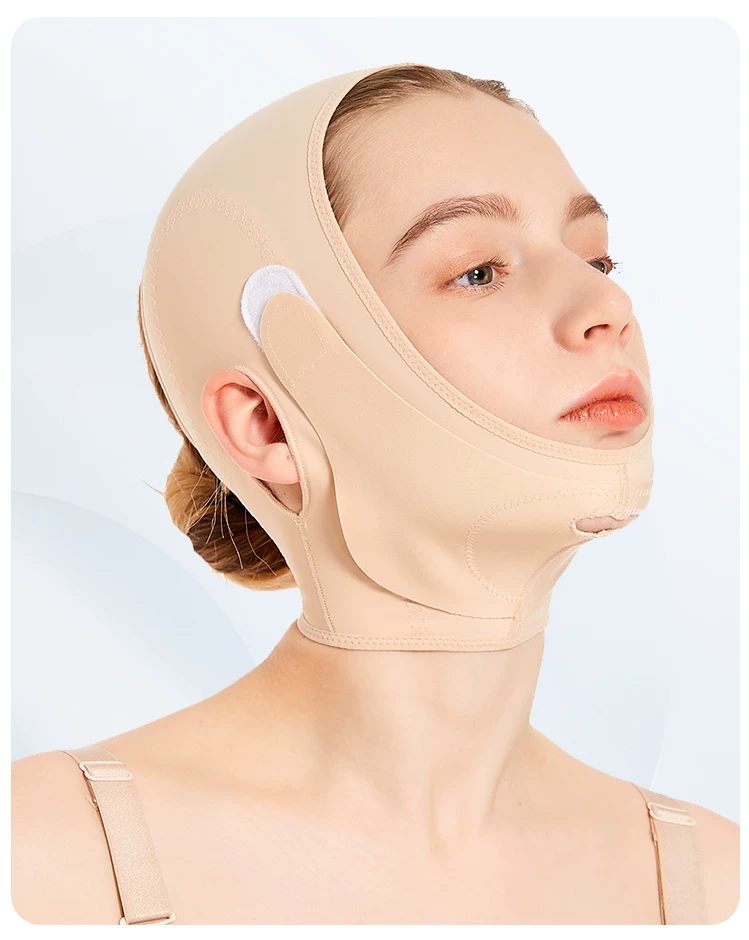
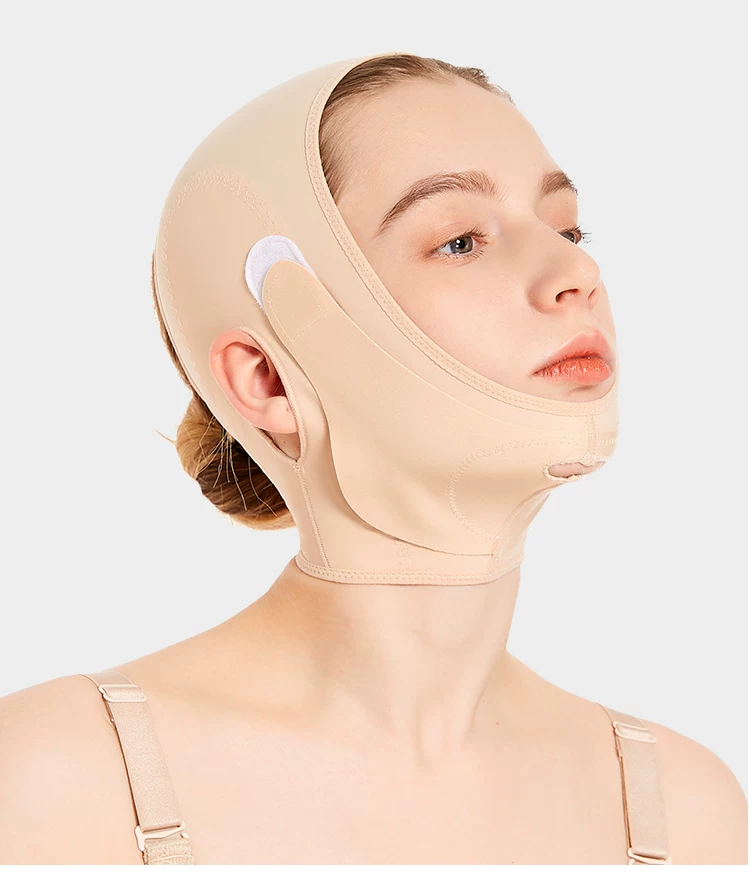
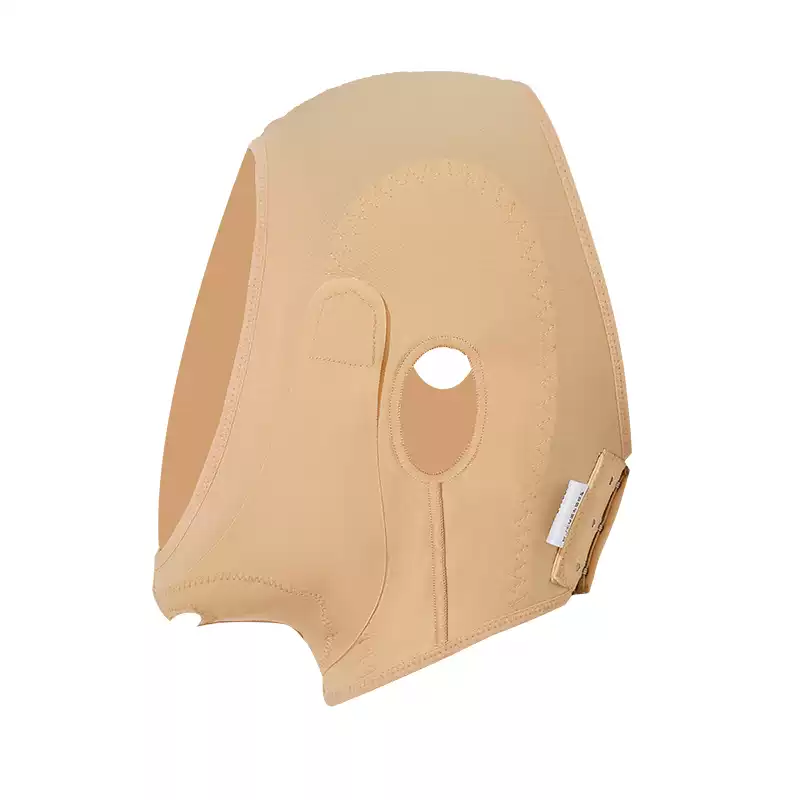
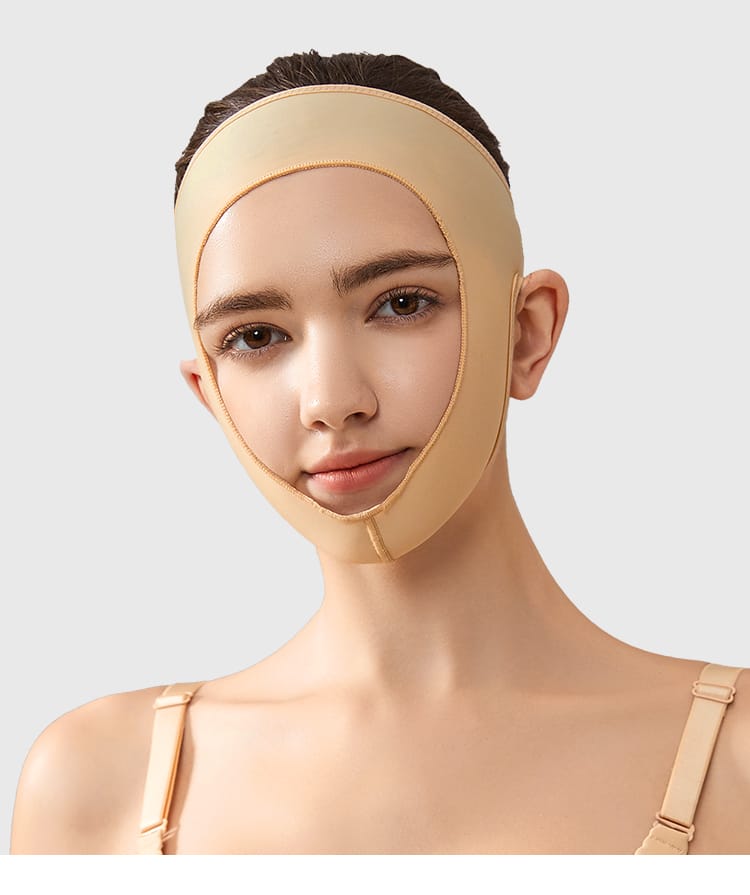
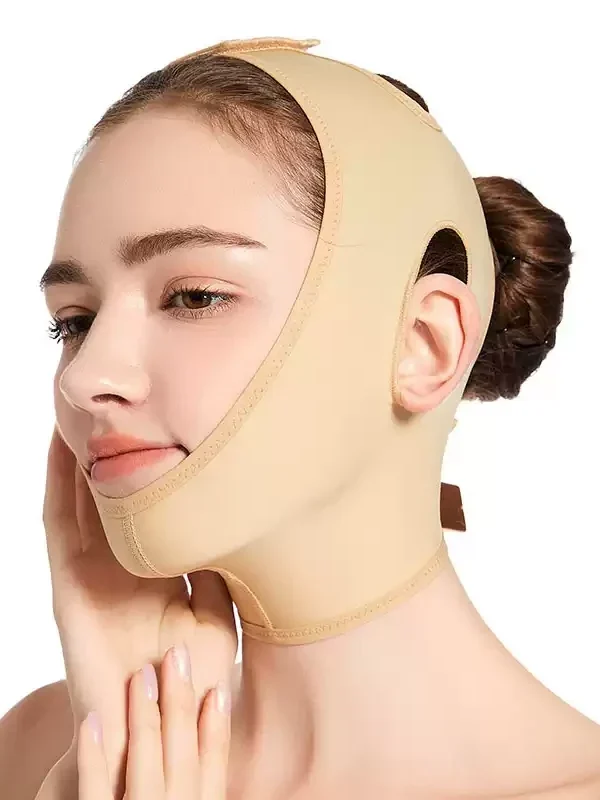
This Beige head wrap covers the top and sides of the head, the jaw area and the underside of the chin while leaving the central face open. Shaped ear openings, a rear hair opening and several hook-and-loop adjustment points help the wrap settle around different head proportions.
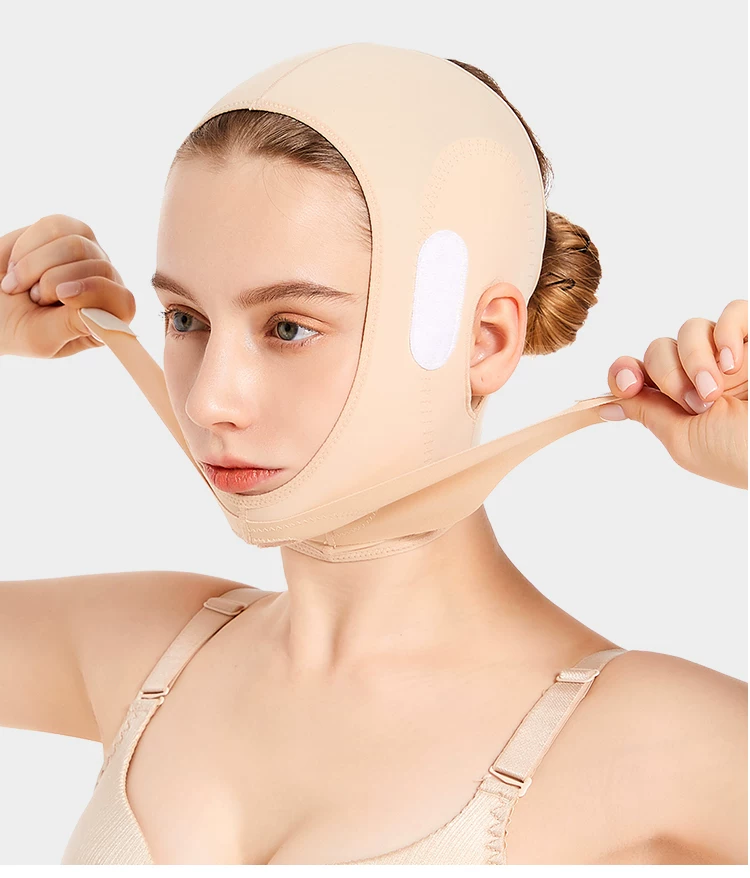
The design uses layered panels rather than one narrow chin strap. The upper section surrounds the crown, the side sections frame the ears and jaw, and the lower tabs cross beneath the chin before fastening. A rear tab helps refine the neck and lower-head fit.
The garment is described by its coverage and adjustable support while worn. It should sit evenly enough for normal breathing, speaking and careful daily movement without sharp pressure around the ears, mouth, chin or rear edge.
Designed Around Real Full-Head Wrap Fit Problems
“A narrow chin strap shifts too easily.”
The wrap extends over the crown and around the sides of the head, creating more contact area than a single under-chin band.
“The ear area folds or feels crowded.”
Dedicated ear openings help position the side panels around the ears instead of covering them completely.
“The jaw fits, but the top of the head feels wrong.”
The approved chart includes both head circumference and chin-to-crown circumference so two different proportions can guide the first size choice.
“The face opening drifts to one side.”
Gradual adjustment at the chin, sides and back helps keep the central opening aligned around the forehead, cheeks and mouth.
“My hair gets trapped under the back panel.”
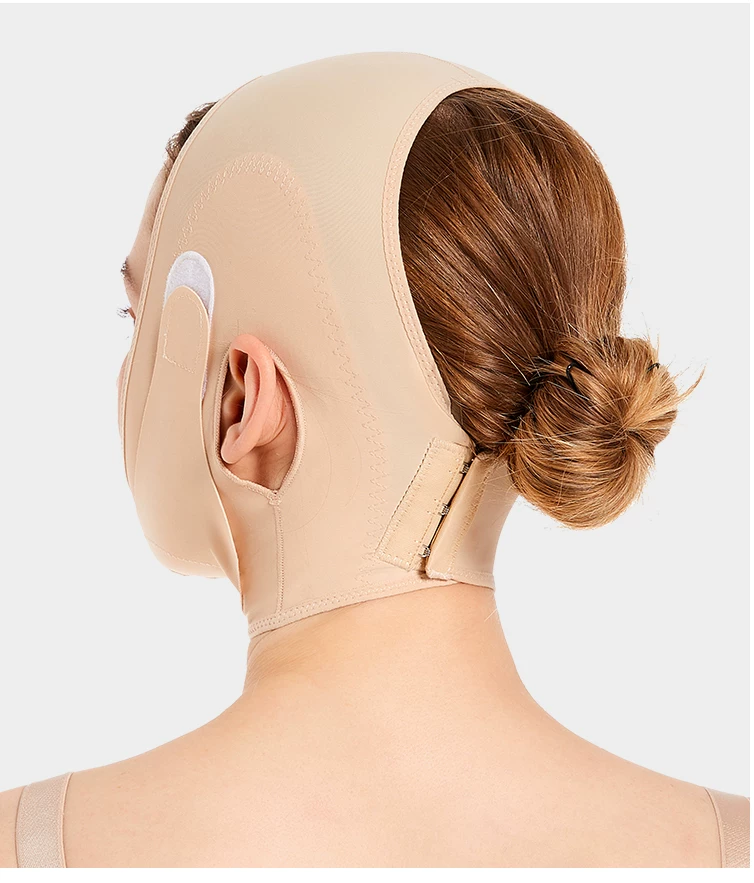
The open rear area allows many wearers to position a low bun or ponytail outside the wrap before fastening the back tab.
“I need to see the exact product, not a generic mask.”
This page uses only confirmed views of the same Beige full-head wrap, including front, adjustment, back and product-only views.
Best For
- A full-head wrap with an open central face rather than a narrow chin-only strap.
- Coverage around the crown, temples, jaw and underside of the chin.
- Customers who need shaped ear openings instead of fully covered ears.
- Several adjustable hook-and-loop zones around the lower face and back of the head.
- Beige in the complete S–2XL live size range.
- Use beneath loose scarves or head coverings when seams and tabs are acceptable.
Coverage Map
Crown and upper head
The upper panel follows the top and sides of the head while leaving the front hairline and central face visible.
Temple and cheek edges
The side panels run beside the face opening. They should frame the cheeks without pressing into the eyes or pulling at the corners of the mouth.
Jaw and chin
Layered lower panels meet beneath the chin and continue along the jaw area. The panel should lie flat rather than bunching into a narrow fold.
Ear openings
Each ear opening should sit around the ear without folding the outer edge or trapping the earlobe.
Back of head
The back panel surrounds the lower head while the open center leaves room for tied-back hair.
Upper neck edge
The lower rear edge meets the upper neck. It should remain level and should not climb sharply toward one side.
How the Construction Works
Open-face pattern
The eyes, nose, mouth and most of the cheeks remain uncovered, allowing normal visibility and easier communication.
Layered chin tabs
The lower tabs are guided beneath the chin and fastened gradually. They should overlap smoothly without creating a hard ridge.
Side adjustment patches
Hook-and-loop patches near the temples and ears help refine the side fit and keep the face opening centered.
Rear fastening tab
The back tab adjusts the lower-head and upper-neck edge. It should close without catching loose hair.
Stitched panel shaping
Curved seams divide the wrap into shaped sections so the fabric can follow the head, jaw and chin more evenly.
Single Beige color
All five live sizes use the same Beige construction shown in the confirmed images.
How the Fit Should Feel
The face opening should remain centered, with the upper edge following the hairline and the lower opening sitting beneath the mouth. The wrap should not pull the chin sharply upward or force the lips closed.
The ear openings should surround both ears without folding them forward. When one opening sits higher than the other, reopen the side tabs and center the crown panel before tightening again.
The top panel should lie smoothly across the crown without a deep crease. A loose fold at the crown can indicate that the size is too large or that the lower tabs were tightened before the upper panel was positioned.
The back edge should remain level around the lower head and upper neck. It should not press against a hair tie, bun or clip.
A suitable starting fit should allow normal breathing, speaking and gentle head movement. Stronger pressure is not automatically a better fit.
Size Guide
The following values come directly from the approved chart supplied for Product 8529. The first measurement is head circumference. The second follows from beneath the chin over the crown and back to the starting point. The source XXL row is displayed as the live 2XL option.
| Size | Head Circumference | Chin-to-Crown Circumference |
|---|---|---|
| S | 51–53 cm / 20.1–20.9 in | 61–63 cm / 24.0–24.8 in |
| M | 53–55 cm / 20.9–21.7 in | 63–65 cm / 24.8–25.6 in |
| L | 55–57 cm / 21.7–22.4 in | 65–67 cm / 25.6–26.4 in |
| XL | 57–59 cm / 22.4–23.2 in | 67–69 cm / 26.4–27.2 in |
| 2XL | 59–62 cm / 23.2–24.4 in | 69–72 cm / 27.2–28.3 in |
Head circumference
Measure around the widest part of the head, passing above the eyebrows and around the back of the head.
Chin to crown
Begin beneath the chin, guide the tape over the crown and return to the starting point without pulling it tight.
Between sizes
When either measurement falls between two live rows, begin with the larger size.
Different rows
When the two measurements indicate different sizes, use the larger indicated size as the first fit.
Current Color and Size Matrix
| Color | S | M | L | XL | 2XL |
|---|---|---|---|---|---|
| Beige | Available | Available | Available | Available | Available |
How to Put the Head Wrap On
- Open the lower tabs, side patches and rear fastening tab.
- Tie long hair into a low bun or ponytail that can pass through the rear opening.
- Place the upper panel over the crown and center the face opening around the forehead and cheeks.
- Guide each ear through its opening without folding the ear edge.
- Smooth the side panels downward toward the jaw.
- Bring the lower tabs beneath the chin and fasten them gradually.
- Adjust the side patches while keeping the face opening centered.
- Close the rear tab after checking that no hair is trapped beneath it.
- Recheck the chin, ears, crown and back edge while speaking and turning the head gently.
What Each Adjustment Zone Controls
Lower chin tabs
Control the overlap beneath the chin and help the lower panels lie smoothly along the jaw.
Side patches
Refine the side fit near the temples and ears while helping the central opening remain aligned.
Rear tab
Controls the lower-head and upper-neck edge and should fasten without catching hair.
Crown position
The crown panel is positioned by hand before the tabs are tightened. It is not controlled by one single closure.
Before the First Full Wear
Try the wrap during a calm part of the day when there is time to adjust each fastening point. Begin with lighter overlap at the chin, sides and back. The first fitting is for checking alignment, not for forcing the smallest possible setting.
Use a mirror to compare the ear openings and the two sides of the face opening. The forehead edge, chin seam and rear edge should appear centered rather than leaning toward one side.
Speak several sentences, open and close the mouth gently, and turn the head slowly. The wrap should remain in place without pressing sharply into the ear openings or corners of the mouth.
Check the ears
Both ears should sit naturally inside the openings without folded edges or downward pulling.
Check the mouth area
The lower face opening should allow normal lip movement and should not ride upward over the mouth.
Check the crown
The top panel should lie flat without a deep fold or a strong forward pull at the hairline.
Check the rear edge
The back tab should close over fabric only, not over loose hair, clips or a thick hair tie.
Fit Troubleshooting
- Face opening shifts sideways: reopen the side patches, recenter the crown panel and refasten both sides evenly.
- One ear opening sits too high: check crown alignment before tightening the lower chin tabs.
- Chin panel bunches: loosen the lower overlap and smooth each layer from the center outward.
- Back edge climbs upward: check whether the rear tab is too tight or caught against a hair tie.
- Crown fabric folds deeply: reposition the upper panel and compare both measurements with the size table.
- Mouth movement feels restricted: loosen the lower tabs and confirm that the chin seam sits beneath the mouth.
- One side feels tighter: compare the side-patch overlap and ear-opening position before changing the size.
Not Ideal For
This full-head wrap is not ideal when you need only a narrow chin strap, a completely open crown, full neck coverage, covered ears, a different rear opening or a size outside the complete S–2XL chart.
Choose Another Style If
- You want the top of the head completely uncovered.
- You need only under-chin support without crown coverage.
- You prefer a wrap without ear openings.
- You need coverage extending farther down the neck.
- You do not want hook-and-loop adjustment tabs.
- Your head circumference or chin-to-crown measurement is outside the listed ranges.
Measurement Walkthrough
Use a soft measuring tape and keep the hair as flat as reasonably possible. Thick braids, clips or a high bun can change the reading and make the wrap feel smaller than expected. Take each measurement twice and use the larger consistent result.
Prepare the hair
Remove bulky clips and place long hair in a low, flat style. Measure over the head itself rather than over a thick hairstyle.
Keep the tape level
For head circumference, pass the tape above the eyebrows, over the widest part of the head and around the back without tilting it upward.
Find the chin starting point
For the chin-to-crown measurement, place the starting point beneath the center of the chin before guiding the tape over the top of the head.
Do not compress the tape
The tape should touch the body without digging in. Pulling the tape tight can lead to a size that is too small.
Repeat the reading
Measure a second time after relaxing the jaw and shoulders. Small changes can occur when the head is tilted or the mouth is held tightly closed.
Use the larger size signal
When the two measurements fall in different rows, begin with the larger row so both the crown and chin areas have enough room for adjustment.
Daily Adjustment Routine
The wrap may need small changes from one wear to the next. Hair position, fastening overlap and the way the crown panel is placed can all change how the same size feels. Recheck the fit instead of assuming every tab should return to the exact same position.
- Open all fastening tabs and lay the wrap flat before putting it on.
- Check that the hook-and-loop surfaces are free of lint and loose fibers.
- Center the crown panel before bringing the lower tabs beneath the chin.
- Set the ear openings first so the ears are not pulled by later adjustments.
- Fasten the chin overlap lightly, then adjust the side patches.
- Close the rear tab only after the hair is positioned outside the opening.
- Recheck the face opening while speaking and moving the jaw gently.
- Loosen one area when another area becomes sharply tight or visibly distorted.
Balanced adjustment matters more than maximum overlap. A centered wrap with even contact is preferable to one very tight tab pulling the other panels out of position.
Hair, Ear and Rear-Opening Placement
The rear opening is designed to leave room for tied-back hair, but hairstyle still affects the fit. A high bun can lift the crown panel, while a thick low bun can press against the rear tab. A flatter low style usually works more smoothly with the opening shown in the photos.
Guide each ear fully into its opening before tightening the side patches. The fabric should frame the ear rather than covering the outer edge. When the ear is folded, reopen the nearest tab and reposition the panel instead of pulling the ear through a tight opening.
Keep clips, pins and thick elastic bands away from the rear fastening area. Hard objects beneath the fabric can create uneven pressure and can stop the rear tab from lying flat.
Low ponytail
Guide the ponytail through the rear opening before fastening the back tab.
Low bun
Use a compact bun that does not sit directly beneath the rear closure.
Short hair
Smooth loose strands away from the hook-and-loop patches before closing them.
Ear comfort
Confirm that neither ear is folded, pinched or pulled forward by the side panel.
Speaking, Eating and Gentle Movement Checks
After fastening the wrap, speak several sentences and open the mouth gently. The chin panel should remain beneath the mouth, and the face opening should not ride upward. A lower tab that pulls across the lips or limits ordinary mouth movement should be loosened and repositioned.
Turn the head slowly from side to side and look slightly upward and downward. The rear edge should remain stable without catching against the neck or pulling the ear openings backward.
For longer wear periods, reassess comfort after sitting, walking and changing head position. The wrap should continue to feel even across the crown, sides, jaw and chin rather than becoming concentrated at one small point.
- Loosen the chin overlap when the mouth area feels restricted.
- Recenter the crown when the face opening shifts during head movement.
- Adjust the side patches when one ear opening pulls more than the other.
- Move the hairstyle when the rear tab presses against a bun or hair tie.
- Remove and refit the wrap when several panels remain twisted after adjustment.
Fastener and Seam Care
Hook-and-loop patches work best when their surfaces stay clean. Close the tabs before washing so they do not catch the stitched edges or other fabrics. After drying, inspect the patches and remove lint with clean fingers or a soft tool.
Check the curved seams around the crown, ears and chin before each wear. Small loose threads should not be pulled. Stop using the wrap when a seam opens far enough to change panel alignment or expose a rough edge.
When storing the wrap, close each tab lightly and lay the garment flat. Folding a fastening patch sharply against a shaped seam can leave the panel distorted for the next wear.
Fit Decision Guide
Use the full pattern of fit signals rather than judging the wrap by one tab alone. A size can feel acceptable at the chin but still be too small through the crown, or it can feel comfortable over the head while leaving too much loose fabric around the lower face.
Likely too small
The face opening pulls upward, the ears fold inside the openings, the crown seam feels stretched, or the lower tabs barely overlap even after the panels are centered.
Likely too large
The crown forms a deep loose fold, the face opening shifts during gentle movement, or the chin panels require unusually large overlap to stay in place.
Needs repositioning
One ear opening sits correctly while the other is high, the rear edge is tilted, or one side patch is much tighter than the other even though both measurements match the chart.
Balanced starting fit
The crown lies smooth, both ears sit naturally, the chin panel stays beneath the mouth and the rear edge remains level during speaking and gentle head movement.
When several “too small” or “too large” signals remain after the wrap has been fully repositioned, compare the measurements again and consider the neighboring live size. Do not use extreme tab overlap to compensate for a size that cannot stay centered.
Wear Planning and Practical Notes
Plan the first wear around a period when the wrap can be checked in a mirror and adjusted without rushing. Keep the fastening sequence consistent so it is easier to identify which adjustment changed the fit.
When the wrap will be worn beneath a scarf, hood or loose head covering, complete the fit check before adding the outer layer. The outer layer should not pull the crown backward or press the side tabs into the ears.
Keep a simple note of the size and the approximate tab positions that felt balanced. The exact overlap may still change with hairstyle and placement, but a written reference can make later fitting faster.
- Position the wrap before adding glasses, earrings or other accessories.
- Keep large earrings outside the ear openings or remove them during fitting.
- Avoid placing thick seams from another head covering directly over the side tabs.
- Recheck the rear edge after adding a hood or scarf.
- Stop and refit the wrap when the central opening moves enough to touch the eyes or cover part of the mouth.
Care Notes
- Fasten all hook-and-loop tabs before washing.
- Use cool water, mild detergent and a laundry bag.
- Air dry away from direct heat.
- Keep hair, lint and loose fibers away from the fastening patches.
- Do not pull the wrap into place using only one chin tab.
- Inspect the ear openings, seams and fastening patches before wear.
- Store the wrap flat with the tabs closed.
Confirmed Product Views
Every image below shows the same Beige full-head wrap, including front, adjustment, back and product-only views. The old duplicate image and shared generic size image are excluded from the customer-facing gallery and body content.
Compare Face & Chin Coverage
Choose by the areas covered and the closure construction rather than by product name alone.
- Full-Face Compression Mask — broader forehead, cheek, chin and upper-neck coverage with defined facial openings.
- Current style: Post-Op Jaw Compression Wrap — open-face, full-head construction with chin and jaw coverage and adjustable tabs.
- Full-Head Facial Compression Mask — facial, chin and jaw coverage with a rear hook-and-loop closure.
For recovery-stage use, follow your care provider’s guidance on garment type, fit and wear time.
FAQ
What areas does this head wrap cover?
The wrap covers the top and sides of the head, the area around the ears, the jaw and the underside of the chin. The central face remains open.
How is the fit adjusted?
Adjustment comes from the lower chin tabs, side hook-and-loop panels and the rear fastening tab. Each area should be set gradually so the face opening remains centered.
Which measurements should guide the size choice?
Compare both head circumference and chin-to-crown circumference with the table. When the measurements point to different live sizes, begin with the larger size.
How should the ear openings sit?
The openings should surround the ears without folding the ear edges or pulling the wrap sharply forward or backward.
How should the chin panel feel?
The chin panel should lie flat beneath the chin and along the jaw without forcing the mouth closed or creating a narrow pressure point.
Can the wrap be worn with hair tied back?
The rear opening allows many wearers to position a low bun or ponytail outside the wrap. Hair should not be trapped beneath the rear fastening tab.
When should I choose another style?
Choose another style when you need only a chin strap, an open-top design, more neck coverage, a different ear-opening shape or a size outside S–2XL.
How should the wrap be washed?
Fasten the hook-and-loop tabs before washing. Use cool water, mild detergent and a laundry bag, then air dry away from direct heat.



Reviews
There are no reviews yet.