
High-Waist Full-Length Compression Leggings
One Continuous Garment from the High Waist to the Ankles
These full-length leggings combine a tall waist panel, a centered multi-row hook-and-eye closure, shaped hip and seat seams, smooth thigh coverage and long legs in one continuous design. They are intended for shoppers who want more lower-body coverage than shorts or capri styles while keeping the waist panel accessible from the front.
Tall waist coverage
The upper panel extends above the natural waist and continues into the lower abdomen and hip area.
Front hook-and-eye access
Several closure rows allow the waist panel to be fastened from the front without pulling the entire garment over the widest part of the hips in one step.
Full-length legs
The legs continue through the thighs, knees and lower legs toward the ankles rather than stopping at mid-thigh or mid-calf.
Two measurements guide the size
Waist and upper-thigh circumference should be considered together. A usual jeans or dress size does not describe the tall waist and thigh panels precisely enough.
What This Product Actually Is
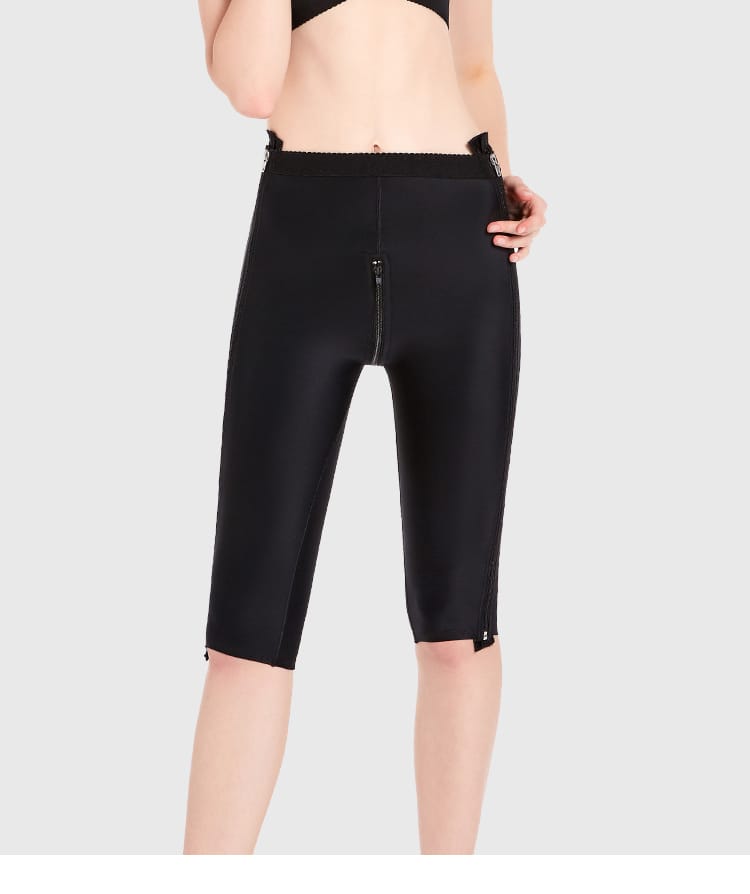
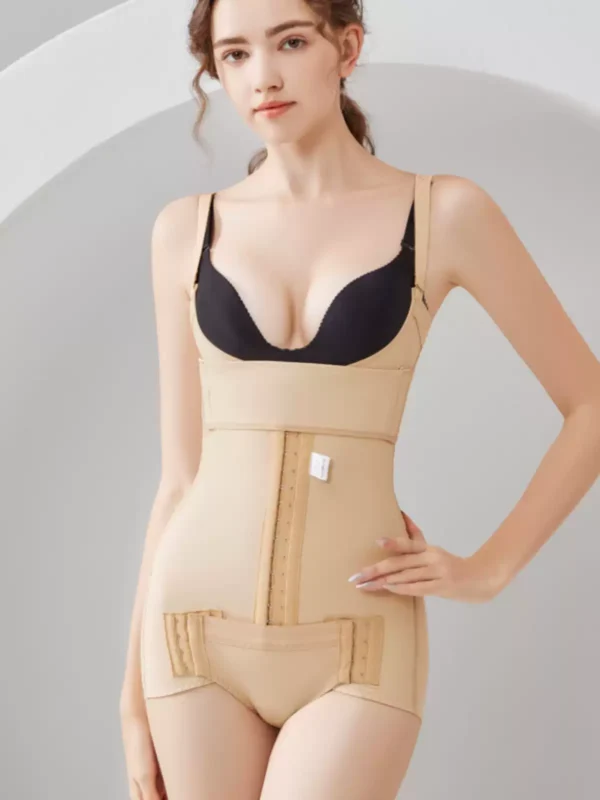
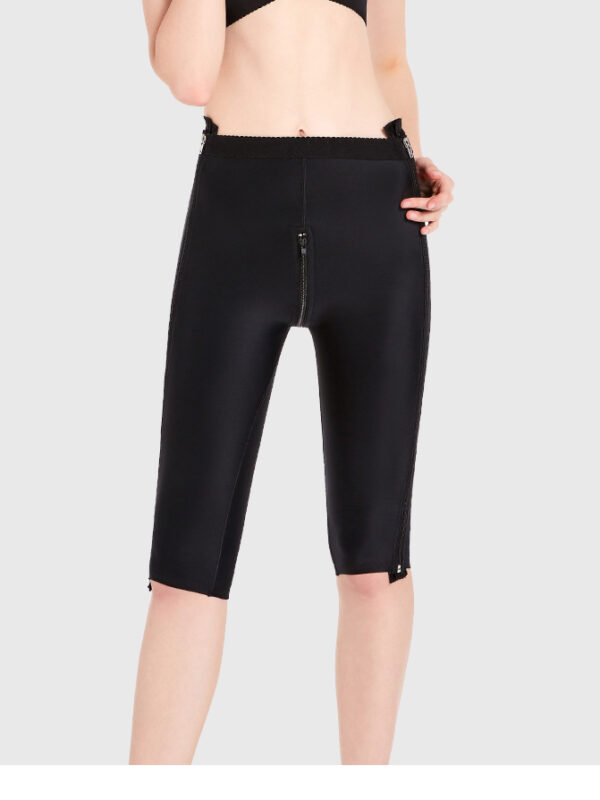
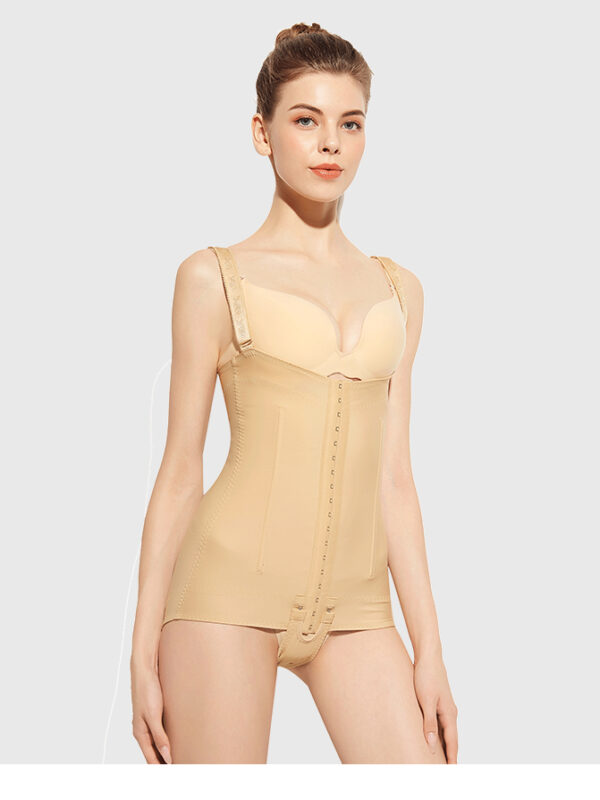
This is a high-waist, full-length compression legging with a front hook-and-eye waist panel. The garment covers the waist, lower abdomen, hips, seat, thighs, knees and lower legs. It is a lower-body legging, and the confirmed construction does not include a chest, shoulder or arm section.
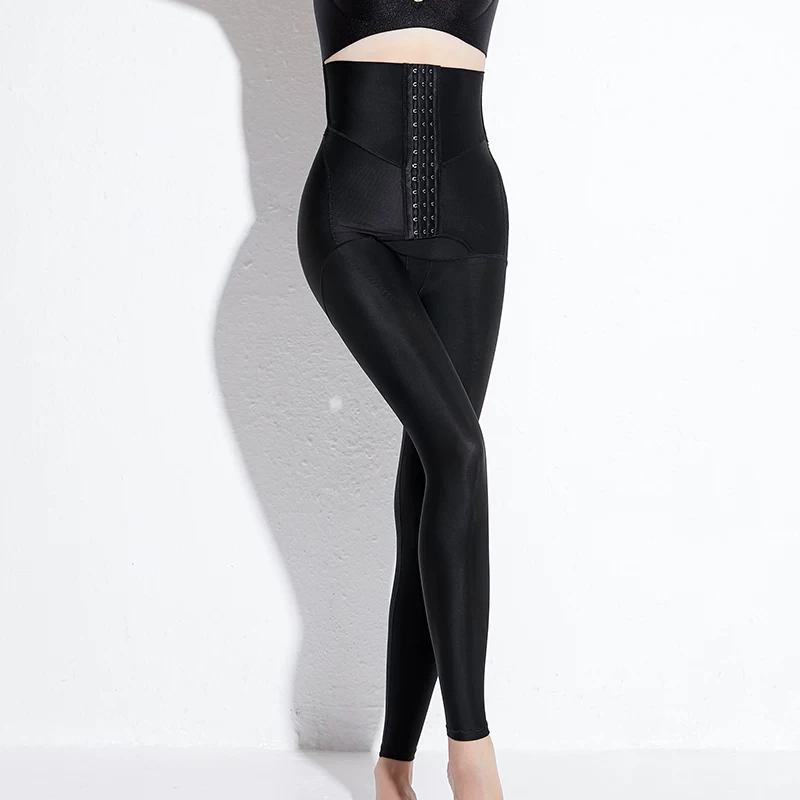
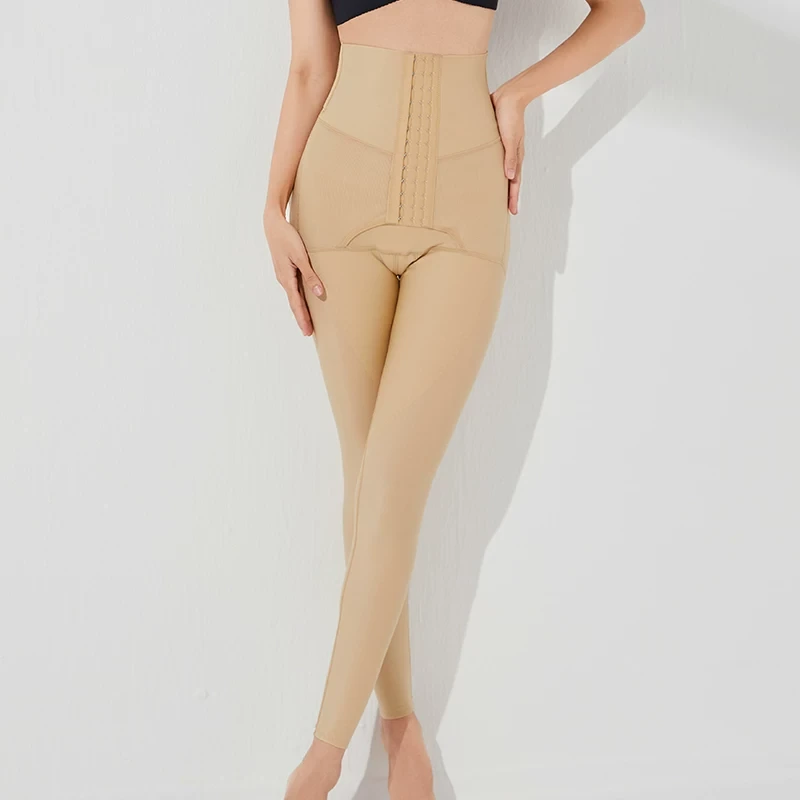
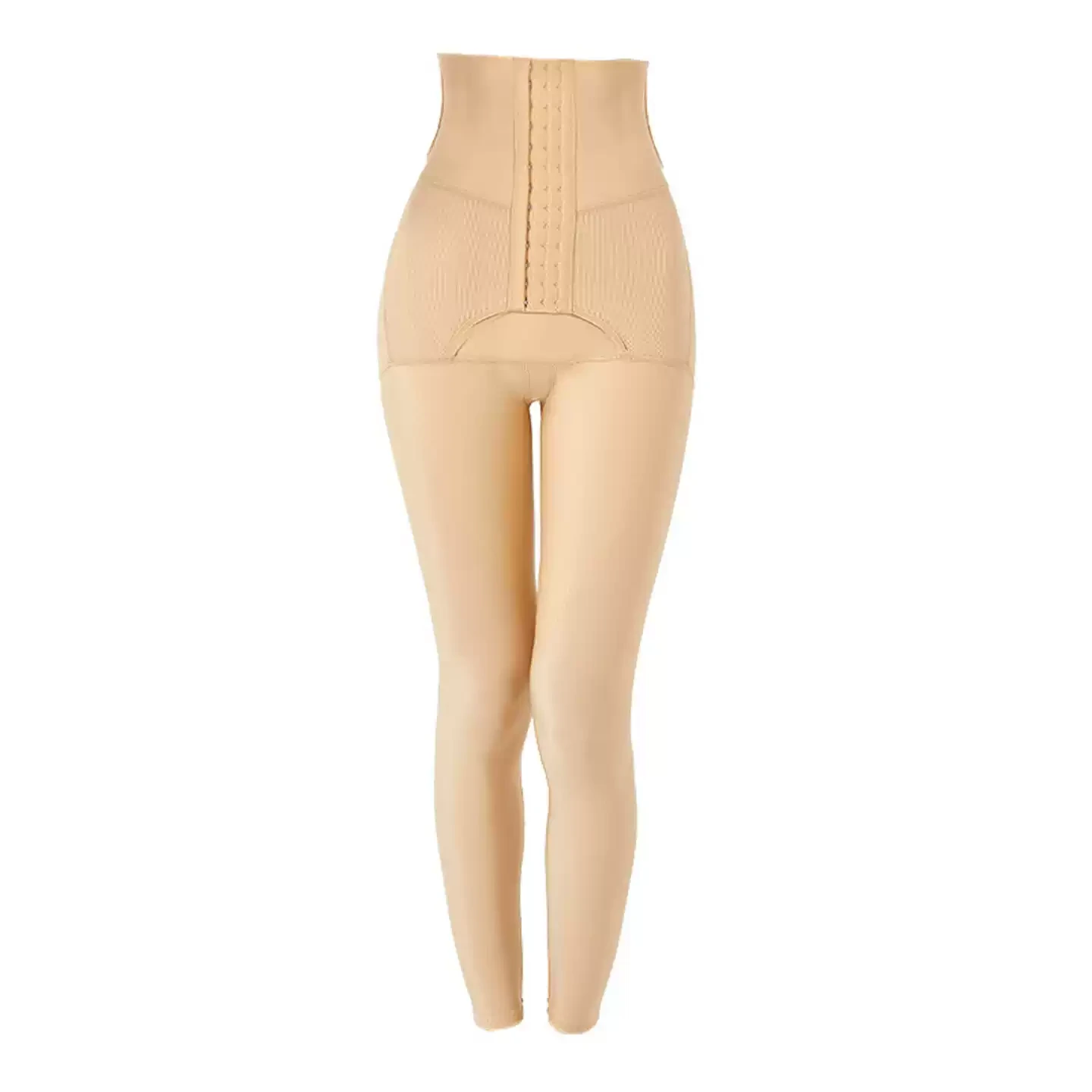
Black and Beige use the same basic construction. The visual differences come from color and lighting, while the waist height, centered front closure, hip seams, seat shaping and full-length leg coverage remain consistent.
Best For
- Shoppers who want continuous coverage from a high waist through the ankles.
- People who prefer a front hook-and-eye waist panel over a closed pull-on waistband.
- Those whose waist and upper-thigh measurements fit the live S–2XL chart.
- Shoppers choosing between Black and Beige in the same construction.
- People who want more leg coverage than shorts, mid-thigh styles or capri garments.
- Layering beneath loose dresses, robes or relaxed trousers when the tall waist and long legs suit the intended outfit.
Coverage Map
High waist and lower abdomen
The tall upper section begins above the natural waist and continues across the lower abdomen before joining the hip panels.
Hips and seat
Curved seams follow the hip and seat area so the garment can be positioned around the lower torso without relying on a simple straight tube shape.
Upper thighs
The thigh panels continue directly from the hip and seat sections, which is why upper-thigh circumference is part of the size chart.
Knees and lower legs
The leg panels extend through the knees and calves toward the ankles for full-length coverage.
Front waist access
The centered hook-and-eye panel provides a visible fastening area at the front of the tall waist.
High back
The rear waist rises high across the lower back and connects continuously to the seat panel.
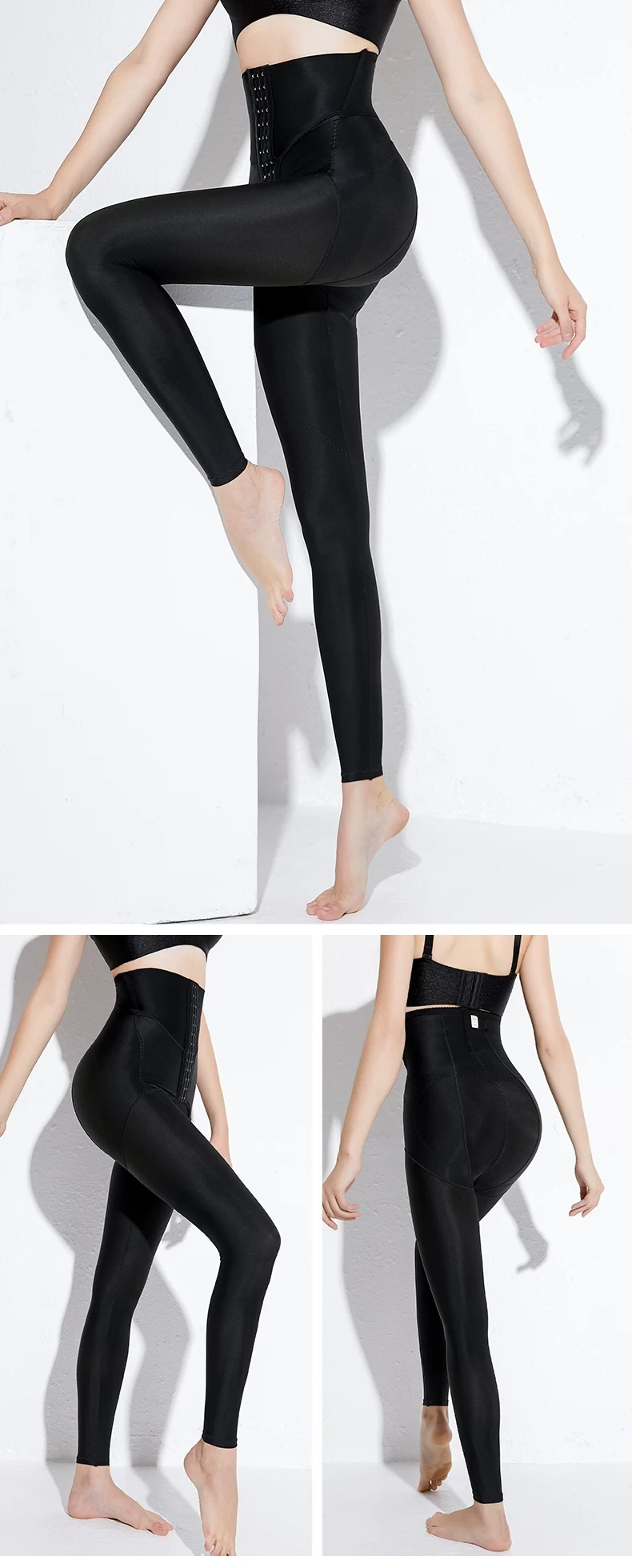
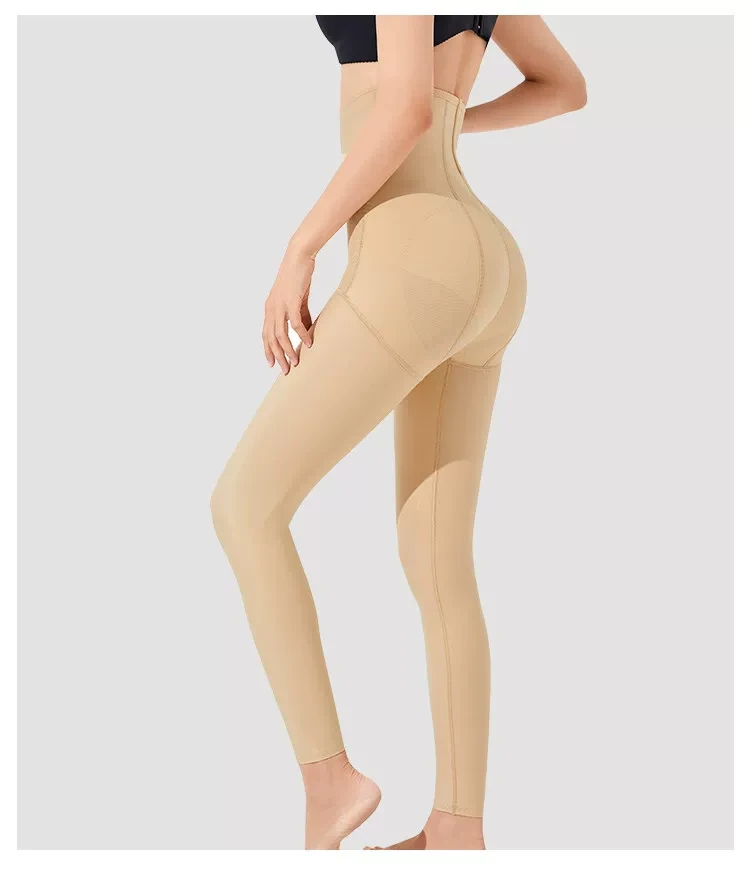
Front Hook-and-Eye Waist Panel
The waist panel uses several vertical rows of hooks and eyes. Open the panel before dressing, position the legs and seat first, then close the panel from the bottom upward. Starting at the bottom helps keep the closure line centered instead of pulling the upper edge toward one side.
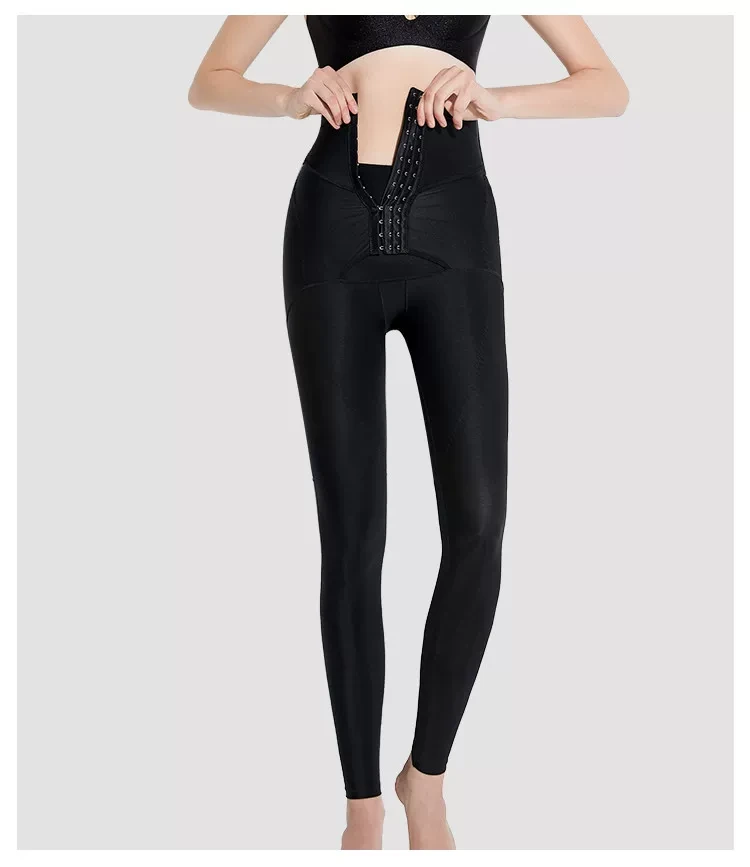
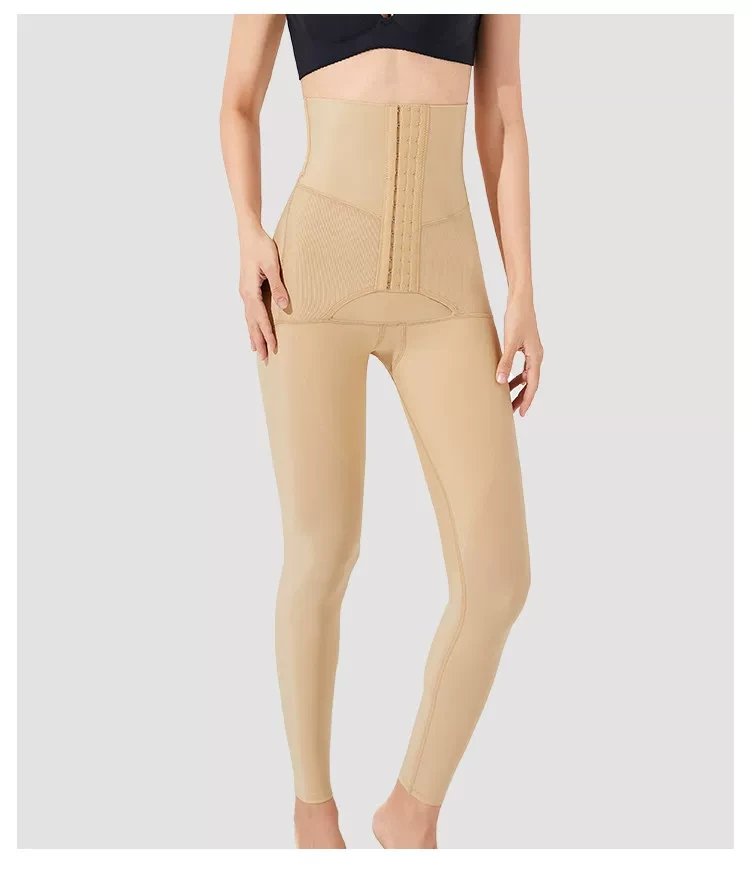
Begin with the loosest comfortable row
The panel should close without a diagonal ridge or a hard fold beneath the hooks. A tighter row is not automatically a better fit.
Keep the panel centered
The hook line should remain near the center of the abdomen. If it shifts sideways, reopen the panel and recenter the seat and waistband.
Keep the top edge level
The upper edge should sit at a similar height across the front, sides and back rather than dipping on one side.
Do not use the hooks as handles
Lift and position the garment by the fabric panels. Pulling directly on the metal hardware can strain the stitching.
How the Waist, Hip and Seat Panels Work Together
The tall waist panel, curved hip seams, rear seat section and upper-thigh panels should be judged as one connected system. Tightening only the front closure cannot correct a seat panel that is too low, a waistband that is rolled or legs that are twisted.
Waist panel
The upper section should lie flat across the front and lower back. A rolled top edge changes how the entire garment feels.
Hip seams
The curved side sections should follow the hips without sitting far forward on one side and far back on the other.
Seat panel
The rear shaping seam should remain centered. When it shifts, smooth the fabric upward from the thighs and reposition the waistband.
Thigh panels
The upper legs should feel even from left to right. One tighter side often means the fabric is rotated rather than that the two legs require different sizes.
Current Color and Size Matrix
| Color | S | M | L | XL | 2XL |
|---|---|---|---|---|---|
| Black | Available | Available | Available | Available | Available |
| Beige | Available | Available | Available | Available | Available |
The listing contains ten live combinations: Black and Beige in S, M, L, XL and 2XL. XXS and XS appear in the reference chart but are not live options on this product page, so they are intentionally excluded from the selector and customer-facing table.
Size Guide
| Size | Waist | Upper Thigh Circumference |
|---|---|---|
| S | 63–68 cm / 24.8–26.8 in | 49–51 cm / 19.3–20.1 in |
| M | 69–74 cm / 27.2–29.1 in | 51–53 cm / 20.1–20.9 in |
| L | 75–80 cm / 29.5–31.5 in | 54–56 cm / 21.3–22.0 in |
| XL | 81–86 cm / 31.9–33.9 in | 57–60 cm / 22.4–23.6 in |
| 2XL | 87–92 cm / 34.3–36.2 in | 61–64 cm / 24.0–25.2 in |
Compare both readings. When waist and upper thigh point to adjacent sizes, begin with the larger live size. The waist panel, seat placement and thigh comfort should all be checked before moving to a tighter closure row.
How to Measure
Waist
Measure around the area where the tall waist panel will sit. Keep the tape level across the front, sides and back without pulling it into the skin.
Upper thigh
Measure around the fullest part of one upper thigh, close to the body but without compressing the tissue. Keep the tape parallel to the floor.
Repeat both readings
Take each measurement twice. A difference of more than about one centimeter usually means the tape moved or tightened between attempts.
Use current body measurements
Do not substitute an old jeans size, a usual dress size or a height-and-weight estimate for the two circumference readings.
The height-and-weight matrix shown in the original reference is secondary guidance only. The live product page uses waist and upper-thigh circumference because those measurements relate directly to the garment panels.
Size Selection Examples
These examples demonstrate how to read the chart; they do not replace your own measurements.
- Waist 66 cm and thigh 50 cm: both readings fall in S, so S is the first size to compare.
- Waist 72 cm and thigh 54 cm: the waist points to M while the thigh points to L. Begin with L and check whether the waist panel can remain level on the loosest comfortable row.
- Waist 78 cm and thigh 57 cm: the waist points to L and the thigh points to XL. Begin with XL and check the seat and upper-thigh panels together.
- Waist 84 cm and thigh 59 cm: both readings fall in XL, near the middle of the row.
- Waist 90 cm and thigh 63 cm: both readings fall in 2XL, the largest live option.
Step-by-Step Dressing Guide
- Open the front hook-and-eye panel completely.
- Gather one leg from the ankle upward instead of stretching the full leg tube at once.
- Guide one foot through and smooth the fabric from ankle to calf.
- Repeat on the other leg.
- Pull the leggings upward in small sections, alternating from left to right.
- Center the knee areas before lifting the fabric over the thighs.
- Position the seat panel by smoothing upward from the backs of the thighs.
- Set the high waistband at an even height across the front, sides and back.
- Close the front hooks from the bottom upward on the loosest comfortable row.
- Walk, sit and bend each knee gently before deciding whether another closure row is suitable.
Remove the leggings in reverse order. Open the entire waist panel first, then roll the fabric downward gradually instead of pulling sharply from the ankles.
Five-Minute Fit Check
- The top edge remains level across the abdomen, sides and lower back.
- The hook-and-eye line stays centered and vertical.
- The waist panel lies flat without a hard fold beneath the closure.
- The hip seams sit at a similar position on both sides.
- The seat panel is centered and does not pull strongly toward one side.
- The inner-leg seams remain aligned instead of twisting toward the front or back.
- The knees can bend without a sharp band forming behind them.
- The ankle openings lie smooth and do not create a hard rolled edge.
- Normal walking, sitting and breathing remain comfortable.
Sharp pinching, numbness, skin color change, breathing restriction or a closure that cannot lie flat are signs to remove the garment and reassess the size and placement.
Movement Check: Standing, Sitting and Walking
A garment that looks centered while standing should remain reasonably stable during gentle movement. Walk several steps, sit on a chair, bend each knee, rise again and check the waist panel, seat seams and inner legs.
While walking
The inner legs should not rotate noticeably, and the seat panel should remain centered rather than shifting toward one hip.
While sitting
The waist panel may flex, but it should not fold into a hard ridge or force the hook line into a diagonal position.
While bending the knees
Fabric may gather slightly, but the knees should bend without a sharp fixed band behind the joint.
After standing again
The top edge should return to an even position without extensive pulling or repeated tightening.
Do not tighten the front panel to correct twisted legs or a low seat panel. Reposition the lower sections first, then close the waist again.
Fit Troubleshooting
- Waistband rolls: reopen the panel, lower the fabric slightly, center the seat and smooth the waist upward in small sections.
- Hook line pulls diagonally: check whether one hip panel is higher than the other and restart the closure from the bottom.
- One thigh feels tighter: inspect the inner and outer seams for rotation before changing size.
- Seat panel sits too low: work the fabric upward from the backs of the thighs instead of pulling only at the waistband.
- Knee area bunches: redistribute fabric from the calves and thighs so excess material is not concentrated at the joint.
- Ankle edge rolls: smooth the lower legs downward and confirm that extra fabric has not collected above the ankles.
- Top edge gaps while thighs feel tight: compare both circumference readings and begin with the size required by the larger area.
Material and Support: What Is Confirmed
The images confirm a smooth close-fitting textile, a tall waist panel, hook-and-eye hardware, curved hip and seat seams, stitched leg panels and full-length coverage. The available information does not provide a verified fiber percentage or a numerical pressure value.
Because those specifications are not confirmed, this page focuses on visible construction, exact circumference values and practical fit checks. Shoppers who require a particular fiber or allergy-related material detail should obtain that information before purchase.
Important Limitations
This page does not assign a numbered compression stage, guarantee a specific physical result or provide a universal wear schedule. The garment should be selected and positioned according to the confirmed measurements and the instructions relevant to the shopper’s own situation.
The design covers the lower body only. It does not include shoulder, chest, arm or upper-back coverage, and it does not replace a full-body garment when those additional areas are required.
Not Ideal For
This style is not ideal when you need an upper-body garment, a short or capri leg length, a pull-on waist with no front hardware, a size outside S–2XL, a separate cup or bra section, or a verified fiber or numerical pressure specification that is not listed here.
Choose Another Style If
- You need a garment that covers the chest, shoulders or arms.
- You prefer shorts, mid-thigh coverage or a capri length.
- You do not want hook-and-eye hardware at the front waist.
- Your waist or upper-thigh measurement falls outside the live chart.
- You require a pull-on waistband with no adjustable front panel.
- You need a different lower-body construction than the one shown in the confirmed images.
Care Notes
- Close the hooks before washing so they do not catch the fabric.
- Place the leggings in a laundry bag and use cool water with mild detergent.
- Air dry away from direct heat.
- Do not pull the garment by the metal closure.
- Inspect the hook stitching, inner-leg seams, seat panel and ankle edges before wearing.
- Store the leggings flat or lightly folded with the hooks secured.
FAQ
What type of front closure does this style use?
The tall waist panel closes with multiple rows of hooks and eyes. Begin with the loosest comfortable row and move inward only when the panel remains level and smooth.
How high does the waist sit?
The waist panel extends well above the natural waist in the confirmed images. The exact height on the body depends on torso length and the selected size.
Do the legs reach the ankles?
Yes. The confirmed design is full length and extends toward the ankles rather than ending at the knees or mid-calf.
How do I choose between two sizes?
Compare both waist and upper-thigh measurements. When the readings point to adjacent sizes, begin with the larger live size and check the waist panel, seat and thigh fit together.
Why are XXS and XS not listed?
They appear in the reference chart but are not live variations on this product page. The available range is S–2XL.
Are Black and Beige the same construction?
Yes. Both colors use the same high-waist body, front hook-and-eye panel, shaped hip and seat seams, and full-length legs.
What should I check after putting them on?
Confirm that the waist panel is level, the front hooks form a straight line, the seat panel is centered, the inner legs are not twisted and normal walking and sitting remain comfortable.
How should I wash the leggings?
Close the hooks, place the leggings in a laundry bag, wash in cool water with mild detergent and air dry away from direct heat.
Chloe W. –
Average product. Does what it says but I have had better from other brands.
Crystal H. –
Slim and smooth under clothes with no visible lines. Really pleased.
Grace B. –
Slim and smooth under clothes with no visible lines. Really pleased.
Olivia K. –
Provides good compression and holds everything in place. Size chart was accurate.
Nicole D. –
Material feels durable and well made. Good value for the price.
Lauren C. –
Feels supportive but still breathable. Definitely exceeded my expectations.
Hailey H. –
Not bad but not amazing. Does the job for casual wear.
Melissa O. –
Fit is a little off for my body shape. Might work better for others.
Mackenzie F. –
Wears like a second skin. I forget I have it on.