
Substantively reviewed and updated: August 28, 2026
Direct answer
After a C-section, ask your OB, midwife or care team before using an abdominal binder or compression garment. There is no universal start day, number of hours or week-by-week product schedule. If a garment is approved, compare incision-area contact, coverage, closure access, current measurements and whether you can breathe, sit, walk and care for your baby without painful pressure.
- Provider first: the care team decides whether and when a garment fits your recovery plan.
- Support is not healing: a wrap may feel supportive, but it does not heal an incision or strengthen the core.
- Fit can change: use current measurements and reassess any new discomfort or wound interference.
Quick FAQ
When can I wear a compression garment after a C-section?
Only when your OB, midwife or care team says it is appropriate for your incision, symptoms and recovery. A generic day or week cannot provide personal clearance.
Should the garment cover the incision?
Ask your care team. If coverage is approved, the edge, seam or closure should not rub, trap moisture or place painful pressure on the incision area.
Is an abdominal binder the same as a bodysuit?
No. A binder focuses on the abdomen and is easier to adjust; a bodysuit provides connected torso, hip or thigh coverage and has more fit variables.
Can a postpartum wrap heal diastasis recti?
No. A wrap may offer temporary physical support, but it does not close abdominal separation or rebuild core strength.
What a postpartum support garment can—and cannot—do
Cleveland Clinic describes postpartum belly wraps as a form of physical support that some people find useful, including after a C-section. That is different from claiming that a garment heals tissue, closes an incision, treats abdominal separation or prevents a complication. Comfort and usefulness vary, and a provider who knows the delivery and recovery should guide the decision.
| A garment may… | A garment does not… |
|---|---|
| Provide a feeling of abdominal support when approved and correctly fitted | Replace wound care, postpartum follow-up or medical evaluation |
| Offer a clothing layer with an adjustable or connected construction | Guarantee less swelling, faster healing or a specific recovery result |
| Help some wearers feel more supported during ordinary movement | Strengthen core muscles or heal diastasis recti |
| Give a choice of binder, brief, shorts, bodysuit or leggings coverage | Determine when it is safe for an individual to begin or stop use |
First ask the care team these six questions
- Is any support garment appropriate now? Ask in relation to your incision, pain, mobility and other recovery factors.
- Where may it touch? Confirm whether the incision area should be covered, avoided or protected from a seam or edge.
- Which coverage is useful? Ask whether abdominal-only support is enough or whether connected hip or thigh coverage is relevant.
- How should it be put on? Confirm whether pulling, twisting or lifting required by a style is compatible with current movement limits.
- What is the wear plan? Use the personal schedule given by the care team instead of a generic online hours-or-weeks chart.
- Which symptoms mean stop or call? Keep the care team’s written contact instructions accessible.
Compare C-section and postpartum garment formats
| Format | Coverage | Possible practical advantage | Fit issue to check |
|---|---|---|---|
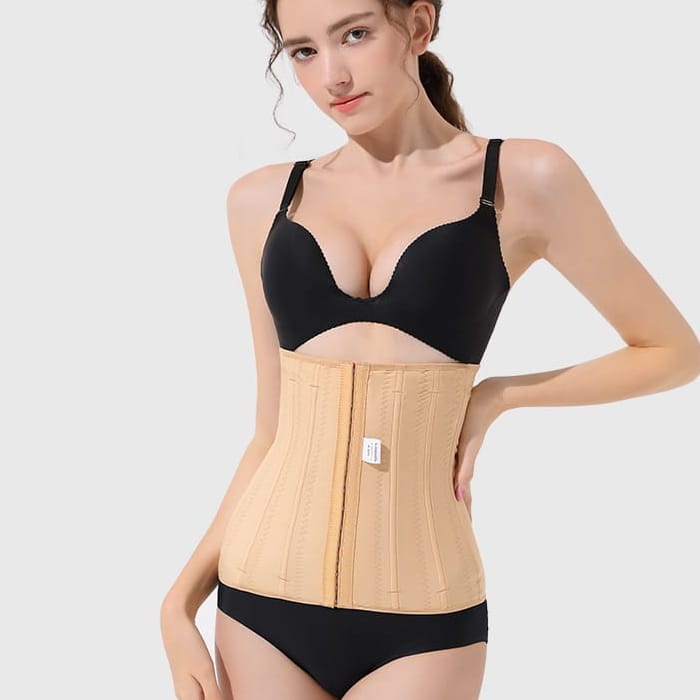
| Adjustable abdominal binder | Abdomen only | Easier to position and adjust without stepping into a full garment | Edge or closure placement near the incision; bunching while seated |
| High-waist brief | Abdomen, waist and hips | Simple lower-torso format without thigh coverage | Waistband stability and leg opening; pulling required to dress |
| High-waist shorts | Abdomen, hips and upper thighs | Adds thigh coverage and can reduce separate garment edges | Leg hem, gusset access and pressure distribution while sitting |
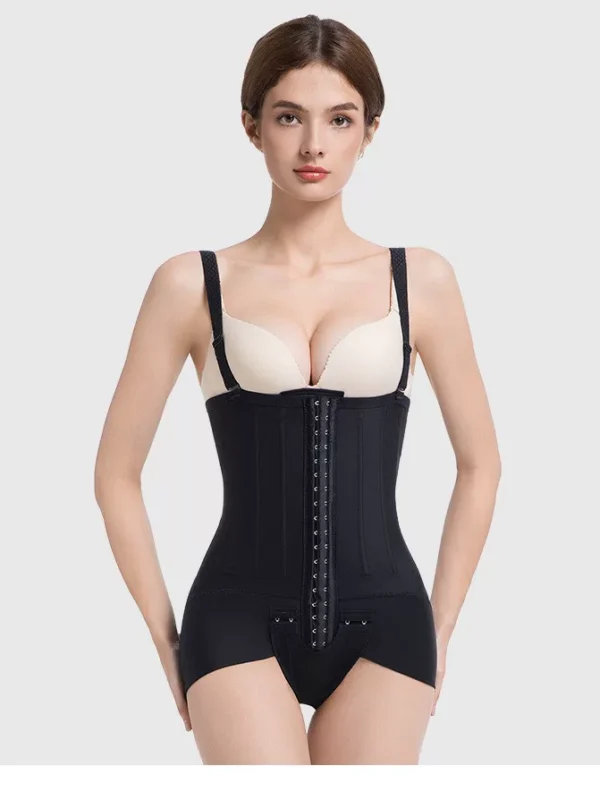
| Open-bust bodysuit | Connected torso through brief or thigh | Avoids a separate waistband and lets you use your own bra | Torso length, straps, closure and bathroom access |
| Recovery leggings | Abdomen through part or all of the leg | Extended lower-body coverage when that construction is approved | More fabric, more dressing effort and additional edges or closures |
How to check fit without using a “tighter is better” rule
Use current measurements and the chart for the exact product. A postpartum body can change, and two garments with the same size label may use different patterns or closure positions. Do not size down to create stronger pressure.
Standing
The garment should lie evenly without a hard edge crossing a sensitive area or a closure twisting off center.
Sitting
Check the lower edge, gusset and abdomen. The piece should not fold into a painful ridge or interfere with comfortable breathing.
Walking
Confirm that it stays positioned without repeated pulling, rolling or pressure that changes with each step.
Daily care
Make sure dressing, bathroom access and removal are manageable within the movement guidance you received.
Do not follow a universal week-by-week garment timeline
C-section recovery differs by person, incision, symptoms and care plan. This article therefore does not assign a product to “Week 1,” “Week 2” or “Months 3–6,” and it does not prescribe a fixed daily wear time. A general postpartum timeline cannot examine an incision or account for complications, additional procedures and individual mobility.
Use How to Choose a Post-Surgery Compression Garment by Procedure to compare construction, then ask your provider to approve the exact coverage and plan.
Incision and postpartum warning signs need medical attention
The NHS advises seeking medical guidance after a C-section for concerns including severe pain, heavy bleeding, a wound becoming more red, painful or swollen, wound discharge, shortness of breath, or lower-leg pain or swelling. Follow the discharge instructions and emergency guidance from your own care team.
Binder, brief or bodysuit: a practical decision path
- Begin with a binder comparison when the approved need is abdominal-only support and easy adjustment is the priority.
- Compare a brief or short-leg bodysuit when connected lower-torso coverage is approved and the waistband/leg edges work for you.
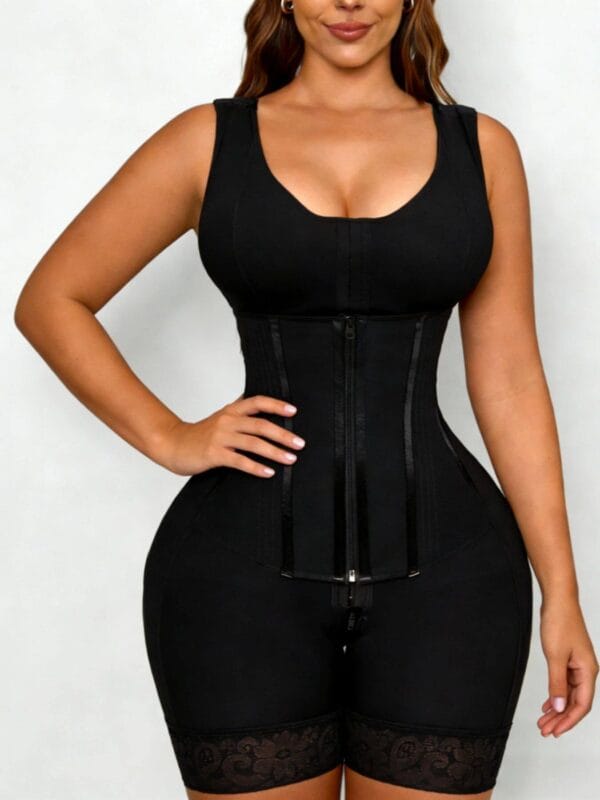
- Compare a mid-thigh bodysuit when the provider approves broader hip or thigh coverage and you can manage the garment and gusset.
- Do not assume more coverage is better. Extra panels and closures add fit variables and dressing effort.
Compare three construction formats
These in-stock examples show abdominal-only, short-leg and mid-thigh formats. They are construction examples—not personal medical recommendations. Confirm the exact product with your OB or care team before post-C-section use.
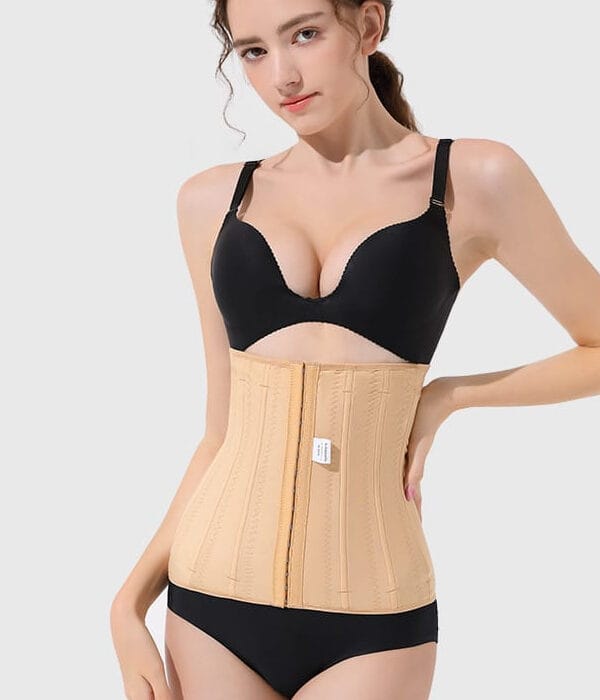
- Waist & Abdominal Support
High-Waist Post-Surgery Abdominal Compression Belt
$79.00Select options This product has multiple variants. The options may be chosen on the product page - Fajas & Recovery Bodysuits
Open-Bust Front-Hook Post-Surgery Brief Bodysuit
$79.00Select options This product has multiple variants. The options may be chosen on the product page - Fajas & Recovery Bodysuits
Open-Bust Mid-Thigh Compression Bodysuit with Front Closure
Original price was: $59.00.$49.00Current price is: $49.00.Select options This product has multiple variants. The options may be chosen on the product page
See the broader Recovery Support guide and measurement guide.
Sources and review notes
- American College of Obstetricians and Gynecologists: Cesarean Birth — procedure and recovery context.
- ACOG: Optimizing Postpartum Care — individualized postpartum follow-up.
- NHS: Caesarean Section Recovery — recovery and warning-sign guidance.
- Cleveland Clinic: Postpartum Belly Wraps — support uses and limitations.
- Cleveland Clinic: Diastasis Recti — binders do not heal abdominal separation.
Sources and product availability checked August 28, 2026. This guide is educational and does not replace postpartum medical care.