

Substantively reviewed and updated: August 28, 2026 · Evidence and links checked August 28, 2026
Direct answer
Postpartum shapewear may provide optional support or make some movements feel more comfortable, but there is no universal start day, pressure level or wear schedule. Vaginal birth and Cesarean birth create different fit questions. Incisions, tears, swelling, pain, skin condition and your obstetric clinician’s instructions should determine whether a belly band, everyday shapewear or a prescribed recovery garment is appropriate.
- Delivery type changes the decision.
An abdominal incision needs different clearance from uncomplicated vaginal recovery. - Support is not permanent reshaping.
A wrap does not establish lasting waist reduction or weight loss. - Comfort is a checkpoint.
Pain, numbness, breathing difficulty, wound pressure or circulation concerns mean remove it and contact the care team.
Quick FAQ
When can you start wearing postpartum shapewear?
There is no universal start day. Delivery type, incision or tear status, pain, swelling and your clinician’s instructions should determine whether and when a support garment is appropriate.
Can you wear shapewear after a C-section?
Ask the obstetric care team first. The incision must remain protected, and the garment’s edge, closure and pressure must not conflict with wound-care instructions.
Does a postpartum belly wrap make your waist smaller?
No lasting waist reduction or weight loss has been established. Cleveland Clinic describes belly wraps as optional support and comfort tools, not permanent body-changing treatments.
Is postpartum shapewear the same as a post-surgery garment?
No. Everyday shapewear, a soft belly band and a prescribed postoperative garment have different purposes. Use the exact category and schedule approved for your recovery.
Why delivery type belongs at the start of the decision
“Postpartum” describes a life stage, not one identical physical recovery. The latest final national delivery figures available from the U.S. Centers for Disease Control and Prevention report 2,450,519 vaginal deliveries and 1,173,391 Cesarean deliveries in 2024; the Cesarean delivery rate was 32.4%. Those figures do not measure demand for shapewear and do not show whether a garment helps. They do show why a single one-size-fits-all answer ignores a large and clinically distinct recovery group.
U.S. deliveries by method, 2024
Final CDC counts; context for different recovery pathways, not garment-effectiveness data
Source: CDC/NCHS, Births: Final Data for 2024. The second bar is 1,173,391 divided by 2,450,519 for visual scale. CDC reports a 32.4% Cesarean delivery rate. These population counts cannot prescribe an individual garment or start date.
What current medical guidance supports—and what it does not
Cleveland Clinic’s postpartum belly-wrap guidance describes a wrap as an optional tool that may support the abdomen and help some people feel more comfortable. It also says a wrap will not make the waist permanently smaller or cause weight loss. If a wrap causes pain, feels too tight or appears to affect circulation, remove it. This is a modest, useful claim: possible support and comfort during wear, not permanent body transformation.
A randomized controlled trial indexed in PubMed evaluated abdominal binders after Cesarean delivery and reported lower distress and increased mobility in that particular study setting. The trial does not establish that every postpartum person needs a binder, that retail shapewear is equivalent to the tested intervention, or that one timing and fit protocol works for everyone. Study population, product, clinical instructions and outcome all matter.
C-section and vaginal birth: different fit questions
| Decision area | After vaginal birth | After Cesarean birth |
|---|---|---|
| Primary clearance | Ask about tears, stitches, pelvic-floor symptoms, bleeding, swelling and comfort | Ask about incision protection, wound care, swelling, sensation and abdominal movement |
| Garment edge | Check that leg and gusset edges do not irritate tender tissue | Map every waistband, seam, hook and zipper against the incision area |
| Bathroom access | Prioritize easy removal and hygiene; avoid complicated layers | Prioritize access without pulling across the abdomen or wound dressing |
| Movement check | Sit, stand and walk without pelvic or perineal pressure | Test standing, sitting and gentle movement only as permitted by the care plan |
| Stop signals | New pain, numbness, increased bleeding, skin injury or worsening symptoms | Incision pressure, increased pain, drainage, wound change, skin injury or breathing difficulty |
For an incision-focused recovery overview, read the C-section recovery garment options and the more specific C-section compression-garment guide. Cleveland Clinic’s C-section recovery guidance is an additional clinical source for wound and activity questions. Product fit should never override the treating team’s wound-care instructions.
Three product categories that should not be confused
| Category | What it may be used for | Who should set the plan | What not to assume |
|---|---|---|---|
| Soft belly band or wrap | Optional abdominal support and comfort | Discuss timing and fit with the postpartum care team | It does not prove permanent waist change or weight loss |
| Everyday shapewear | Temporary smoothing under clothing once ordinary apparel is appropriate | Shopper selects by current measurements, with clinical clearance when recovery is ongoing | It is not automatically a recovery device |
| Prescribed postoperative garment | A defined role in an individualized surgical plan | Treating clinician specifies zones, access, timing and changes | A retail support label is not a prescription |
The everyday versus post-surgery compression guide explains the category boundary. If your clinician has requested a recovery garment, use the procedure-based selection guide and bring the exact product construction—not only its marketing name—to the appointment.
A provider-first decision path
Recovery status → category → fit map → trial → reassess
A question sequence; it does not replace postpartum assessment
The treating team supplies clearance and restrictions. The wearer supplies real-time symptom feedback. Neither a product title nor this workflow supplies a universal start date.
How to compare construction after you have clearance
Use current measurements rather than a pre-pregnancy size. Body measurements, swelling and comfort can change during recovery, so remeasure before ordering and consult the Qinelle size guide. Check waistband location, closure direction, torso length, gusset access, leg openings, fabric contact and whether the design can be put on without excessive pulling.
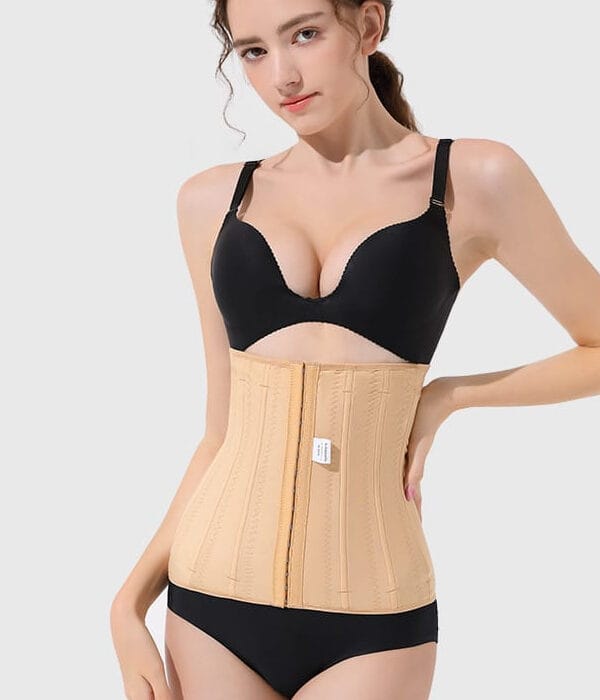
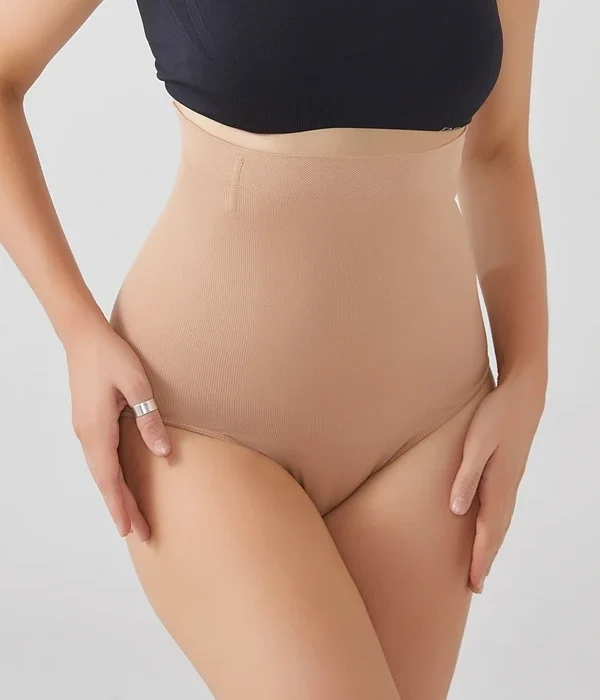
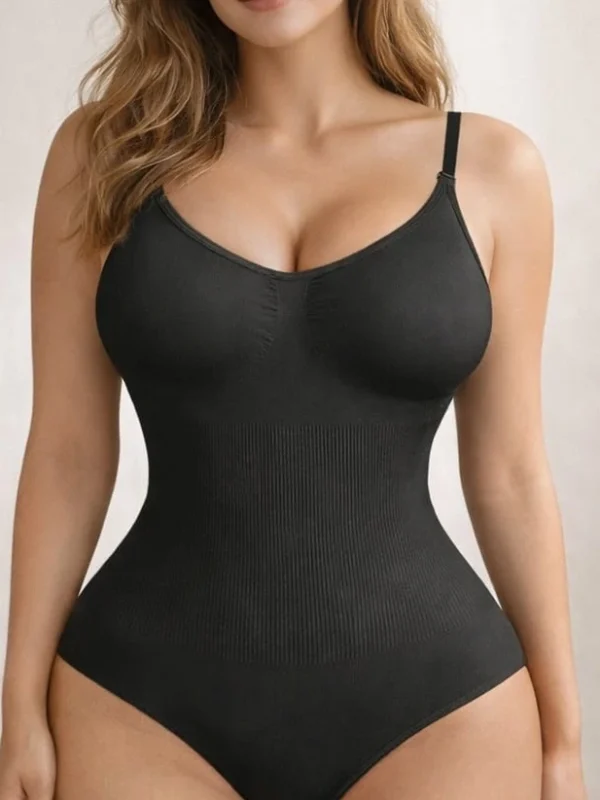
A belt format concentrates coverage at the abdomen and leaves the legs free, but its top and bottom edges must remain compatible with the approved zone. A high-waist brief is an everyday clothing format with a gusset and leg openings; it is not automatically appropriate around an incision. A bodysuit distributes coverage across more of the torso and may avoid a separate waistband, but straps, bust configuration, torso length and bathroom access become important.
Abdominal belt example
The High-Waist Post-Surgery Abdominal Compression Belt is a construction example only. A clinician must approve its use and placement.
Everyday brief example
The High-Waist Tummy-Control Shaping Brief illustrates a daily-wear format, not a Cesarean recovery prescription.
Everyday bodysuit example
The Seamless Tummy Control Bodysuit adds connected torso coverage; measure torso length and check access.
Safety checkpoint
Use the shapewear safety and warning-sign guide whenever ordinary shapewear becomes appropriate.
Compare three different construction examples
These products were published and in stock in the August 28, 2026 Authority snapshot. Their presence here verifies catalog identity, not postpartum suitability. Obtain clinical clearance and use the current product measurements.
- Waist & Abdominal Support
High-Waist Post-Surgery Abdominal Compression Belt
$79.00Select options This product has multiple variants. The options may be chosen on the product page - Shaping Briefs & Thongs
High-Waist Tummy-Control Shaping Brief
Original price was: $29.00.$19.00Current price is: $19.00.Select options This product has multiple variants. The options may be chosen on the product page - Shapewear Bodysuits
Seamless Tummy Control Bodysuit for Smooth Everyday Outfits
Original price was: $39.00.$29.00Current price is: $29.00.Select options This product has multiple variants. The options may be chosen on the product page
What the evidence can and cannot answer
Supported here
- CDC delivery counts and delivery-rate context
- Optional support and comfort language from a clinical health source
- A narrow randomized-trial finding with its limitations preserved
- Construction questions for delivery-specific conversations
Not established here
- A universal postpartum start day or daily schedule
- Permanent waist reduction, weight loss or faster healing
- Equivalence between retail shapewear and a studied binder
- Suitability for an individual incision, tear or symptom
Continue with the right guide
If you need a broad category orientation, begin with shapewear basics. For post-surgical garment requirements, go to post-surgery compression garments. For everyday use after recovery, the daily wear-duration guide explains how fit, movement, meals and symptoms change the decision. Each page owns a separate intent so postpartum medical boundaries are not diluted by general apparel advice.
Sources and evidence notes
- CDC/NCHS: Births — Method of Delivery — final 2024 vaginal and Cesarean counts and Cesarean rate.
- Cleveland Clinic: Should You Use a Postpartum Belly Wrap? — optional support, comfort and permanent-change boundaries.
- Cleveland Clinic: C-Section Recovery — clinical recovery and wound-care context.
- PubMed: randomized trial of abdominal binders after Cesarean delivery — narrow study evidence, not a universal product recommendation.
Sources, product availability, internal links and calculations checked August 28, 2026. Editorial method: national statistics were used only as population context; medical-source claims were kept within their stated scope; no start day, pressure or result was inferred. No clinician review is claimed.