

Substantively reviewed and updated: August 28, 2026 · Evidence and links checked August 28, 2026
Direct answer
One-piece shapewear is usually the better comparison when you want continuous torso coverage and fewer waistband junctions; separates are usually better when you need modular sizing, easier access or different coverage above and below the waist. Neither is universally more effective. The right choice depends on outfit boundaries, current measurements, torso length, bust design, heat, movement and restroom access.
- Continuity favors one-piece.
A bodysuit can connect upper and lower torso coverage without two waistbands. - Modularity favors separates.
Different top and bottom sizes or coverage needs are easier to solve independently. - Access is part of fit.
Gusset, closure and dressing route must work for the actual occasion.
Quick FAQ
What is the main advantage of one-piece shapewear?
It connects torso coverage and can reduce the junction between a separate top and bottom. It may create a more continuous clothing line, provided torso, bust, hip and gusset fit are compatible.
When are separate shapewear pieces better?
Separates can be better when upper and lower measurements need different sizes, when only one zone needs coverage, or when easier dressing, temperature control or restroom access matters more.
Is an open-bust or built-in-bust bodysuit better?
An open-bust design lets you use your own bra and can suit more necklines. A built-in-bust design reduces layers but adds cup and bust-fit variables. The outfit and measurements decide.
Should you size down for a smoother one-piece result?
No. A smaller bodysuit can shorten the effective torso, move seams and increase pressure at straps, gusset or leg openings. Use the exact chart and change construction when proportions conflict.
The comparison is architecture, not a winner
“One-piece shapewear versus separates” is useful because each architecture solves a different set of clothing problems. A bodysuit links coverage across the torso. A high-waist brief or short isolates the lower torso and can be combined with a bra or shaping top. The decision should not begin with which option sounds stronger. It should begin with where the outer outfit reveals edges and whether one garment can accommodate all relevant proportions.
ISO 8559-2:2017 explains that clothing size designation is based on body dimensions while the designer sets actual garment dimensions and allowances for style and cut. ISO 8559-3:2018 recognizes meaningful variation in body shape and proportions. Those principles matter more for a one-piece garment because bust or underbust, torso, waist, hip and sometimes thigh must coexist in one construction.
One-piece versus separates at a glance
| Decision factor | One-piece shapewear | Separate pieces |
|---|---|---|
| Coverage continuity | Connected torso can reduce a separate waistband junction | Two edges may overlap or create a gap |
| Proportion flexibility | One size must accommodate more body zones | Top and bottom can be selected independently |
| Torso length | Critical; incompatibility can pull at straps or gusset | Less dependent on shoulder-to-gusset distance |
| Bust and neckline | Open-bust or built-in-bust architecture must match outfit and bra plan | Bra can be chosen independently; shaping top adds another edge |
| Restroom access | Depends on gusset and closure design | A lower-body piece may be simpler to remove |
| Temperature and layering | More connected coverage can retain more heat | Only the needed zone can be covered |
A four-question architecture test
Edges → proportions → neckline → access
Answer in this order to avoid choosing by control level alone
Qinelle apparel-selection model, informed by ISO measurement principles. It is not a pressure or performance test.
If continuous coverage solves the outfit but one size does not fit all body points, do not automatically size down or up. Compare adjustable straps, open-bust construction, brief versus thigh length, or separate pieces. A theoretically continuous line is not useful when the garment pulls, gaps or creates a hard edge.
One-piece construction: five variables to inspect
| Variable | Options | Fit consequence |
|---|---|---|
| Bust | Open bust, molded or unstructured built-in bust | Changes bra choice, neckline, cup fit and layer count |
| Straps | Fixed, adjustable or convertible | Affects shoulder pressure, neckline and usable torso range |
| Lower body | Brief, thong or mid-thigh | Moves the terminal edge and changes hip or thigh coverage |
| Entry | Pull-on, hook, zipper or combinations | Changes dressing sequence, edge structure and access |
| Gusset | Closed, opening or closure-based | Changes bathroom access; does not prove medical suitability |
What Qinelle’s current assortment shows
The August 28, 2026 Authority snapshot recorded 247 published products. Among selected in-stock category assignments, Qinelle had 60 Shapewear Bodysuits, 24 Shaper Shorts and 8 Shaping Briefs & Thongs. That makes bodysuits the broadest of these three listed assortments, offering more construction combinations to compare. It does not prove that bodysuits sell more, fit better or produce stronger outcomes.
Selected in-stock format counts
Published WooCommerce category snapshot, August 28, 2026
Source: Qinelle Batch 05 Authority snapshot. Category assignments may overlap. Bar widths use 60 as the maximum and represent inventory count only—not traffic, sales or effectiveness.
When one-piece shapewear is the stronger candidate
Start with a bodysuit when a dress or jumpsuit reveals the junction between a separate shaping top and bottom, when a lower-body waistband repeatedly rolls at the torso bend point, or when you want a connected foundation layer under a fitted garment. An open-bust bodysuit can preserve your chosen bra, while a built-in-bust design can reduce layers when its bust architecture fits.
The candidate still has to pass measurement and movement tests. Check torso length, not just waist and hip. Sit to see whether the garment pulls upward. Raise your arms and notice strap tension. Confirm the gusset and restroom-access plan. Inspect the neckline and leg or brief edge through the outer garment.
When separates are the stronger candidate
Start with separates when upper and lower body measurements fall into different product sizes, when only the hip or thigh needs coverage, or when a long event makes access and temperature especially important. A high-waist brief can pair with an existing bra. A shaping short can address hip and thigh lines without adding shoulder straps or bust construction.
The tradeoff is edge management. Two garments can stack elastic at the waist, and a gap between pieces can create an uneven line. Test the exact combination under the outer garment. Sometimes changing the waistband height or using only one piece produces a better result than adding another layer.
Open-bust versus built-in bust
An open-bust bodysuit lets the wearer use a separate bra for cup fit, support and neckline. This is often useful when bust and torso proportions do not fit the same standard size or when the outfit requires a specific bra. The underbust edge and bra band must still coexist without a hard stacked line.
A built-in-bust bodysuit simplifies the layer system but asks one garment to solve cup or bust fit together with torso, waist and hip. Do not assume fewer layers means easier sizing. The exact construction, chart and adjustable features decide.
Fit and safety remain the same in either architecture
Cleveland Clinic guidance emphasizes correct sizing and notes that excessively tight shapewear can aggravate skin, nerve or digestive symptoms. One-piece coverage is not permission to tolerate pain, numbness, breathing difficulty or persistent irritation. Separate pieces are not automatically gentler if their edges stack at the same point.
Use how to put on and wear shapewear for dressing technique and what correctly fitted shapewear feels like for continue, adjust and stop signals. The everyday safety guide covers the medical boundary in more detail.
Three one-piece examples to compare
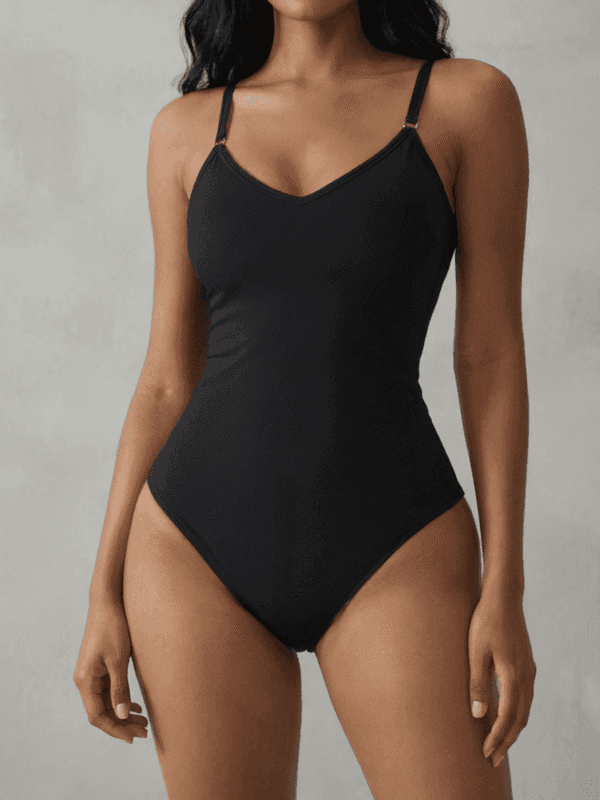
Everyday V-neck bodysuit
The Seamless Tummy Control Bodysuit illustrates connected torso coverage with its own neckline and bust construction.
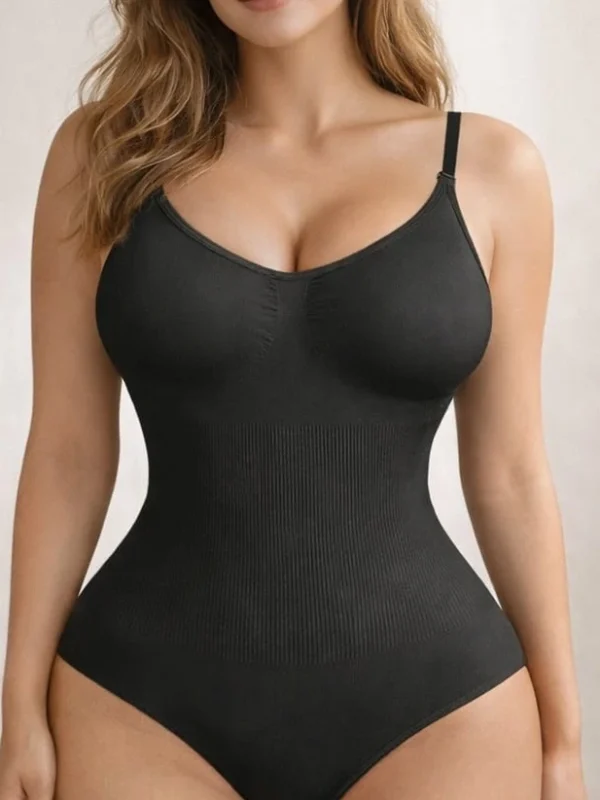
Open-bust brief or thong
The Seamless Adjustable-Strap Shaping Bodysuit illustrates own-bra flexibility and lower-body configuration choices.
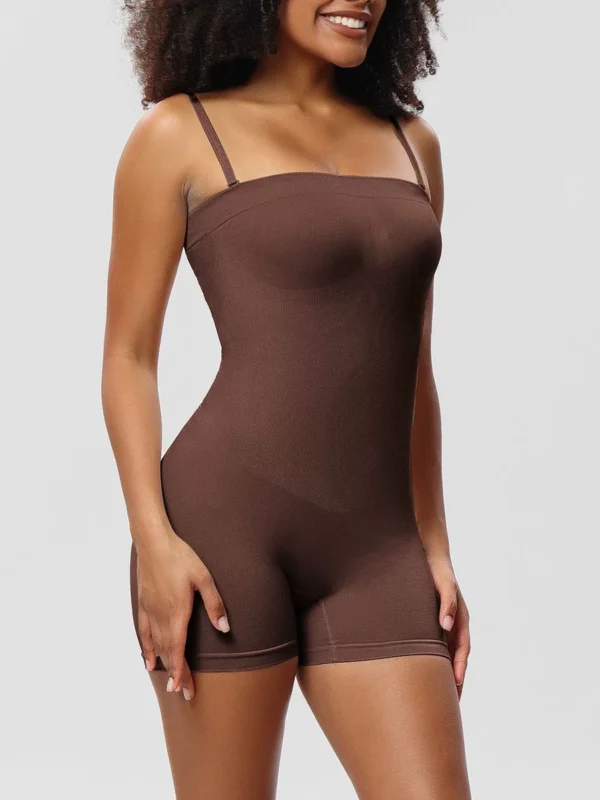
Convertible-strap short
The Seamless Convertible-Strap Shaping Bodysuit with Shorts adds thigh coverage and strap options.
Need a measurement-first choice?
Use how to choose shapewear for your body shape and outfit before selecting architecture.
Compare current one-piece constructions
These published, in-stock products were verified in the August 28, 2026 Authority snapshot. They demonstrate construction differences; check live specifications and size charts for the exact variant.
- Shapewear Bodysuits
Seamless Adjustable-Strap Shaping Bodysuit – Brief or Thong
Original price was: $49.00.$29.00Current price is: $29.00.Select options This product has multiple variants. The options may be chosen on the product page - Shapewear Bodysuits
Seamless Convertible-Strap Shaping Bodysuit with Shorts
Original price was: $39.00.$29.00Current price is: $29.00.Select options This product has multiple variants. The options may be chosen on the product page - Shapewear Bodysuits
Seamless Tummy Control Bodysuit for Smooth Everyday Outfits
Original price was: $39.00.$29.00Current price is: $29.00.Select options This product has multiple variants. The options may be chosen on the product page
An outfit-based decision scenario
Consider a fitted dress with thin fabric and a low neckline. A shopper’s waist and hip fit the same bodysuit size, but the built-in bust is incompatible with the needed bra support. The answer is not automatically a tighter bodysuit. An open-bust one-piece may preserve continuous torso coverage while allowing the correct bra; alternatively, a high-waist separate can avoid the bust question entirely if its top edge remains invisible under the dress.
This is an illustrative selection scenario, not a customer result. It shows how neckline, proportion and edge visibility—not a generic claim of “full-body benefits”—determine the stronger candidate.
What this comparison supports—and what it does not
Supported decisions
- Connected coverage versus modular sizing
- Open-bust, strap, lower-body and access comparisons
- Measurement and outfit tests for each architecture
Not established
- That one-piece garments are universally more effective
- That category inventory count predicts fit or sales
- A measured pressure, medical benefit or permanent body change
Sources and evidence notes
- ISO 8559-2:2017 — body-dimension size designation and designer-set garment dimensions.
- ISO 8559-3:2018 — variability in body shape and proportions within measurement tables.
- ASTM D13.55 active body-measurement standards — separate standards for different apparel populations.
- Cleveland Clinic: A Doctor’s Advice on Wearing Shapewear — correct sizing and symptom boundaries.
Sources, catalog counts, products and internal links checked August 28, 2026. Editorial method: architecture comparisons were separated from medical and performance claims; catalog counts were labeled as inventory, not popularity or effectiveness. No clinician review is claimed.