

Substantively reviewed and updated: August 28, 2026 · Evidence and links checked August 28, 2026
Direct answer
Everyday shapewear is not automatically unsafe, but safe wear depends on fit, duration, activity and your body’s response. A garment should allow normal breathing and movement without pain, numbness, tingling, swelling, broken skin or persistent irritation. Remove it when those signals appear. Ordinary shapewear is also not medical compression and should never replace a clinician-selected garment.
- Correct size first.
Smaller is not safer or more effective. - Symptoms outrank the outfit.
Remove the garment when warning signs appear. - Know the category.
Everyday shaping is not prescribed recovery compression.
Quick FAQ
Is it safe to wear shapewear every day?
It can be for many people when the garment is the correct size and does not cause pain, numbness, breathing difficulty, persistent marks or skin irritation. Remove it and reassess when symptoms appear.
Can shapewear damage your organs?
Cleveland Clinic says modern flexible shapewear does not permanently relocate organs. Extremely tight, prolonged wear can still aggravate skin, nerve or digestive symptoms, so fit and body feedback matter.
Should shapewear leave marks?
A faint temporary fabric impression is different from a deep, painful or persistent mark. Cleveland Clinic advises treating marks and discomfort as evidence that the garment may be too tight.
Is everyday shapewear medical compression?
No. UPMC distinguishes ordinary shapewear from medical-grade compression, which is selected for a condition and carries a measured pressure rating. Do not substitute one for the other.
Why one page should own the shapewear-safety question
Qinelle previously had four short pages answering slightly different versions of “is shapewear harmful?” None cited an authority source, none contained a table or visual, and all four were marked noindex. Keeping them separate would divide the same search intent across weak pages. This rebuilt page is the single owner for everyday-wear safety, fit checks and warning signs. The separate daily wear-duration guide answers the practical “how long” question, while the shapewear buying guide owns size, coverage and outfit selection.
This page does not diagnose a symptom or approve shapewear for a medical condition. It translates current health-system guidance into clothing-fit decisions and clearly identifies where a clinician is needed.
What authoritative guidance actually says
Cleveland Clinic physician guidance says modern flexible shapewear does not permanently narrow the rib cage or relocate organs. It also warns that an excessively tight garment can irritate skin, compress nerves, aggravate reflux or worsen swelling in people with poor circulation. The practical message is not “shapewear is dangerous” or “shapewear is always safe.” It is: choose the correct size, avoid extreme tightness and stop when symptoms appear.
MedlinePlus guidance for gastroesophageal reflux disease includes wearing loose-fitting clothes among measures that may improve symptoms. If tight clothing reliably worsens reflux, changing or removing the garment is more useful than forcing a longer wear period.
Pressure labels: a data point with an important boundary
UPMC HealthBeat describes educational pressure ranges for several types of compression clothing. These numbers explain why a generic “high compression” label is not a medical specification. Qinelle has not supplied instrument measurements for the everyday products linked on this page, so this article does not assign them an mmHg value.
Pressure ranges described by UPMC
Educational category ranges in millimeters of mercury (mmHg); not Qinelle product test results
Source: UPMC HealthBeat, reviewed June 23, 2023. Bars use the upper value divided by 50 for visual scale. UPMC notes that medical compression is selected for a condition; the ranges do not prove the pressure, safety or effectiveness of an unlabeled garment.
A fit-signal table for real-world decisions
| Observation | Interpretation boundary | Practical response |
|---|---|---|
| Secure fit; normal breathing and movement | Compatible with the intended outfit, but not proof of medical benefit | Continue to reassess during sitting, meals and movement |
| Rolling, bunching or a hard edge | May indicate a style, torso-length or size mismatch | Remove and compare a different format or size |
| Redness or itching that persists | Could reflect friction, heat, moisture or material sensitivity | Remove, clean and dry the skin and garment; seek advice if it persists or worsens |
| Numbness, tingling, pain or swelling | Not an acceptable sign of “working” | Remove promptly; seek medical advice when symptoms do not resolve or are concerning |
| Breathing difficulty, chest pain or an urgent symptom | Cannot be evaluated by a clothing guide | Remove the garment and seek urgent medical help according to local guidance |
The five-step fit check
Measure → dress → move → reassess → decide
A repeatable clothing-fit workflow, not a clinical test
Decision: keep wearing only while the garment remains compatible with the outfit and your comfort. Remove or change it when the fit changes.
Start with the Qinelle size guide, then check the product-specific chart. A garment can match waist measurement but fail at hip circumference, torso length, thigh opening or bust configuration. That is why sizing down is a poor solution to rolling or insufficient coverage.
Everyday shapewear and postoperative garments are different categories
| Decision | Everyday shapewear | Postoperative garment |
|---|---|---|
| Primary purpose | Clothing-line smoothing, outfit coverage and a secure foundation layer | Part of an individualized recovery plan |
| Who selects it | Shopper using current measurements and outfit needs | Treating team specifies zones, timing, access and other requirements |
| Pressure evidence | Do not infer mmHg from “firm,” “control” or price | Use the exact specification requested by the clinician |
| Wear schedule | Fit- and comfort-based; no universal hour limit | Provider-directed; ordinary fashion advice does not apply |
Read the detailed everyday shapewear versus post-surgery compression comparison before choosing between categories.
Choose construction for the outfit—not maximum tightness
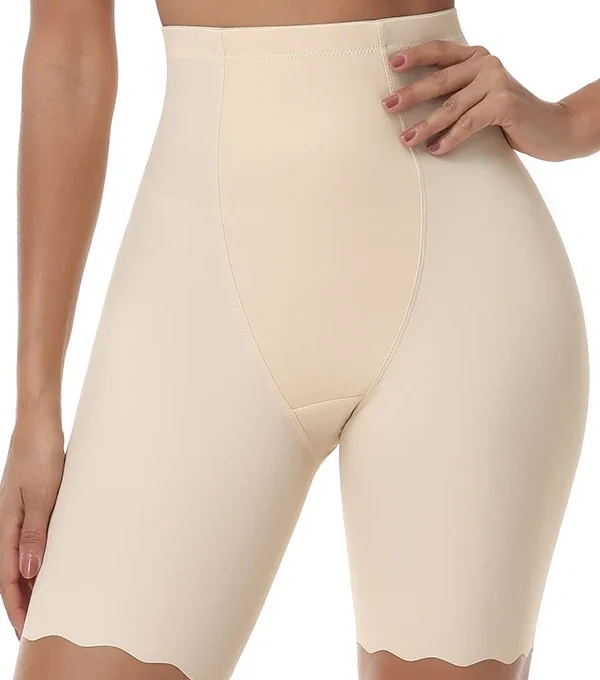
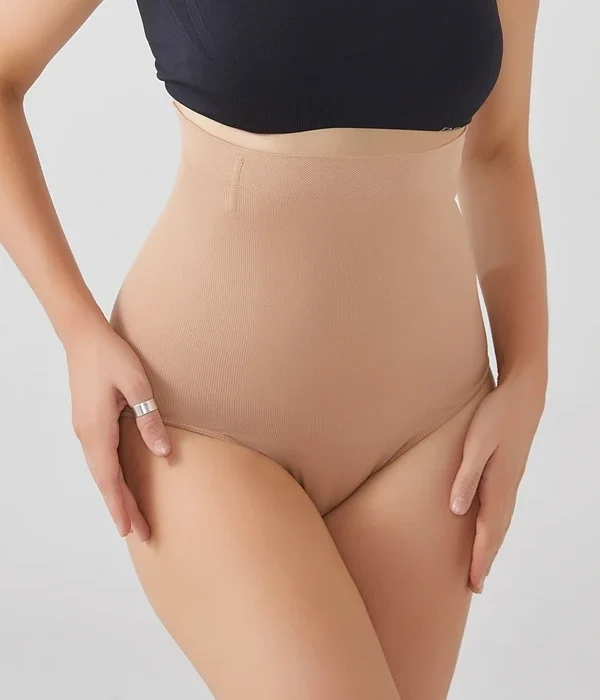
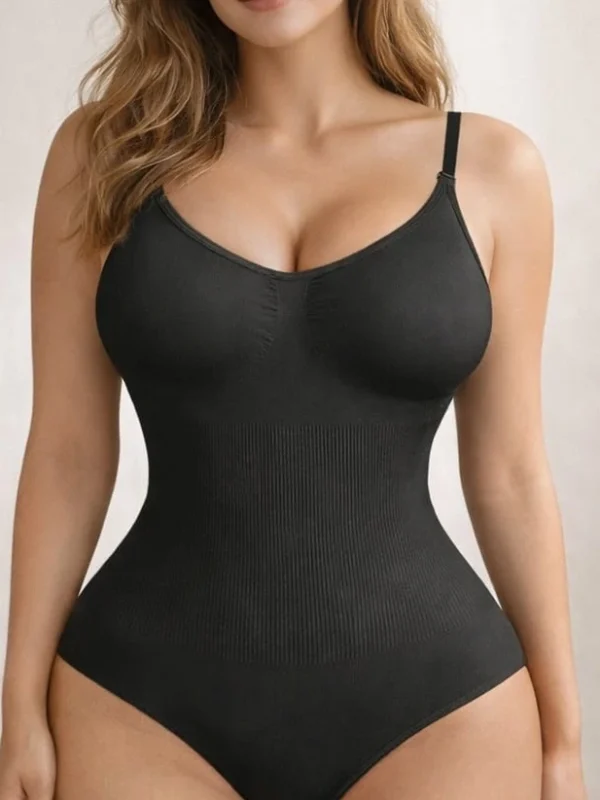
Coverage and garment architecture usually solve more problems than choosing the strongest-sounding label. A high-waist brief separates top and bottom coverage and may be easier for bathroom access. A shaping short extends coverage across the hips and thighs but adds leg openings that must remain comfortable. A bodysuit connects torso coverage and can reduce a separate waistband, but bust style, torso length, gusset and shoulder straps become part of fit.
Brief
Compare waistband height, lower-abdomen coverage, leg opening and outfit visibility. See High-Waist Tummy-Control Shaping Brief.
Short
Compare thigh length, leg edge and sitting comfort. See High-Waist Seamless Shaper Shorts.
Bodysuit
Compare torso length, bust configuration, straps and bathroom access. See Seamless Tummy Control Bodysuit.
Need a full selection process?
Use the size, support, coverage and outfit buying guide, then compare shapewear formats by function.
Compare current everyday formats
These in-stock examples were verified in the August 28, 2026 Authority snapshot. They are format examples, not medical recommendations. Check each current size chart and remove any garment that causes warning signs.
- Shaper Shorts
High-Waist Seamless Shaper Shorts – Tummy & Thigh
Original price was: $39.00.$29.00Current price is: $29.00.Select options This product has multiple variants. The options may be chosen on the product page - Shaping Briefs & Thongs
High-Waist Tummy-Control Shaping Brief
Original price was: $29.00.$19.00Current price is: $19.00.Select options This product has multiple variants. The options may be chosen on the product page - Shapewear Bodysuits
Seamless Tummy Control Bodysuit for Smooth Everyday Outfits
Original price was: $39.00.$29.00Current price is: $29.00.Select options This product has multiple variants. The options may be chosen on the product page
When the correct response is a different design
Not every uncomfortable garment is simply “too small.” A high waistband can conflict with a short torso, a thigh edge can land on the widest part of the leg, and fixed straps can pull when torso length is not compatible. Repeatedly buying a larger or smaller version of the same construction may preserve the same pressure point. Compare the architecture instead: brief versus short, separate pieces versus bodysuit, open-bust versus built-in bust, and flexible edge versus a more structured closure.
Also check the outer outfit. A stiff trouser waistband can add pressure over a shapewear waistband. A narrow dress hem may interact with a longer shaping short. Heat, moisture and prolonged sitting can make a previously acceptable seam less comfortable. Trial the complete outfit in realistic positions rather than judging the shapewear by standing in front of a mirror for one minute.
Change coverage
If the edge creates the problem, compare a shorter or longer format so the edge lands elsewhere.
Change construction
If a waistband rolls, compare connected torso coverage instead of assuming stronger control will fix it.
Change the outfit layer
Two individually comfortable waistbands may become uncomfortable when stacked in the same place.
Change the plan
Removing shapewear is a valid fit decision. An outfit should not depend on tolerating warning signs.
What this page does not prove
Supported here
- Fit and symptom checks drawn from cited health guidance
- Differences between clothing and prescribed compression
- Verified Qinelle product identity, price and stock status at the review date
Not established here
- A pressure measurement for an untested Qinelle product
- Medical suitability for a person or condition
- Permanent body change, weight loss or treatment benefit
Continue with the right owner page
New to the category? Start with shapewear basics. Deciding how long to keep a garment on? Use the fit-based daily wear guide. Comparing real expectations? Read what shapewear can and cannot do. These pages have distinct jobs so the same query is not repeated across multiple thin articles.
Sources and evidence notes
- Cleveland Clinic: A Doctor’s Advice on Wearing Shapewear — fit, skin, nerve, digestive and prolonged-wear boundaries.
- UPMC HealthBeat: Does Compression Clothing Help Circulation? — educational pressure categories and medical-compression distinction.
- MedlinePlus: Gastroesophageal Reflux Disease — loose-fitting clothing among symptom-management measures.
Sources, product availability, internal links and calculations checked August 28, 2026. Editorial method: claims were limited to what the cited source supports; product pressure and individual medical suitability were not inferred. No clinician review is claimed.