

Substantively reviewed and updated: August 28, 2026 · Evidence and links checked August 28, 2026
Direct answer
Correctly fitted everyday shapewear should feel close and secure, but you should still be able to breathe, sit, walk and bend normally. It may feel firmer than ordinary underwear and may take a few minutes to position evenly. Pain, numbness, tingling, breathing difficulty, worsening reflux, swelling, a hard rolled edge or persistent skin irritation are not signs that it is “working”; remove it and reassess the size or construction.
- Secure is not painful.
Normal movement and breathing are minimum fit requirements. - Context changes sensation.
Sitting, meals, heat and stacked waistbands can expose a poor fit. - Judge the architecture.
Rolling can mean the style or torso length is wrong, not only the size.
Quick FAQ
What should correctly fitted shapewear feel like?
It should feel close and supportive while allowing normal breathing, sitting, walking and bending. Pressure should be distributed rather than concentrated at a waistband, seam, strap or leg opening.
Is it normal for shapewear to feel tight?
It can feel firmer than ordinary underwear, but pain, numbness, tingling, breathing restriction or a hard rolled edge are not acceptable fit signals. Remove it and reassess.
Should shapewear leave marks?
A faint temporary fabric impression is different from a deep, painful or persistent mark. Persistent redness, broken skin or irritation means the garment or wearing conditions need to change.
Does first wear predict all-day comfort?
No. Sitting, meals, heat, movement and the outer outfit can change pressure and friction. Test the complete outfit in realistic positions and reassess during wear.
The best description is a fit signal, not a promise
“What does shapewear feel like?” sounds subjective, but the answer can still be structured. There are sensations compatible with clothing fit, sensations that suggest an adjustment, and symptoms that mean stop. The exact feel changes with fabric, panel placement, coverage, body measurements and activity. No online article can certify a product for an individual body, and a product’s marketing level—light, firm or high control—does not establish a measured pressure.
Cleveland Clinic physician guidance recommends the correct size and warns that excessive tightness can irritate skin, compress nerves or aggravate digestive symptoms. UPMC HealthBeat distinguishes ordinary compression clothing from medical-grade compression selected for a condition. Those sources support a practical boundary: an everyday garment can feel firm without becoming a medical device, and stronger sensation is not proof of a better result.
A three-zone sensation map
Continue, adjust or stop
A clothing-fit triage for first wear; it does not diagnose symptoms
Interpretation based on Cleveland Clinic’s fit and symptom guidance. “Adjust” means remove and reposition or change the garment—not force it tighter.
If an adjustment does not solve the problem, compare a different design. A waistband that repeatedly rolls may be landing at an incompatible torso point. A thigh edge may be too narrow for the relevant circumference. A bodysuit may pull because of torso length even when waist and hip measurements appear correct.
What normal first-wear sensations can include
| What you notice | What it may mean | What to do |
|---|---|---|
| Closer contact than ordinary underwear | Expected for a shaping layer if pressure is even | Check breathing, movement and every edge before continuing |
| Smoother clothing line while worn | The garment is redistributing soft tissue under the outfit | Treat it as a temporary styling result, not permanent reshaping |
| Brief effort while positioning the garment | Fabric needs to be distributed rather than pulled from one edge | Gather it, step in when designed for that, and ease it upward in sections |
| Warmth during extended wear | Layering, fabric and environment can retain heat and moisture | Reassess skin and comfort; change the layer or plan when needed |
| Awareness of a closure or seam | May be normal only if it is not painful or progressively irritating | Check alignment and whether the outer garment adds pressure at the same point |
What is not a normal “shapewear result”
| Signal | Why it matters | Response |
|---|---|---|
| Pain or a hard cutting edge | Pressure is concentrated rather than comfortably distributed | Remove the garment; compare size, edge placement or another format |
| Numbness or tingling | Cleveland Clinic identifies nerve compression as a possible problem with excessive tightness | Remove it promptly; seek advice if symptoms persist or concern you |
| Breathing difficulty or chest symptoms | Cannot be evaluated as a clothing-fit issue online | Remove it and seek urgent medical help according to local guidance |
| Worsening reflux after dressing or a meal | Tight clothing can aggravate digestive symptoms for some people | Remove or change the garment and discuss recurrent symptoms with a clinician |
| Persistent redness, broken skin or swelling | Friction, pressure, heat or another condition requires a different response | Stop wearing it and obtain medical advice when appropriate |
MedlinePlus GERD guidance lists loose-fitting clothing among measures that may help symptoms. That does not mean shapewear causes reflux in everyone; it means a repeatable symptom linked to tight clothing should override an outfit plan.
Why a one-minute standing test is not enough
Standing still usually distributes pressure differently from sitting. Sitting can fold the abdomen, bring a trouser waistband onto the shapewear edge and move a bodysuit gusset or strap. A meal may change abdominal comfort. Walking creates repeated contact at thigh openings. Heat and moisture change friction. These conditions explain why a garment that initially feels acceptable may fail later without the body or product having “changed.”
Four contexts before a longer wear
Complete the test in the actual outer outfit whenever possible
Qinelle apparel-fit workflow. It is a practical test, not an evidence-based universal wear-time schedule.
How different formats usually feel
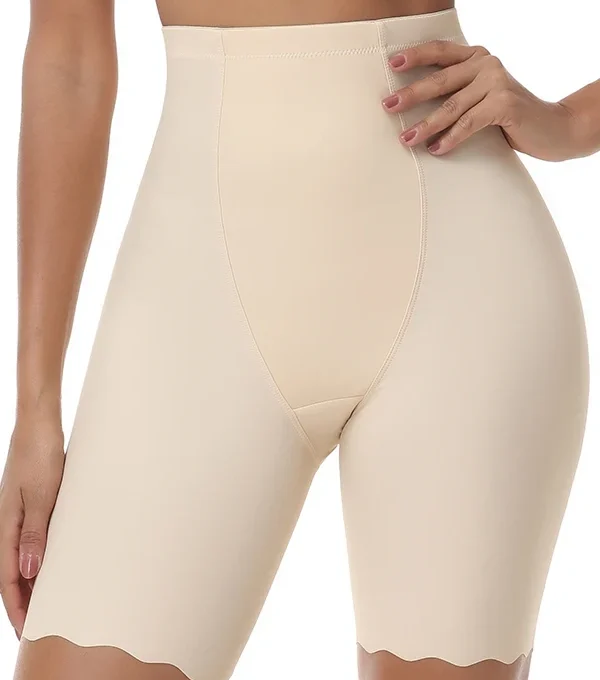
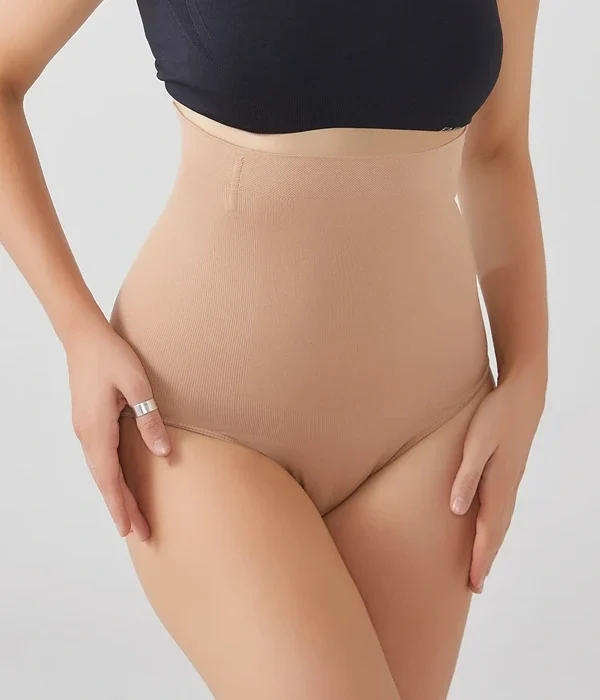
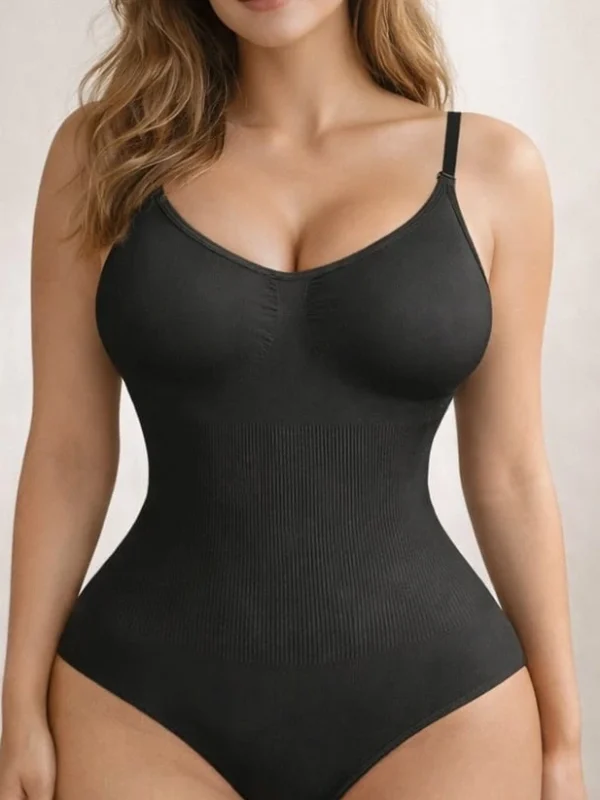
A high-waist brief concentrates construction around the lower torso and waistband. It may feel simpler than a bodysuit, but its top edge becomes the decisive fit point. A shaping short adds hip and thigh coverage, so the leg edge and seated thigh movement matter. A bodysuit distributes contact across a larger area and removes a separate waist-only garment, but torso length, bust design, straps and gusset access become part of the experience.
Brief
Focused lower-torso coverage with a prominent waistband decision. See the High-Waist Tummy-Control Shaping Brief.
Short
Coverage continues onto the thigh, adding a leg-opening fit test. See the High-Waist Seamless Shaper Shorts.
Bodysuit
Connected torso coverage with more vertical fit variables. See the Seamless Tummy Control Bodysuit.
Compare architecture
Use one-piece shapewear versus separates when the issue is coverage continuity or modular sizing.
How to put it on without creating a false pressure point
Do not pull an entire garment upward by one waistband or strap. That can twist panels and concentrate fabric. Follow the product instructions, remove shoes and jewelry that may snag fabric, gather the garment, step in if it is designed to be stepped into, and ease it upward in sections. Align gusset, side seams, panels and leg openings before adjusting the top edge or straps.
If you need detailed steps, use how to put on and wear shapewear. Start with the Qinelle size guide and the exact product chart. If the garment requires extreme force, produces a hard edge or cannot be aligned without twisting, stop treating that experience as normal.
What results can you realistically expect?
Everyday shapewear can temporarily smooth clothing lines, reduce the visibility of some seams and change how soft tissue sits under an outfit while the garment is worn. It does not remove body fat, create lasting weight loss or permanently reshape anatomy. The most useful result is therefore outfit-specific: does the garment produce the intended line without introducing a visible edge or an unacceptable sensation?
For a detailed result boundary, read is shapewear effective?. For safety signals and category distinctions, use the everyday shapewear safety guide. For the duration question, use how long you can wear shapewear; it explains why there is no authoritative universal hour limit.
Compare three everyday constructions
These published, in-stock examples were verified in the August 28, 2026 Authority snapshot. They illustrate different garment architectures; they are not pressure-tested claims or personal fit recommendations.
- Shaper Shorts
High-Waist Seamless Shaper Shorts – Tummy & Thigh
Original price was: $39.00.$29.00Current price is: $29.00. Select options This product has multiple variants. The options may be chosen on the product page - Shaping Briefs & Thongs
High-Waist Tummy-Control Shaping Brief
Original price was: $29.00.$19.00Current price is: $19.00. Select options This product has multiple variants. The options may be chosen on the product page - Shapewear Bodysuits
Seamless V-Neck Adjustable-Strap Brief Shaping Bodysuit
Original price was: $39.00.$29.00Current price is: $29.00. Select options This product has multiple variants. The options may be chosen on the product page
A first-wear decision scenario
Consider a shopper preparing for a seated dinner in a fitted dress. A shaping short looks smooth while standing, but its waistband sits directly under the dress seam and becomes a hard rolled edge when seated. The evidence does not support “endure it until you get used to it” or “buy an even smaller size.” The correct decision is to remove it, recheck measurements and compare an alternative whose edge lands elsewhere—perhaps a connected bodysuit or a shorter brief—then repeat the complete-outfit test.
This is an illustrative fit scenario, not a customer testimonial or clinical case. Its value is the decision logic: change one variable, retest in context and stop when symptoms appear.
What this guide can and cannot tell you
Supported here
- Clothing-fit signals for continuing, adjusting or stopping
- Construction differences that change first-wear sensation
- Realistic, temporary outfit results
Not established here
- A measured pressure for any linked Qinelle product
- Medical suitability for a person or condition
- A universal break-in period, wear schedule or permanent body result
Sources and evidence notes
- Cleveland Clinic: A Doctor’s Advice on Wearing Shapewear — correct sizing, realistic effects and skin, nerve and digestive warning signs.
- UPMC HealthBeat: Does Compression Clothing Help Circulation? — distinction between ordinary compression clothing and medical-grade compression.
- MedlinePlus: Gastroesophageal Reflux Disease — loose-fitting clothing as one symptom-management measure.
- ISO 8559-2:2017 — body-dimension-based size designation and the designer’s role in garment dimensions.
Sources, product status and internal links checked August 28, 2026. Editorial method: health statements were limited to cited guidance; fit scenarios were explicitly labeled as illustrative; no product pressure, medical benefit or permanent result was inferred. No clinician review is claimed.