

Substantively reviewed and updated: August 28, 2026 · Evidence and links checked August 28, 2026
Direct answer
The most persistent shapewear myths confuse a temporary clothing effect with permanent body change, treat discomfort as proof of performance, or assume a marketing term describes measured medical pressure. Everyday shapewear can change how fabric and soft tissue sit while the garment is worn. It does not remove fat, permanently remodel the body, or become medical compression simply because a product page calls it “firm” or “high control.” The safer buying rule is simple: use current measurements, choose the architecture for the outfit, and stop if pain, numbness, breathing difficulty or persistent irritation appears.
- Temporary means temporary.
Smoothing while worn is not permanent fat loss or anatomical change. - Fit beats force.
Sizing down can misplace panels, waistbands, straps and leg openings. - Labels need context.
Everyday control terms are not a disclosed medical-pressure measurement.
Quick FAQ
Does shapewear permanently reshape your body?
No. Everyday shapewear can temporarily smooth clothing lines and redistribute soft tissue while worn, but it does not permanently remove fat or remodel anatomy.
Should you size down in shapewear?
No. Use current measurements and the exact product chart. Sizing down can move panels and openings into the wrong places and increase rolling, pinching or concentrated pressure.
Is pain a sign shapewear is working?
No. Pain, numbness, tingling, breathing difficulty or persistent irritation are stop signals, not proof of better shaping. Remove the garment and reassess.
Is everyday shapewear the same as medical compression?
No. Medical compression is selected for a clinical purpose and may use measured pressure specifications. Everyday shapewear should not be treated as a medical device without explicit evidence and professional direction.
What we checked—and what “myth” means here
This review tests ten common buying and wearing claims against three kinds of evidence: health-system guidance about fit and symptoms, apparel-sizing and labeling standards, and Qinelle’s verified product architecture. A claim is marked false as stated when its universal wording conflicts with the evidence. It is marked depends on context when a useful answer changes with the garment, body measurements, outfit or duration.
This is not a laboratory pressure test, clinical trial or customer survey. The verdict count below is an editorial evidence ledger of the ten claims in this article. It should not be presented as a percentage of consumers who believe each claim. The method matters because a precise-looking number without a defined denominator is another form of misinformation.
Ten-claim evidence ledger
Classification of the ten claims reviewed below—not consumer prevalence
Qinelle editorial claim ledger, reviewed August 28, 2026. The classifications and reasons are fully visible in the next table.
The ten myths at a glance
| Claim | Verdict | What the evidence supports | Decision |
|---|---|---|---|
| 1. Shapewear permanently reshapes the body or burns fat | False as stated | Everyday garments can change an outfit line while worn; they do not establish permanent fat loss. | Judge the temporary outfit result, not a body-change promise. |
| 2. A smaller size always shapes better | False as stated | The correct size keeps intended panels and openings closer to their designed locations. | Use current measurements and the exact chart. |
| 3. Pain proves the garment is working | False as stated | Pain and neurological, breathing or skin symptoms are reasons to stop. | Remove it; do not “push through.” |
| 4. Everyday shapewear is medical compression | False as stated | Ordinary and medically directed compression are different use categories. | Do not infer clinical suitability from styling language. |
| 5. “High compression” always states a measured pressure | False as stated | A control label alone does not disclose a validated pressure at a body location. | Look for an actual method and unit before treating a number as evidence. |
| 6. A body-shape label can determine the right garment | False as stated | Waist, hip, bust, thigh and torso proportions still vary within every label. | Choose by outfit, zones and measurements. |
| 7. Any skin mark means injury | Depends | A faint temporary fabric impression differs from deep, painful or persistent redness. | Recheck promptly and stop for persistent or concerning signs. |
| 8. One minute standing predicts all-day comfort | Depends | Sitting, meals, heat and movement can change pressure and friction. | Test the complete outfit in realistic positions. |
| 9. Underwear is always required—or never required | Depends | Gusset design, label instructions, hygiene preference, seams and access differ. | Follow the exact garment and outfit context. |
| 10. A higher price always means better quality | Depends | Price alone does not prove fiber content, seam durability, fit or care performance. | Inspect disclosed construction and return terms. |
Myths 1–3: body change, sizing down and pain
Myth 1: shapewear creates permanent reshaping
A shaping layer can redistribute soft tissue under clothing and reduce the visibility of some garment lines. When the layer comes off, that mechanical clothing effect ends. It is therefore inaccurate to describe ordinary shapewear as a method for burning fat, losing weight or permanently changing anatomy. For a fuller result boundary, see is shapewear effective?
Cleveland Clinic’s physician guidance describes a realistic while-worn effect and warns against overly tight fit. The practical value proposition is still meaningful: an outfit may hang differently, seams may read less strongly, and a selected area may look smoother. The error is converting that temporary styling outcome into a permanent biological claim.
Myth 2: size down for stronger results
Smaller is not a controlled way to increase performance. It changes where waistbands, panels, straps, gussets and leg openings land. A short can cut at the thigh; a brief can roll at the waist; a bodysuit can pull vertically because the effective torso length is too short. Begin with the Qinelle size guide, then use every measurement requested on the exact product chart. If measurements cross sizes, compare construction rather than forcing the smaller option.
ISO 8559-2:2017 addresses size designation based on body dimensions and leaves garment allowances to the designer. ISO 8559-3:2018 addresses body-shape and proportion variability in size tables. Neither standard says a consumer should deliberately choose below current measurements. For a step-by-step decision, use how to choose shapewear.
Myth 3: discomfort means it is working
Firm contact can be compatible with fit; pain is not a performance metric. Stop for pain, numbness, tingling, breathing difficulty, swelling, a hard cutting edge or persistent irritation. Repositioning may solve twisted fabric, but symptoms should not be reframed as a “break-in” phase. See what shapewear should feel like and the shapewear safety guide.
Myths 4–6: medical claims, control labels and body types
Myth 4: all compression clothing is medical compression
UPMC HealthBeat distinguishes ordinary compression clothing from medical-grade compression used for specific health needs. A medical garment may be selected around a condition, body area and measured pressure. An everyday shaping brief sold for outfit smoothing cannot inherit those properties by association. After a procedure or for a medical condition, follow the treating professional’s instructions rather than substituting a general retail garment.
Myth 5: every “high-control” label is a pressure measurement
Light, medium, firm and high control can help compare products inside a brand, but the words do not automatically tell you pressure, test position, body form, garment size or test method. Without those details, converting a marketing tier into millimetres of mercury would manufacture precision. Qinelle product examples in this guide are shown as construction examples only; no medical pressure or clinical outcome is assigned.
Myth 6: apple, pear or hourglass determines the answer
Shape labels can help someone describe where coverage is wanted, but they cannot supply torso length, waistband location, thigh circumference, bust fit or outfit neckline. Start with the outfit and desired zones, then measure. The guide to choosing shapewear for your body shape and outfit explains why the label is a conversation shortcut rather than a sizing system.
Myths 7–10: marks, wear tests, underwear and price
Myth 7: every mark means damage
A temporary textile impression can occur with many close-fitting garments. It is not equivalent to a deep painful groove, persistent redness, broken skin, swelling or a spreading rash. The decision should use severity and persistence, not a binary “mark or no mark” rule. Remove the garment, recheck the skin and seek medical advice for symptoms that persist or concern you.
Myth 8: standing-room comfort predicts the whole day
Sitting changes abdominal folds and waistband overlap. Walking repeats contact at thigh openings. Meals, heat and moisture can change comfort. Test the full outfit by standing, sitting, walking, bending and using the restroom; reassess later rather than relying on the fitting-room minute. For wear-duration boundaries, read how long you can wear shapewear.
Myth 9: underwear has one universal rule
There is no honest always-or-never answer. Check the care label and product instructions, gusset lining, access design, laundering plan, seam visibility and personal hygiene preference. A separate layer can add seams and heat; going without may not suit every gusset or laundering situation. The how-to-wear guide provides a garment-by-garment decision process.
Myth 10: price proves quality
Price may reflect design, materials, production, service or positioning, but it cannot alone prove stretch recovery, seam strength, fit compatibility or care performance. The FTC Textile Fiber Rule governs fiber-content disclosures, while the FTC Care Labeling Rule covers care instructions and a reasonable basis for them. Use the disclosed fiber content, construction, care and return terms as evidence inputs; treat price as one commercial fact.
What the current Qinelle catalog actually shows
Three everyday architecture groups
Published in-stock products in the Batch06 Authority snapshot; category counts can overlap where catalog taxonomy overlaps
Source: Qinelle Batch06 Authority product snapshot, generated August 28, 2026; 247 total product records captured. These category counts describe catalog architecture, not demand, effectiveness or medical suitability.
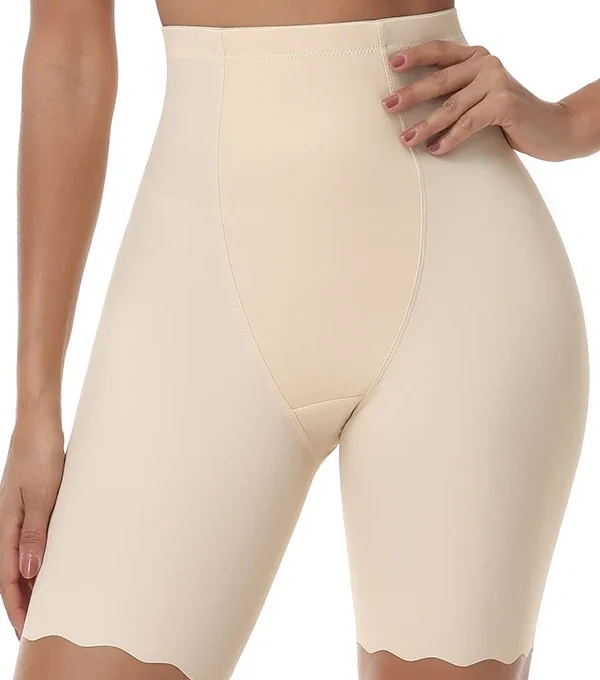
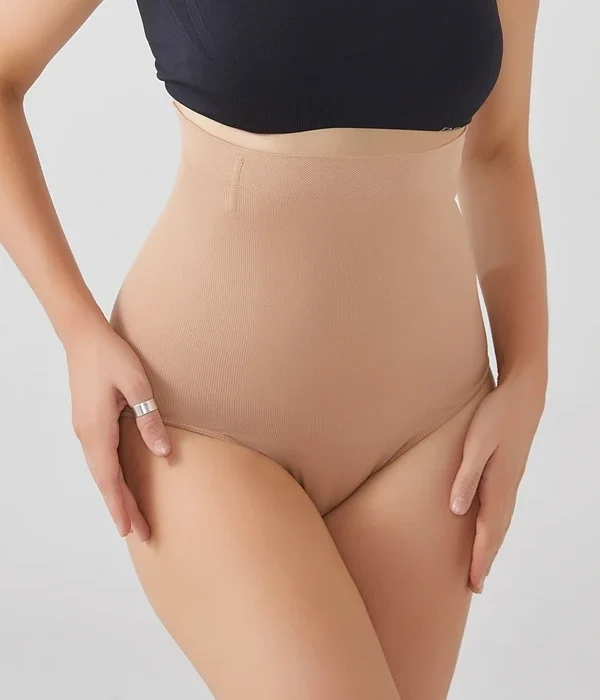
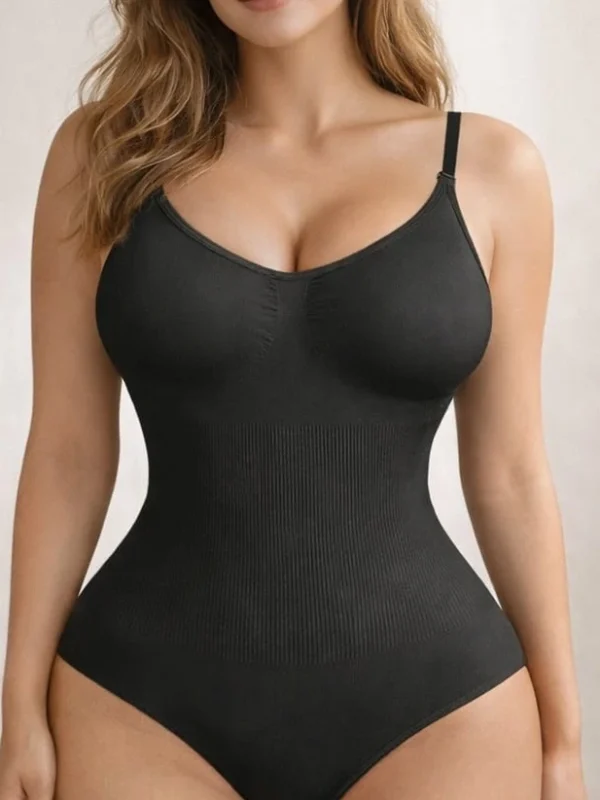
The useful conclusion is not that one category is “best.” It is that architecture changes the fit problem. A brief puts more importance on waistband position; a short adds thigh-edge fit; a bodysuit adds torso, bust, strap and gusset variables. Compare one-piece shapewear versus separates before deciding.
Compare three constructions—not three pressure promises
These products were published and in stock in the August 28, 2026 Authority snapshot. They illustrate brief, short and bodysuit architecture. Product names and control language do not establish medical pressure or a personal fit recommendation.
- Shaper Shorts
High-Waist Seamless Shaper Shorts – Tummy & Thigh
Original price was: $39.00.$29.00Current price is: $29.00.Select options This product has multiple variants. The options may be chosen on the product page - Shaping Briefs & Thongs
High-Waist Tummy-Control Shaping Brief
Original price was: $29.00.$19.00Current price is: $19.00.Select options This product has multiple variants. The options may be chosen on the product page - Shapewear Bodysuits
Seamless Tummy Control Bodysuit for Smooth Everyday Outfits
Original price was: $39.00.$29.00Current price is: $29.00.Select options This product has multiple variants. The options may be chosen on the product page
A five-question evidence test for the next claim
- What is the exact outcome? “Looks smoother while worn” is different from “changes the body permanently.”
- What is the comparison? Against no garment, another size, another architecture or a medical device?
- Where did the number come from? Ask for the sample, date, method, unit and body location.
- Does the source match the claim? A product label, health-system guide, textile standard and clinical study answer different questions.
- What would change the decision? Pain, fit conflict, unsupported medical language or missing measurements should override persuasive copy.
This test also improves GEO clarity: each answer states an entity, scope and boundary that a search or answer engine can extract without turning a conditional statement into a universal promise.
| Claim type | Minimum useful evidence | Evidence that is not enough by itself |
|---|---|---|
| Fit or comfort | Exact chart, garment architecture, full-outfit movement test and symptom boundary | A model photo, size-down advice or one minute standing |
| Fiber or care | Product label, disclosed composition and care instructions | Price, color, hand feel or an unsourced “premium” label |
| Measured pressure | Unit, test method, body location, size and test conditions | Light, firm, sculpting or high-control wording alone |
| Medical benefit | Evidence for the condition and garment, plus qualified individual direction when needed | An everyday product category or analogy to a medical device |
| Permanent result | Longitudinal evidence that separates the garment effect from other interventions | A while-worn before/after image or customer impression |
Evidence boundaries
Supported here
- Temporary outfit smoothing while the garment is worn
- Current-measurement sizing and architecture-based selection
- Stop signals identified in cited health-system guidance
- Verified August 28, 2026 Qinelle catalog counts and product status
Not established here
- Permanent fat loss, weight loss or anatomical reshaping
- A measured pressure for linked Qinelle products
- Medical suitability for a person or condition
- A universal wear duration, underwear rule or price-quality relationship
Sources and evidence notes
- Cleveland Clinic: A Doctor’s Advice on Wearing Shapewear — realistic results, correct sizing and warning signals.
- UPMC HealthBeat: Compression Clothing and Circulation — ordinary versus medical-grade compression boundary.
- ISO 8559-2:2017 and ISO 8559-3:2018 — size designation and body-shape variability.
- FTC Textile Fiber Rule and FTC Care Labeling Rule — fiber and care disclosure context.
Sources, product status and internal links checked August 28, 2026. Editorial method: ten claims were classified from the evidence visible in this article; catalog counts were computed from the dated 247-product Authority snapshot; no consumer-belief survey, product pressure test or permanent-result study was inferred. No clinician review is claimed.