

Substantively reviewed and updated: August 28, 2026 · Evidence and links checked August 28, 2026
Direct answer
Shapewear is an apparel layer that can temporarily smooth clothing lines and change how soft tissue sits under an outfit while it is worn. The useful choice starts with the outfit, coverage area and current measurements—not the strongest-sounding control label. It does not remove fat, create permanent body change or substitute for medical compression.
- Choose architecture first.
Briefs, shorts, bodysuits, tops and leggings solve different coverage problems. - Use current measurements.
Sizing down can create rolling, pinching and misplaced pressure. - Keep claims realistic.
Smoothing during wear is different from weight loss, treatment or permanent reshaping.
Quick FAQ
What does shapewear actually do?
It can temporarily smooth clothing lines and change how soft tissue sits under an outfit while the garment is worn. It does not remove fat or permanently reshape the body.
What is the best shapewear for beginners?
Start with the outfit, coverage area and current measurements. A correctly sized brief, short or bodysuit with a manageable support level is a better first choice than automatically choosing the firmest garment.
Should you size down in shapewear?
No. Use the product’s current measurement chart. Sizing down can increase rolling, pinching and misplaced pressure without proving a better result.
Is shapewear the same as a post-surgery compression garment?
No. Everyday shapewear is a clothing layer; postoperative compression belongs to an individualized recovery plan. Do not substitute one for the other.
Use this page as a map, not ten competing answers
“Shapewear basics” is a broad beginner intent. A useful hub should explain the decision system, then send each deeper question to one specialist page. It should not repeat thin versions of safety, duration, effectiveness, care and postoperative guidance. This page therefore owns orientation: what shapewear does, which construction fits which task, how support language differs from evidence and which Qinelle guide to read next.
For a detailed format comparison, use shapewear types and functions. For a full buying workflow, use how to choose shapewear. For safety signals, go to is shapewear safe? Each link has a separate job.
What shapewear can and cannot do
Reasonable apparel expectations
- Smooth some visible clothing lines while worn
- Provide a more secure foundation layer
- Change coverage under a specific outfit
- Offer different format and access options
Claims this guide does not make
- Fat removal or weight loss
- Permanent waist or body reshaping
- Treatment of a medical condition
- A measured pressure without product test data
Cleveland Clinic physician guidance explains that modern flexible shapewear does not permanently relocate organs, while excessively tight fit can irritate skin, compress nerves or aggravate digestive symptoms. That distinction matters: temporary apparel effects can be real without supporting permanent or therapeutic claims. Read what shapewear results actually mean for the complete evidence boundary.
Five everyday formats in the current Qinelle catalog
The August 28, 2026 WooCommerce Authority snapshot contains 247 published products across the full catalog. Within five selected everyday shaping categories, 95 in-stock products were recorded: 60 bodysuits, 24 shaper shorts, 8 shaping briefs and thongs, 2 shaping tops and vests, and 1 shaping legging or pant. These are inventory counts, not search demand, sales share, quality scores or evidence that one format works better.
In-stock formats in five everyday shaping categories
95 category assignments in the Authority snapshot; catalog availability, not popularity or effectiveness
Source: Qinelle read-only product Authority snapshot, generated August 28, 2026. Bars use the bodysuit count of 60 as the visual maximum. Counts describe in-stock inventory in the five named categories only and may change.
Choose a format by the problem it must solve
| Format | Useful when | Fit points to check | Main tradeoff |
|---|---|---|---|
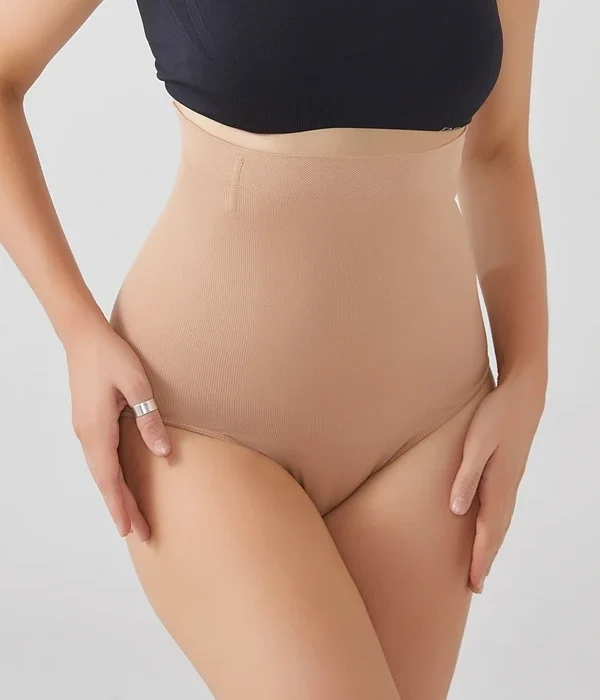
| High-waist brief | You want abdominal and waist coverage without a thigh panel | Rise, waistband, lower-abdomen coverage, leg opening and gusset | Top edge can roll if rise, size or torso proportion is wrong |
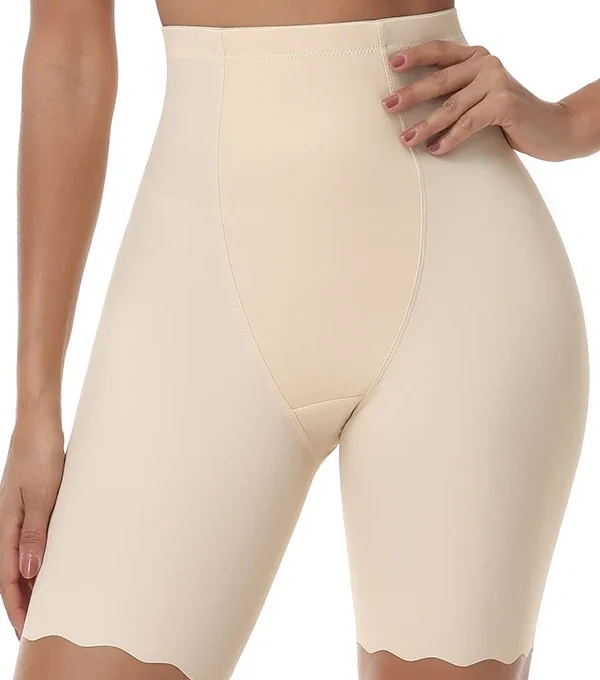
| Shaping short | You want continuous coverage through hips and upper thighs | Waist, inseam, thigh opening, seated comfort and dress hem | Leg edges may show or pinch if length and opening mismatch |
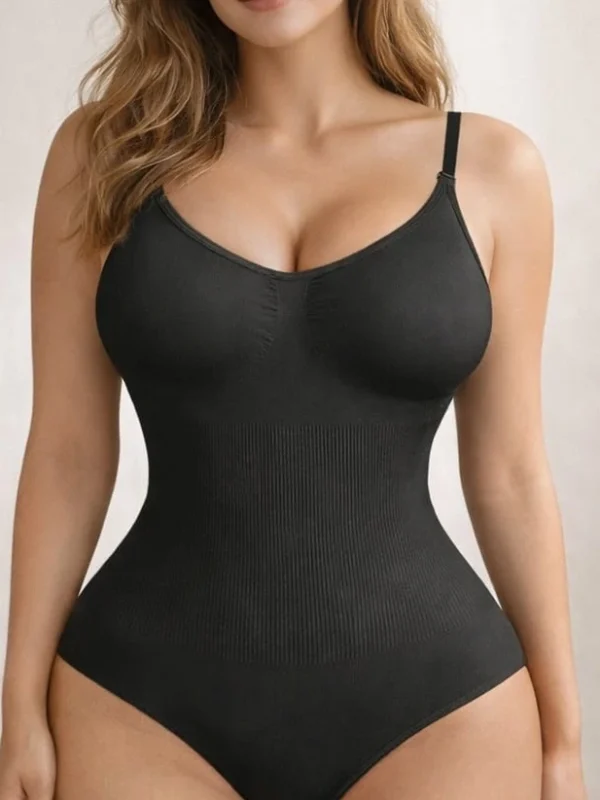
| Bodysuit | You want connected torso coverage and fewer separate waistbands | Torso length, bust style, straps, gusset and bathroom access | A waist-and-hip match can still fail in torso length |
| Top or vest | The outfit needs upper-torso smoothing without a bottom layer | Bust accommodation, armholes, hem grip and breathing | The hem may roll or conflict with bottoms |
| Legging or pant | You want longer leg coverage as part of the visible outfit | Waist, rise, inseam, knee mobility, ankle and opacity | Heat and full-leg fit create more variables |
The “best” format is therefore conditional. A fitted dress may benefit from a seamless short, while trousers may work better with a brief. An open-bust bodysuit can preserve bra choice, while a built-in-bust design adds another measurement problem. Begin with the outer garment and visible lines, then choose the minimum coverage that solves them.
A beginner’s selection sequence
Outfit → target area → format → measurements → movement test
Start with use, not maximum tightness
Editorial workflow derived from garment construction and cited fit-safety guidance. It does not score products or prescribe compression.
Use the Qinelle size guide as a starting point, then follow the current product-specific chart. Do not choose from the letter size alone: brand charts and garment architectures differ. If one measurement falls between sizes or different measurements point to different sizes, ask customer support about the exact style instead of automatically sizing down.
Support language is not a standardized medical dose
Retail pages often use words such as light, medium, firm, control or sculpting. Those can help compare a brand’s own products, but they do not automatically state a measured pressure. UPMC HealthBeat distinguishes ordinary compression clothing from medical-grade compression chosen for a condition. Without instrument-based product data and a stated test method, an mmHg value cannot be inferred from fabric composition, hook count, price or a “high compression” title.
| Information shown | What it can help answer | What it cannot prove alone |
|---|---|---|
| Support descriptor | Relative feel or control within the seller’s range | A medical pressure, safe duration or treatment effect |
| Fabric composition | Fiber content, stretch context and care planning | Exact pressure or fit on every body |
| Size chart | Which listed size aligns with current measurements | Comfort across every torso, thigh or bust proportion |
| Product image | Panel, seam, strap and coverage location | Clinical suitability or invisible fit under every fabric |
| Customer review | One wearer’s context and experience | A representative outcome or medical evidence |
Fit and safety checks for the first wear
Put shapewear on without extreme pulling, folding or improvised double layers. The garment should permit a normal breath and the movements required by the day. Check waist and leg edges, straps, side seams, closures and gusset. Reassess while seated and after a meal because the try-on condition can change.
Remove the garment for pain, numbness, tingling, breathing difficulty, worsening reflux, swelling, broken skin or persistent irritation. A faint temporary fabric impression is different from a deep, painful or persistent mark. If symptoms are concerning or do not resolve, seek medical advice. The daily wear-duration guide provides a condition-based loop without inventing an hour limit.
Everyday shapewear versus postoperative compression
| Decision | Everyday shapewear | Postoperative garment |
|---|---|---|
| Purpose | Temporary outfit smoothing and foundation-layer coverage | A defined role in an individualized recovery plan |
| Selection | Outfit, current measurements, comfort and construction | Procedure, zones, incision or drain access and clinician instructions |
| Schedule | Fit- and symptom-based; no universal daily number | Specified by the treating team and changed by that team |
| Substitution | Not a medical device merely because it feels firm | Do not replace with fashion shapewear unless approved |
Use the classification guide to compare the categories and the procedure-based recovery garment guide when a treating team has requested compression.
Care is part of consistent fit
Read the sewn-in care label and product instructions. Heat, harsh washing, stretched elastic or residue can change feel and fit. Rotate garments when frequent wear is needed so the fabric and skin can dry. Inspect seams, hooks, zippers, elastic and panel recovery; retire a damaged garment instead of tightening or layering it to recreate the original sensation. For a practical replacement checklist, see how long shapewear lasts and when to replace it.
The U.S. Federal Trade Commission maintains the Care Labeling Rule and the Textile Fiber Rule, which provide regulatory context for care instructions and fiber disclosures. For a practical routine, read Qinelle’s shapewear care and cleaning guide.
Three approachable format examples
Bodysuit
The Seamless Tummy Control Bodysuit shows connected torso coverage. Check bust, straps, torso length and gusset access.
Shaping short
The High-Waist Seamless Shaper Shorts adds upper-thigh coverage. Check inseam and leg edges while seated.
High-waist brief
The High-Waist Tummy-Control Shaping Brief avoids a thigh panel. Check the waistband rise and leg openings.
Need manufacturing detail?
Read how Qinelle approaches shapewear manufacturing, then verify the exact product description and current chart.
Compare three current everyday formats
These products were published and in stock in the August 28, 2026 Authority snapshot. The examples show construction choices; inclusion is not a medical recommendation or a performance ranking.
- Shaper Shorts
High-Waist Seamless Shaper Shorts – Tummy & Thigh
Original price was: $39.00.$29.00Current price is: $29.00.Select options This product has multiple variants. The options may be chosen on the product page - Shaping Briefs & Thongs
High-Waist Tummy-Control Shaping Brief
Original price was: $29.00.$19.00Current price is: $19.00.Select options This product has multiple variants. The options may be chosen on the product page - Shapewear Bodysuits
Seamless Tummy Control Bodysuit for Smooth Everyday Outfits
Original price was: $39.00.$29.00Current price is: $29.00.Select options This product has multiple variants. The options may be chosen on the product page
Where to go next
- Choosing: use the complete size, support, coverage and outfit guide.
- Safety: read the fit checks and warning signs.
- Duration: use the fit-based daily wear guide.
- Results: compare supported and unsupported expectations in is shapewear effective?
- Post-surgery: begin with post-surgery compression garments and the treating clinician.
Sources and evidence notes
- Cleveland Clinic: A Doctor’s Advice on Wearing Shapewear — realistic body-change, sizing and safety boundaries.
- UPMC HealthBeat: Does Compression Clothing Help Circulation? — retail versus medical-compression distinction.
- FTC: Care Labeling Rule — regulatory context for care instructions.
- FTC: Textile Fiber Rule — regulatory context for fiber disclosures.
Sources, catalog counts, product availability, internal links and calculations checked August 28, 2026. Editorial method: catalog evidence was labeled as inventory rather than demand or efficacy; health and regulatory claims were limited to cited sources; no product pressure was inferred. No clinician review is claimed.